• Fri frakt över 249 kr
  • •
  • Snabba leveranser
  • •
  • Billiga böcker
Kundservice

Du är på sajten för privatpersoner.

Företag, bibliotek eller offentlig verksamhet?

Du handlar på classic.bokus.com, där alla dina funktioner finns intakta.
Till classic.bokus.com
Bokus logotyp. Gå till startsidan.
  • Erbjudanden
  • Nyheter
  • Student
  • Topplistor
  • Barn & ungdom
  • Bokus Play
  • E-böcker
  • Pocketböcker
  • Spel & pussel

10% rabatt på allt med kod: NYSTART10 →

Sidfot

Mina sidor

    Hjälp

    • Kundservice
    • Vanliga frågor och svar
    • Frakt och leverans
    • Retur vid ångerrätt
    • Reklamera vara
    • Betalning
    • Köpvillkor
    • Allmänna villkor
    • Information om webbplatsens tillgänglighet

    Om Bokus

    • Om oss
    • Pressrum
    • För studenter
    • För företag
    • För bibliotek och offentlig verksamhet
    • För leverantörer
    • Hållbarhet

    Populärt

    • Aktuella erbjudanden
    • Presentkort
    • Studentlitteratur
    • Nya böcker
    • Topplistor
    • Signerade böcker
    • Engelska böcker

    Inspiration

    • Boktips
    • BookTok
    • Populära bokserier
    • Barnbokskaraktärer
    • Populära författare
    Logotyp för Bokus
    Följ oss på Facebook (extern länk)Följ oss på Instagram (extern länk)Följ oss på YouTube (extern länk)Följ oss på TikTok (extern länk)
    bokus @ CookiesAnpassa cookiesIntegritetspolicyKöpvillkor
    Till Citymail hemsida (extern länk)Till Budbee hemsida (extern länk)Till Postnord hemsida (extern länk)Till Schenker hemsida (extern länk)Till Early Bird hemsida (extern länk)Till Walleys hemsida (extern länk)
    1. Naturvetenskap och teknik
    2. Geovetenskap
    3. Geografi

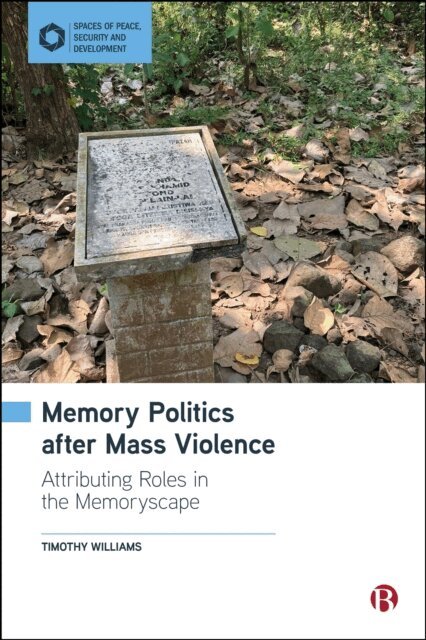
    Memory Politics after Mass Violence

    Attributing Roles in the Memoryscape

    AvTimothy Williams

    Inbunden, Engelska, 2025

    Del i serien Spaces of Peace, Security and Development

    1 170 kr

    Beställningsvara. Skickas inom 5-8 vardagar. Fri frakt över 249 kr.

    Fler format och utgåvor

    Häftad

    Kommande

    E-bok

    442 kr

    E-bok

    1 578 kr

    Beskrivning

    This book explores how political actors draw on memories of violent pasts to generate political power and legitimacy in the present. Drawing on fieldwork in post-violence Cambodia, Rwanda and Indonesia, the book demonstrates in what way power is derived from how roles are assigned, exploring who is deemed a perpetrator, victim or hero, as well as ambivalences in this memory. The author interrogates the ways in which these roles are attributed and ambivalences created in each society’s political discourses, transitional justice processes and cultural heritage. The comparative empirical analysis illustrates the importance of memory for political power and legitimacy today.

    Produktinformation

    • Utgivningsdatum:2025-06-20
    • Mått:156 x 234 x 20 mm
    • Vikt:522 g
    • Format:Inbunden
    • Språk:Engelska
    • Serie:Spaces of Peace, Security and Development
    • Antal sidor:254
    • Förlag:Bristol University Press
    • ISBN:9781529227581

    Utforska kategorier

    • Geografi inom Naturvetenskap och teknik
    • Politik och statsskick inom Samhälle och politik
    • Internationella relationer inom Samhälle och politik

    Mer om författaren

    Timothy Williams is Junior Professor of Insecurity and Social Order at the Institute for Political Science in the Department of Social Science and Public Affairs at the University of the Bundeswehr Munich, Germany.

    Recensioner i media

    “This groundbreaking book examines how collective memory shapes political power after mass violence, revealing no universal memory narrative guarantees authority. Through field research in Cambodia, Rwanda, and Indonesia, it demonstrates how attributed roles—perpetrator, victim, hero—directly constitute political legitimacy. The author's compelling, timely argument extends beyond these case studies, inviting scholars to critically explore how political actors across various post-conflict societies strategically utilize violent pasts to legitimize present power arrangements.” Andrea Peto, Central European University

    Innehållsförteckning

    • 1. Introduction2. Memoryscapes’ Complex Negotiation of the Past and Present: Mnemonic Role Attributions and Ambivalence3. Cambodia: From Demonization to Universal Victimhood4. Rwanda: Ethnic Essentialism and Rwandan Patriotic Front Heroism5. Indonesia: Ambivalent Silence and Communist Threat Constructions6. Mnemonic Role Attributions and Ambivalence in Post-Violence Memoryscapes: Comparative Insights7. Conclusion