• Fri frakt över 249 kr
  • •
  • Snabba leveranser
  • •
  • Billiga böcker
Kundservice

Du är på sajten för privatpersoner.

Företag, bibliotek eller offentlig verksamhet?

Du handlar på classic.bokus.com, där alla dina funktioner finns intakta.
Till classic.bokus.com
Bokus logotyp. Gå till startsidan.
  • Erbjudanden
  • Student
  • Topplistor
  • Barn & ungdom
  • Bokus Play
  • E-böcker
  • Ljudböcker
  • Pocketböcker
  • Spel & pussel

10% rabatt på allt med kod NYSTART10 →

Sidfot

Mina sidor

    Hjälp

    • Kundservice
    • Vanliga frågor och svar
    • Frakt och leverans
    • Retur vid ångerrätt
    • Reklamera vara
    • Betalning
    • Köpvillkor
    • Allmänna villkor
    • Information om webbplatsens tillgänglighet

    Om Bokus

    • Om oss
    • Pressrum
    • För studenter
    • För företag
    • För bibliotek och offentlig verksamhet
    • För leverantörer
    • Hållbarhet

    Populärt

    • Aktuella erbjudanden
    • Presentkort
    • Studentlitteratur
    • Nya böcker
    • Topplistor
    • Signerade böcker
    • Engelska böcker

    Inspiration

    • Boktips
    • BookTok
    • Populära bokserier
    • Barnbokskaraktärer
    • Populära författare
    Logotyp för Bokus
    Följ oss på Facebook (extern länk)Följ oss på Instagram (extern länk)Följ oss på YouTube (extern länk)Följ oss på TikTok (extern länk)
    bokus @ CookiesAnpassa cookiesIntegritetspolicyKöpvillkor
    Till Citymail hemsida (extern länk)Till Budbee hemsida (extern länk)Till Postnord hemsida (extern länk)Till Schenker hemsida (extern länk)Till Early Bird hemsida (extern länk)Till Walleys hemsida (extern länk)
    1. Samhälle och politik
    2. Samhälle och kultur
    3. Kultur och medier
    4. Referensverk och tvärvetenskap

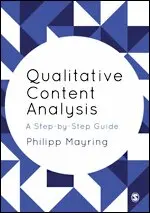
    Qualitative Content Analysis

    A Step-by-Step Guide

    AvPhilipp Mayring

    Inbunden, Engelska, 2021

    3 739 kr

    Beställningsvara. Skickas inom 3-6 vardagar. Fri frakt över 249 kr.

    Fler format och utgåvor

    Häftad

    693 kr

    E-bok

    570 kr

    Beskrivning

    In eight clear-cut steps, this book provides a systematic introduction to qualitative content analysis and how you can use it in each stage of your research project, no matter the type or amount of data.

    Developed by a leading expert in the field and based on years of teaching experience, this book offers an essential framework for interpreting qualitative data for any social sciences student or researcher.

    To support you in choosing the best approach for your research, this book includes:
    ·       Examples of how QCA can be applied to various research processes
    ·       An introduction to text analysis and its different approaches
    ·       Discussions of how to use QCA software to benefit your research
    ·       An online how-to manual to help you get the most out of QCAmap software.

    It also introduces the process of scientific research, and integrates qualitative and quantitative analysis into the step-by-step approach.

    Produktinformation

    • Utgivningsdatum:2021-12-06
    • Mått:170 x 242 x 19 mm
    • Vikt:580 g
    • Format:Inbunden
    • Språk:Engelska
    • Antal sidor:240
    • Upplaga:1
    • Förlag:SAGE Publications
    • ISBN:9781529701982

    Utforska kategorier

    • Referensverk och tvärvetenskap inom Samhälle och politik
    • Sociologi inom Samhälle och politik
    • Tillämpad datateknik inom Data och IT

    Mer om författaren

    Philipp Mayring, born in 1952, studied psychology, education and sociology at Ludwigs-Maximilians University Munich. He is now retired professor for psychological methodology at Alps-Adria University Klagenfurt, was president of the German Association of Evaluation DeGEval and head of the Center for Evaluation and Research Consulting ZEF. He is now head of the Association for Supporting Qualitative Research ASQ, Klagenfurt.

    Recensioner i media

    Philip Mayring offers a clear, systematic, step-by-step formula for both undergraduate and postgraduate students and novice researchers interested in using qualitative content analysis. The book offers significant context, elaborate detail, and supplements this with clear examples of research in the everyday practice.

    Innehållsförteckning

    • Introduction: Why Should we be Concerned With Qualitative Content Analysis?Part I: Foundations of Text AnalysisChapter 1: The Methodological Debate of Qualitative vs. Quantitative ResearchHistorical BackgroundTheory of Science Background of the ControversyIs Mixed Methods a Solution?Common Research Criteria for Qualitative and Quantitative ApproachesChapter 2: Importance of Text Analysis in Social SciencesTexts and Numerical Data as Material in Social SciencesMethods of Collecting Textual Material in Social Sciences ProjectsChapter 3: Different Approaches of Text AnalysisA comparison of Five Qualitative Text Analysis ApproachesSocial-Hermeneutic ParaphrasePsychoanalytic Text InterpretationObjective HermeneuticsGrounded Theory CodingQualitative Content AnalysisComparison of the Approaches and Quality CriteriaChapter 4: A Short History of Content AnalysisPreliminary PhaseConsolidation PhaseFine Developments and Interdisciplinary ExpansionStagnation and “Discontent” with Content AnalysisNew quantitative approaches in computational linguistics, complex algorithms and text miningApproaches to Qualitative Content AnalysisChapter 5: Basic Principles of Qualitative Content AnalysisEmbedding the Material within its Communication ContextCategories in the Focus of AnalysisDefining content analytical unitsSystematic, Rule-bound ProcedureObject Reference in Place of Formal TechniquesTheory-guided Character of the AnalysisTesting Specific Instruments via Pilot StudiesIntegrating Quantitative Steps of AnalysisQuality CriteriaChapter 6: Procedures of Qualitative Content AnalysisSummarizing Qualitative Content AnalysisInductive Category FormationExplication: Narrow and Broad Context AnalysisStructuring: Deductive Category AssignmentMixed ProceduresChapter 7: Computer Programs for Supporting Qualitative Content AnalysisThe Merits of Computer Assistance in Text AnalysisQCAmap Software for Qualitative Content AnalysisPart II: The 8 Step Qualitative Content Analysis Research ProcessChapter 8 Step 1: Forming the Research QuestionFrom Themes to QuestionsHow to Formulate a Research QuestionExample for Step 1: Forming the Research QuestionChapter 9 Step 2: Establishing the Theoretical Background of the StudyDifferent Levels of Theory BackgroundExample for Step 2: Establishing the Theoretical Background of the StudyChapter 10 Step 3: Designing the StudyBasic Designs for Qualitative (and Quantitative) ResearchExample for Step 3: Designing the StudyEthical Aspects of a Qualitative Content Analysis StudyChapter 11 Step 4: Gathering Textual Material, SamplingThe Quality of the Sample: Establishing a Sampling StrategyRecommendations for Sample SizeDescribing the Text Corpus for Qualitative Content AnalysisTranscription RulesExample for Step 4 (Textual Material)Chapter 12 Step 5: Choosing and Constructing Adequate MethodsSummarizing: Procedure and ExampleInductive Category Formation: Procedure and ExampleExplicating (Context Analysis): Procedure and ExampleStructuring (Deductive Category Assignment): Procedure and ExampleMixed Procedures: Theme Analysis, Type Analysis, Parallel ProceduresChapter 13 Step 6: Conducting the Study and Presenting the ResultsDescription of ResultsPresenting Studies with Summarizing Content AnalysisPresenting Inductive Category FormationPresenting Deductive Category AssignmentAnswering the Research QuestionChapter 14 Step 7: Discussing Quality CriteriaClassical Quality CriteriaSpecific Content-analytical Quality CriteriaSoftware Example: Three Levels of Intercoder AgreementChapter 15 Step 8: Reflecting on Research ImplicationsTheoretical ImplicationsPractical ImplicationsPart III: Indications and Limitations of Qualitative Content AnalysisChapter 16: Indications and LimitationsSimilar Conceptions of a Qualitative Content AnalysisCriticism and MisunderstandingsStrengths and Weaknesses of Qualitative Content AnalysisFurther Developments