• Fri frakt över 249 kr
  • •
  • Snabba leveranser
  • •
  • Billiga böcker
Kundservice

Du är på sajten för privatpersoner.

Företag, bibliotek eller offentlig verksamhet?

Du handlar på classic.bokus.com, där alla dina funktioner finns intakta.
Till classic.bokus.com
Bokus logotyp. Gå till startsidan.
  • Erbjudanden
  • Nyheter
  • Student
  • Topplistor
  • Barn & ungdom
  • Bokus Play
  • E-böcker
  • Pocketböcker
  • Spel & pussel

10% rabatt på allt med kod: NYSTART10 →

Sidfot

Mina sidor

    Hjälp

    • Kundservice
    • Vanliga frågor och svar
    • Frakt och leverans
    • Retur vid ångerrätt
    • Reklamera vara
    • Betalning
    • Köpvillkor
    • Allmänna villkor
    • Information om webbplatsens tillgänglighet

    Om Bokus

    • Om oss
    • Pressrum
    • För studenter
    • För företag
    • För bibliotek och offentlig verksamhet
    • För leverantörer
    • Hållbarhet

    Populärt

    • Aktuella erbjudanden
    • Presentkort
    • Studentlitteratur
    • Nya böcker
    • Topplistor
    • Signerade böcker
    • Engelska böcker

    Inspiration

    • Boktips
    • BookTok
    • Populära bokserier
    • Barnbokskaraktärer
    • Populära författare
    Logotyp för Bokus
    Följ oss på Facebook (extern länk)Följ oss på Instagram (extern länk)Följ oss på YouTube (extern länk)Följ oss på TikTok (extern länk)
    bokus @ CookiesAnpassa cookiesIntegritetspolicyKöpvillkor
    Till Citymail hemsida (extern länk)Till Budbee hemsida (extern länk)Till Postnord hemsida (extern länk)Till Schenker hemsida (extern länk)Till Early Bird hemsida (extern länk)Till Walleys hemsida (extern länk)
    1. Samhälle och politik
    2. Samhälle och kultur
    3. Kultur och medier
    4. Referensverk och tvärvetenskap

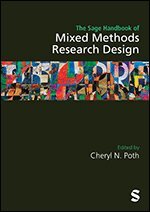
    The Sage Handbook of Mixed Methods Research Design

    AvCheryl N. Poth

    Inbunden, Engelska, 2023

    1 890 kr

    Beställningsvara. Skickas inom 5-8 vardagar. Fri frakt över 249 kr.

    Beskrivning

    With contributions from over 80 of the biggest names and rising stars of the field, this Handbook is an essential resource for anyone interested in the contemporary, emerging, and evolving practice of mixed methods research and scholarship. Exploring new and novel applications of existing mixed methods research design practices, the handbook provides comprehensive integration guidance while showcasing how design innovations inspire and contribute to investigating previously under-researched social issues and populations. Through its unique focus on design and the diverse contexts in which mixed methods research is being applied, this Handbook prepares researchers for the changing conditions in which they will conduct studies. Newcomers and seasoned mixed methods researchers alike will find this Handbook a go-to source for tools to think and act ‘complexively’ and creatively in research design. Using accessible language and illustrative examples, this Handbook is written for those with various roles and experience in mixed methods research design. The in-depth discussions led by the interdisciplinary group of 11 internationally renowned editorial section leads project our collective thinking of mixed methods research design into the future across the following six sections:

    Section 1: Inspiring Diversity and Innovation in Mixed Methods Design
    Section 2: The Craft of Mixed Methods Research Design 
    Section 3: Expanding Mixed Methods Design Approaches
    Section 4: Designing Innovative Integrations with Technology 
    Section 5: Navigating Research Cultures in Mixed Methods Design
    Section 6: Exploring Design Possibilities and Challenges for Mixed Methods Research

    Produktinformation

    • Utgivningsdatum:2023-09-20
    • Mått:170 x 244 x 33 mm
    • Vikt:1 149 g
    • Format:Inbunden
    • Språk:Engelska
    • Antal sidor:600
    • Upplaga:1
    • Förlag:SAGE Publications
    • ISBN:9781529723960

    Utforska kategorier

    • Referensverk och tvärvetenskap inom Samhälle och politik

    Mer om författaren

    Cheryl N. Poth, PhD, is a Professor in the Faculty of Education and faculty member of theresearch-intensive Centre for Research and Applied Measurement and Evaluation at theUniversity of Alberta. In this role, she has developed and taught graduate-level research methodsand program evaluation courses in addition to supervising and mentoring students, faculty,and local as well as global community members in qualitative, quantitative, and mixed methodsresearch. She is the author of over 50 peer-reviewed journal articles, three books as well asnumerous book chapters. Her work has been recognized by the American Educational ResearchAssociation with the Division D Significant Contributions to Research Methodology Awardin 2023 (with Peggy Shannon-Baker) and by the Textbook & Academic Authors Associationwith the Most Promising New Textbook Award in 2020 and the McGuffey Longevity Awardfor Qualitative Research book in 2018 (with John Creswell). She served as Editor of the SAGEHandbook of Mixed Methods Research (2023) and as Guest Coeditor of several journal specialissues, including the International Journal of Qualitative Methods. In addition to more than40 invited talks and 150 conference presentations, she has led research methods workshopswith diverse audiences on four continents. She served as an Advisory Board Member of the International Institute of Qualitative Methodology (2014–2020); the President of the MixedMethods International Research Association (2017–2018); a Research Fellow at the Universityof South Africa (2018–2020); a Helen Glass Scholar in the College of Nursing within the RadyFaculty of Health Sciences at the University of Manitoba (2022); and as a MERIT VisitingProfessor in the Faculty of Health Sciences at McMaster University (2023–2025). In 2009, shecofounded the interdisciplinary Alberta Clinical and Community-Based Evaluation ResearchTeam to advance innovative community–university research partnership supports for programplanning and impact assessments of service delivery for individuals with complex needs. Sheserves as the Methodologist on several cross-disciplinary research teams and has led federally,provincially, and locally funded research projects. She is an Associate Editor of the Journal ofMixed Methods Research and is an editorial board member of several journals. Updates on herwork can be found on her website at https://sites.google.com/ualberta.ca/cheryl-poth/.

    Recensioner i media

    The SAGE Handbook of Mixed Methods Design edited by Dr. Cheryl Poth offers an exciting and innovative collection of information on mixed methods research from some of the leading experts in the field. The book and its topic areas are timely and highly relevant addressing key areas such as diversity, navigating research cultures, designing innovative integrations with technology, and exploring design possibilities. I look forward to sharing this innovative resource with students, colleagues, and others who are tackling some of the most complex research questions using mixed methods designs. Importantly, the handbook facilitates understanding by bridging theory with practical examples and will serve as a "go-to" guide for mixed methods scholars and practitioners alike!

    Innehållsförteckning

    • Dilemmas and Opportunities for Mixed Methods Research Design: Handbook Introduction - Cheryl N. PothSection 1: Inspiring Diversity and Innovation in Mixed Methods DesignEvolving Tensions and Conversations in Mixed Methods Research Design Approaches: Section 1 Introduction - Sergi Fàbregues and José F. Molina-AzorinChapter 2: Revisiting Mixed Methods Research Designs Twenty Years Later - John W. Creswell and Vicki L. Plano ClarkChapter 3: Mixed Methods Design in Historical Perspective: Implications for Researchers - Joseph A MaxwellChapter 4: Mixed Methods Designs to Further Social, Economic, and Environmental Justice - Donna M. MertensChapter 5: Developments in Mixed Methods Designs: What Have Been the Dominant Pathways and Where Might They Take Us in the Future? - Katrin NiglasChapter 6: The Role of Methodological Paradigms for Dialogic Knowledge Production: Using a Conceptual Map of Discourse Development to Inform MMR Research Design - Dawn Freshwater and Jane CahillFuture Tensions and Design Conversations in the Mixed Methods Field: Section 1 Conclusions - José F. Molina-Azorin & Sergi FàbreguesSection 2: The Craft of Mixed Methods Research DesignThe Craft of Mixed Methods Research Design: Section 2 Introduction - Sophia L. Johnson and Judith SchoonenboomChaper 7: Embracing Emergence in Mixed Methods Designs: Theoretical Foundations and Empirical Applications - Manuela De Allegri and Julia LohmannChapter 8: The Methods-Inference Map: Visualizing the Interactions Between Methods and Inferences in Mixed Methods Research - Judith SchoonenboomChapter 9: Towards Sampling Designs that are Transparent, Rigorous, Ethical, and Equitable (TREE): Using a Tree Metaphor as a Sampling Meta-Framework in Mixed Methods Research - Julie A. Corrigan and Anthony J. OnwuegbuzieChapter 10: Data Integration as a Form of Integrated Mixed Analysis in Mixed Methods Research Designs - Susanne VoglChapter 11: Ethical Issues and Practices for Mixed Methods Research in an Era of Big Data - Roslyn Cameron and Heinz HerrmannChapter 12: Building the Logic for an Integrated Methodology: Mixed Method Grounded Theory as an Example of Constructing a Methodology to Guide Design and Integration - Elizabeth G. Creamer, Cherie D. Edwards, and Cassandra McCallThe Craft of Mixed Methods Research Design: Section 2 Conclusions - Judith Schoonenboom and Sophia L. JohnsonSection 3: Expanding Mixed Methods Design ApproachesExpanding Beyond Typology-Based Mixed Methods Designs: Section 3 Introduction - Peggy Shannon-Baker and Jessica T. DeCuir-GunbyChapter 13: Exploring Interlocking Relationships of Race, Gender, and Class with an Intersectionality-Informed Mixed Methods Research Design Framework - Jenny DouglasChapter 14: Indigenous Cultural Values Instrument Development: Using Mixed Methods Research - Mehdi TaghipoorreynehChapter 15: What Can Mixed Methods Partnerships Learn from Kaupapa Maori Research Principles? - Peter Rawlins, Philippa Butler, Spencer Lilley, and Maggie HartnettChapter 16: Prioritizing Cultural Responsiveness in Mixed Methods Research and Team Science with Underrepresented Communities - Tera R. Jordan and Maya BartelChapter 17: Using Participatory Methods in Randomised Controlled Trials of Complex Interventions - Jenevieve Mannell and Audrey ProstChapter 18: Illustrating the Mixed Methods Phenomenological Approach (MMPR) - Joanne Mayoh, Talia Thompson, and Shanlee DavisChapter 19: Intersection of Mixed Methods and Case Study Research (MM+CSR): Two Design Options in Educational Research - Loraine D. Cook and Vimala Judy KamalodeenChapter 20: Harnessing Mixed Methods for Research Instrument Development and Legitimation - Vanessa Scherman and Lisa ZimmermanChapter 21: Mixed Methods-Grounded Theory: Best Practices for Design and Implementation - Michelle C. Howell Smith, Wayne A. Babchuk, and Timothy C. GuettermanMoving Beyond Tradition: The Need for Expanded and Culturally Relevant Mixed Methods Design Typologies: Section 3 Conclusions - Jessica T. DeCuir-Gunby and Peggy Shannon-BakerSection 4: Designing Innovative Integrations with TechnologyExpanding Innovative Integrations with Technology: Section 4 Introduction - Timothy C. GuettermanChapter 22: Using Software for Innovative Integration in Mixed Methods Research: Joint Displays, Insights, and Inferences with MAXQDA - Udo Kuckartz and Stefan RädikerChapter 23: Grounded Text Mining Approach: An Integration Strategy of Grounded Theory and Textual Data Mining - Mitsuyuki Inaba and Hisako KakaiChapter 24: A ‘Mixed Methods Way of Thinking’ in Game-based Research Integrations - Lisbeth M. BrevikChapter 25: Integrating Secondary Data from Ethnically and Racially Minoritized Groups in Mixed Methods Research - Daphne C. Watkins and Natasha C. JohnsonChapter 26: Beyond the Joint Display in Mixed Methods Convergent Designs: A Case-Oriented Merged Analysis - Carolina BustamanteFuture Trends in Designing Innovative Integrations with Technology: Section 5 Conclusions - Timothy GuettermanSection 5: Navigating Research Cultures in Mixed Methods DesignFrom Margin to Center: The Design Implications of Cultural Component with Mixed Methods: Section 5 Introduction - Elizabeth CreamerChapter 27: Culturally Responsive Mixed Methods Evaluation Design - Jori N. Hall and Ayesha S. BoyceChapter 28: Integrating a Four-Step Japanese Cultural Narrative Framework, Ki-Shou-Ten-Ketsu, into a Mixed Methods Study - Taichi HattaChapter 29: Leveraging Mixed Methods Community-based Participatory Research (MMCBPR) in Diverse Social and Cultural Contexts to Advance Health Equity - P. Paul Chandanabhumma, Annika Agni, and Melissa DeJonckheereChapter 30: Cultural Diversity in Intervention Designs: A Chinese Illustrative Example - Hongling Chu, Xuejun Yin, and Huieming LiuChapter 31: Examining the Influences of Spanish Research Culture in Systematic Observation with Mixed Methods - M. Teresa Anguera, Eulàlia Arias-Pujol, Francisco Molinero, and Luca Del GiaccoFuture Directions for Research Cultures in Mixed Methods Designs: Section 5 Conclusions - Elsa Lucia Escalante BarriosSection 6: Exploring Design Possibilities and Challenges for Mixed Methods ResearchExploring Possibilities and Challenges for Mixed Methods Research for the Future: Section 6 Introduction - Peter Rawlins and Maggie HartnettChapter 32: Visualising the Process: Using Visuals to Teach and Learn Mixed Methods Research - Peggy Shannon-BakerChapter 33: Toward the Future Legitimacy of Mixed Methods Designs: Responsible Mixed Methods Research for Tackling Grand Challenges for the Betterment of Society - José F. Molina-Azorin and Michael D. FettersChapter 34: Realizing Methodological Potentials and Advantages of Mixed Methods Research Design for Knowledge Translation - Nataliya V. Ivankova, Jami L. Anderson, Ivan I. Herbey, Linda A. Roussel, and Daniel KimChapter 35: Opportunities and Challenges for a Transdisciplinary Mixed Methods Research Future - Mandy M. ArchibaldChapter 36: Mapping Design Trends and Evolving Directions Using the SAGE Handbook of Mixed Methods Research Design - John Creswell, Cheryl N. Poth, and Peter RawlinsWhere to Next in Exploring Possibilities and Challenges for Mixed Methods Research for the Future: Section 6 Conclusions - Peter Rawlins and Maggie HartnettChapter 37: An Emerging and Exciting Future for Mixed Methods Research Design: Handbook Conclusions - Cheryl N. Poth