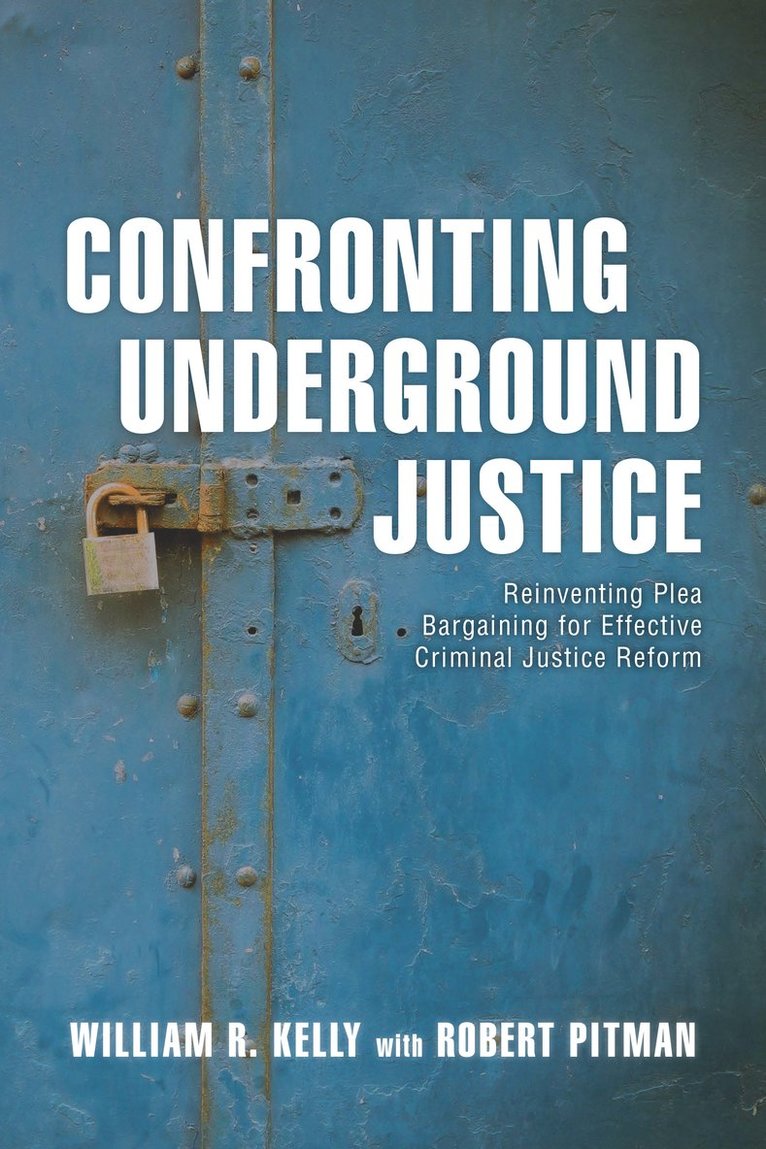
Inbunden, Engelska, 2018
Confronting Underground Justice
Reinventing Plea Bargaining for Effective Criminal Justice Reform
462 kr
Beställningsvara. Skickas inom 10-15 vardagar. Fri frakt över 249 kr.
Beskrivning
Produktinformation
- Utgivningsdatum: 2018-10-29
- Mått: 161 x 235 x 25 mm
- Vikt: 526 g
- Format: Inbunden
- Språk: Engelska
- Antal sidor: 260
- Förlag: Bloomsbury Publishing Plc
- ISBN: 9781538106488
- Utmärkelser: Winner of Choice Outstanding Academic Title 2019
Utforska kategorier
Mer om författaren
William R. Kelly, PhD, is a professor in the Department of Sociology and director of the Center for Criminology and Criminal Justice Research at the University of Texas at Austin, Texas. He is the author of several books and articles on criminal justice, law, and policy, including From Retribution to Public Safety (Rowman & Littlefield, 2017), The Future of Crime and Punishment (Rowman & Littlefield, 2016), Criminal Justice At The Crossroads (2015), and Justice Under Pressure (1993). Robert Pitman, JD, M.St., was appointed in 2014 by President Obama and confirmed by the United States Senate to serve as a United States District Judge for the Western District of Texas. Prior to that he was the United States Attorney for the Western District. Judge Pitman brings extensive knowledge, on the ground experience, insight and a profound interest in criminal justice reform, something that is rather rare among federal prosecutors and judges. Pitman co-authored From Retribution to Public Safety: Disruptive Innovation of American Criminal Justice Policy (Rowman and Littlefield 2017) with William R. Kelly and William Streusand.
Recensioner i media
Kelly, director of the Center for Criminology and Criminal Justice Research at the University of Texas at Austin, and federal judge Pitman cogently analyze a common facet of the American criminal justice system: plea negotiations, which yield more than 95% of all criminal convictions. The prevalence of plea deals developed as a consequence of the massive uptick in arrests in the late 20th century, which made plea bargains essential to keep dockets from backing up with defendants demanding trials. As a result, some defendants pleaded guilty despite their innocence, and some did so in advance of pretrial hearings that would have determined the constitutionality of their arrest and the evidence sought to be used against them. The authors propose a number of reforms meant to address the perceived injustices of the current process, including creating a neutral plea mediator who would “serve the dual purpose of ensuring that each side had an adequate opportunity to consider the consequences of a plea as well as possible alternate outcomes.” But as thoughtful as their suggestions are, as they note at the end, the absence of “political will to make meaningful comprehensive reform a priority” makes this of more intellectual than practical utility. Still, this sobering study deserves a wide readership.
Betyg & recensioner
0 recensioner
Inga recensioner tillgängliga.