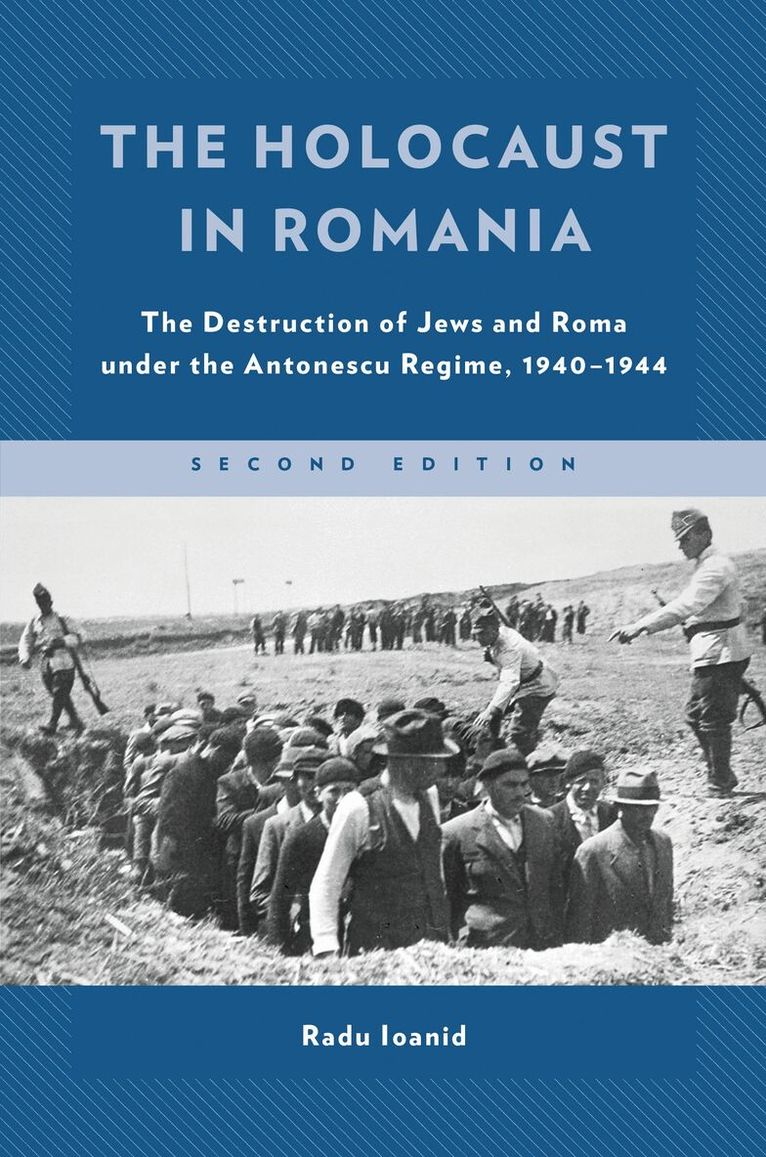
Inbunden, Engelska, 2022
Holocaust in Romania
The Destruction of Jews and Roma under the Antonescu Regime, 1940–1944
Av Radu Ioanid
381 kr
Beställningsvara. Skickas inom 5-8 vardagar. Fri frakt över 249 kr.
Fler format och utgåvor
Beskrivning
Produktinformation
- Utgivningsdatum: 2022-04-20
- Mått: 160 x 238 x 44 mm
- Vikt: 1 020 g
- Format: Inbunden
- Språk: Engelska
- Serie: Published in association with the United States Holocaust Memorial Museum
- Antal sidor: 664
- Upplaga: 2
- Förlag: Bloomsbury Publishing Plc
- ISBN: 9781538138083
Mer om författaren
Radu Ioanid was born and grew up in Bucharest, Romania. He was director of the Benjamin and Vladka Meed Registry of Jewish Holocaust Survivors and then director of the International Archival Programs Division at the United States Holocaust Memorial Museum. He is presently the ambassador of Romania to Israel. Mr. Ioanid’s other books include The Sword of the Archangel: Fascist Ideology in Romania, The Iasi Pogrom, June–July 1941: A Photo Documentary from the Holocaust in Romania,and The Ransom of the Jews: The Story of the Extraordinary Secret Bargain between Romania and Israel.
Recensioner i media
Radu Ioanid has capitalized on his unique, decades-long experience collecting archives worldwide on behalf of the United States Holocaust Memorial Museum and building the museum’s collections of survivor testimony to produce the most authoritative study of the Holocaust in Romania available today. The responsibility of Romania’s violently antisemitic Antonescu regime and the complicity or indifference of most Romanian elites and the broader public emerge with a clarity that is often absent in studies of the Holocaust elsewhere. The agony of the victims is powerfully presented, in their own words as well as in reports generated by military and civilian authorities seeking to document their contributions to a national priority. Ioanid’s attention to the victimization of Roma, minority religious sects, and other groups completes the frightful picture of Romania’s Holocaust-era crimes and serves as a warning that if we fail to learn from history, what happened to Jews during the Holocaust can happen to anyone.
Betyg & recensioner
0 recensioner
Inga recensioner tillgängliga.