• Fri frakt över 249 kr
  • •
  • Snabba leveranser
  • •
  • Billiga böcker
Kundservice

Du är på sajten för privatpersoner.

Företag, bibliotek eller offentlig verksamhet?

Du handlar på classic.bokus.com, där alla dina funktioner finns intakta.
Till classic.bokus.com
Bokus logotyp. Gå till startsidan.
  • Erbjudanden
  • Nyheter
  • Student
  • Topplistor
  • Barn & ungdom
  • Bokus Play
  • E-böcker
  • Pocketböcker
  • Spel & pussel

10% studentrabatt med kod TERM26

Sidfot

Mina sidor

    Hjälp

    • Kundservice
    • Vanliga frågor och svar
    • Frakt och leverans
    • Retur vid ångerrätt
    • Reklamera vara
    • Betalning
    • Köpvillkor
    • Allmänna villkor
    • Information om webbplatsens tillgänglighet

    Om Bokus

    • Om oss
    • Pressrum
    • För studenter
    • För företag
    • För bibliotek och offentlig verksamhet
    • För leverantörer
    • Hållbarhet

    Populärt

    • Aktuella erbjudanden
    • Presentkort
    • Studentlitteratur
    • Nya böcker
    • Topplistor
    • Signerade böcker
    • Engelska böcker

    Inspiration

    • Boktips
    • BookTok
    • Populära bokserier
    • Barnbokskaraktärer
    • Populära författare
    Logotyp för Bokus
    Följ oss på Facebook (extern länk)Följ oss på Instagram (extern länk)Följ oss på YouTube (extern länk)Följ oss på TikTok (extern länk)
    bokus @ CookiesAnpassa cookiesIntegritetspolicyKöpvillkor
    Till Citymail hemsida (extern länk)Till Budbee hemsida (extern länk)Till Postnord hemsida (extern länk)Till Schenker hemsida (extern länk)Till Early Bird hemsida (extern länk)Till Walleys hemsida (extern länk)
    1. Juridik
    2. Särskilda rättsområden
    3. Författningsrätt och förvaltningsrätt
    4. Offentlig förvaltning

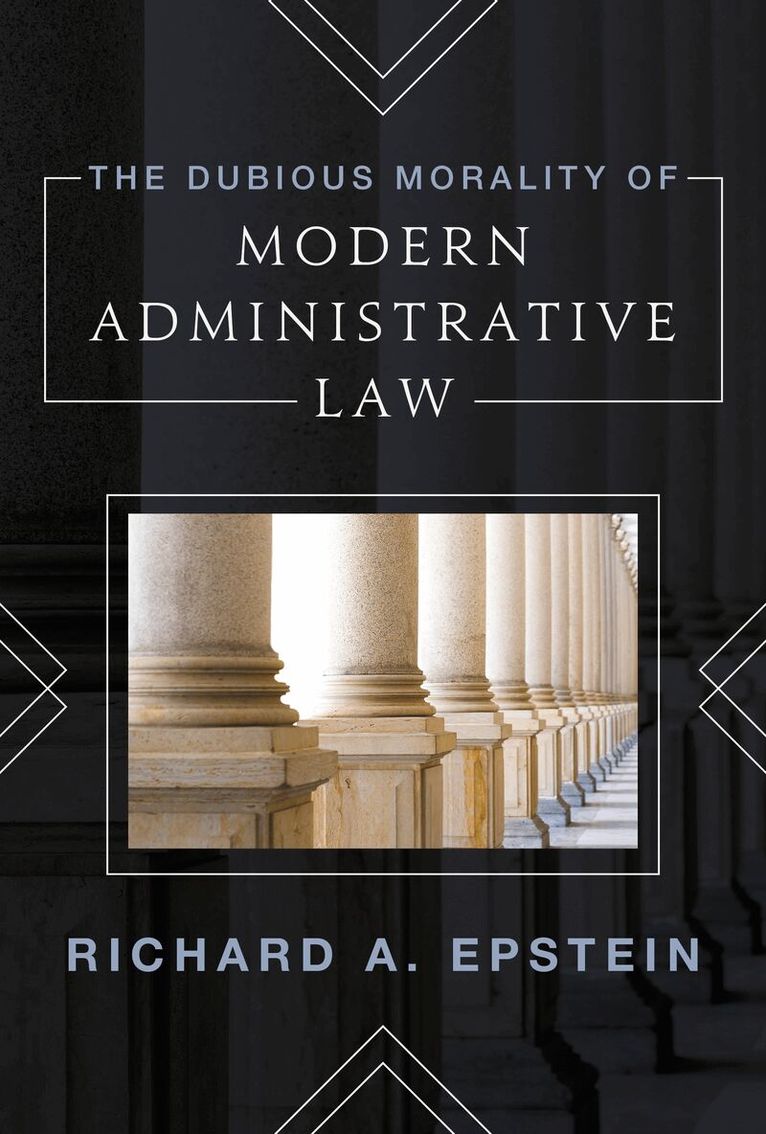
    Dubious Morality of Modern Administrative Law

    AvRichard Epstein

    Inbunden, Engelska, 2020

    466 kr

    Beställningsvara. Skickas inom 10-15 vardagar. Fri frakt över 249 kr.

    Fler format och utgåvor

    E-bok

    484 kr

    Beskrivning

    Modern administrative law has been the subject of intense and protracted intellectual debate, from legal theorists to such high-profile judicial confirmations as those conducted for Supreme Court justices Neil Gorsuch and Brett Kavanaugh. On one side, defenders of limited government argue that the growth of the administrative state threatens traditional ideas of private property, freedom of contract, and limited government. On the other, modern progressives champion a large administrative state that delegates to key agencies in the executive branch, rather than to Congress, broad discretion to implement major social and institutional reforms. In this book, Richard A. Epstein, one of America’s most prominent legal scholars, provides a withering critique of how theadministrative state has gone astray since the New Deal. First examining how federal administrative powers worked well in an earlier age of limited government, dealing with such issues as land grants, patents, tariffs and government employment contracts, Epstein then explains how modern broad mandates for delegated authority are inconsistent with the rule of law and lead to systematic abuse in a wide range of subject matter areas: environmental law; labor law; food and drug law; communications laws, securities law and more. He offers detailed critiques of major administrative laws that are now under reconsideration in the Supreme Court and provides recommendations as to how the Supreme Court can roll back the administrative state in a coherent way.

    Produktinformation

    • Utgivningsdatum:2020-03-15
    • Mått:161 x 238 x 25 mm
    • Vikt:499 g
    • Format:Inbunden
    • Språk:Engelska
    • Antal sidor:236
    • Förlag:Bloomsbury Publishing Plc
    • ISBN:9781538141496

    Utforska kategorier

    • Offentlig förvaltning inom Juridik

    Mer om författaren

    Richard A. Epstein is the Laurence A Tisch Professor of Law, New York University School of Law; the Peter and Kirsten Bedford Senior Fellow, The Hoover Institution; the James Parker Hall Distinguished Service Professor of Law Emeritus, and Senior Lecturer at the University of Chicago. He is the author of many books including Takings: Private Property and the Power of Eminent Domain (1985); Simple Rules for a Complex World (1995); Design for Liberty: Private Property, Public Administration, and the Rule of Law (2011); The Classical Liberal Constitution: The Uncertain Quest for Limited Government (2014). He is a member of the American Academy of Arts and Sciences since 1985, a winner of the Bradley Prize (2011); the recipient of honorary degrees from the University of Gent and the University of Siegen. He works in a wide variety of academic areas, and is a regular columnist and radio commentator.

    Recensioner i media

    n 2014, Columbia Law School professor Philip Hamburger posed the question 'Is administrative law unlawful?' in a book of that title. Now Hamburger’s New York neighbor Professor Richard Epstein, of New York University Law School, asks whether modern administrative law is immoral. Both answer in the affirmative. . . . Drawing upon Lon Fuller’s classic treatise The Morality of Law, Epstein considers whether modern administrative law satisfies Fuller’s prescriptions for a moral legal order. And as Epstein’s title suggests, this is a dubious proposition: 'Fuller’s steely insistence on legal coherence, clarity, and consistency, coupled with his strong condemnation of retroactive laws, does not mesh with modern administrative law.' This is quite a problem, for the features Fuller identified were not merely advisory, but 'the minimum requisites for the rule of law.' Insofar as modern administrative law violates these principles, it is, in one sense, immoral and needs to be reformed.

    Innehållsförteckning

    • About the Manhattan InstituteAbout the AuthorIntroduction: An Accidental BookPART I:THE DEBATE OVER THE MODERN ADMINISTRATIVE STATEA Frame of Reference for All Administrative LawRule-of-Law BasicsFuller on the Rule of LawFuller’s Notable OmissionsThe Empirical Link Between Substance and ProcedurePropertyFreedom of ContractEminent DomainPART II:THE TRADITIONAL APPROACH TO ADMINISTRATIVE LAWThe Founding Period The 19th and Early 20th CenturiesThe 1935 Turning PointThe Framework Applied In Modern TimesBias and the Right to Be Heard GuidancesNondelegationThe Delegation of Benefit DistributionsPART III:THE CHEVRON SYNTHESISSection 706(a) of the Administrative Procedure ActThe Chevron Two Step Navigable WatersWeyerhaeuser v. U.S. Fish & Wildlife ServiceThe Major Question DiversionMCI Telecommunications Corp. v. AT&TFDA v. Brown & WilliamsonWhitman v. American Trucking AssociationMassachusetts v. EPAKing v. BurwellPART IV:CHEVRON LITESkidmoreSeminole Rock and AuerGloucester County KisorRetroactivity and the Reversal of Longstanding PositionsFundamental ChoicesChenery I and Chenery IIChamber of Commerce v. United States Department of LaborPART V: QUESTIONS OF FACT UNDER THE ADMINISTRATIVE PROCEDURE ACTArbitrary, Capricious, or an Abuse of DiscretionTraditional Agency ActionThe Pipeline CasesConclusionTables of CasesGeneral Index