• Fri frakt över 249 kr
  • •
  • Snabba leveranser
  • •
  • Billiga böcker
Kundservice

Du är på sajten för privatpersoner.

Företag, bibliotek eller offentlig verksamhet?

Du handlar på classic.bokus.com, där alla dina funktioner finns intakta.
Till classic.bokus.com
Bokus logotyp. Gå till startsidan.
  • Erbjudanden
  • Student
  • Topplistor
  • Barn & ungdom
  • Bokus Play
  • E-böcker
  • Ljudböcker
  • Pocketböcker
  • Spel och pussel

Pocketfynda! Hundratals böcker för 49 kr/st →

Sidfot

Mina sidor

    Hjälp

    • Kundservice
    • Vanliga frågor och svar
    • Frakt och leverans
    • Retur vid ångerrätt
    • Reklamera vara
    • Betalning
    • Köpvillkor
    • Allmänna villkor
    • Information om webbplatsens tillgänglighet

    Om Bokus

    • Om oss
    • Pressrum
    • För studenter
    • För företag
    • För bibliotek och offentlig verksamhet
    • För leverantörer
    • Hållbarhet

    Populärt

    • Aktuella erbjudanden
    • Presentkort
    • Studentlitteratur
    • Nya böcker
    • Topplistor
    • Signerade böcker
    • Engelska böcker

    Inspiration

    • Boktips
    • BookTok
    • Barnbokskaraktärer
    • Populära författare
    Logotyp för Bokus
    Följ oss på Facebook (extern länk)Följ oss på Instagram (extern länk)Följ oss på YouTube (extern länk)Följ oss på TikTok (extern länk)
    bokus @ CookiesAnpassa cookiesIntegritetspolicyKöpvillkor
    Till Citymail hemsida (extern länk)Till Budbee hemsida (extern länk)Till Postnord hemsida (extern länk)Till Schenker hemsida (extern länk)Till Early Bird hemsida (extern länk)Till Walleys hemsida (extern länk)
    1. Historia och arkeologi
    2. Historia
    3. Europas historia

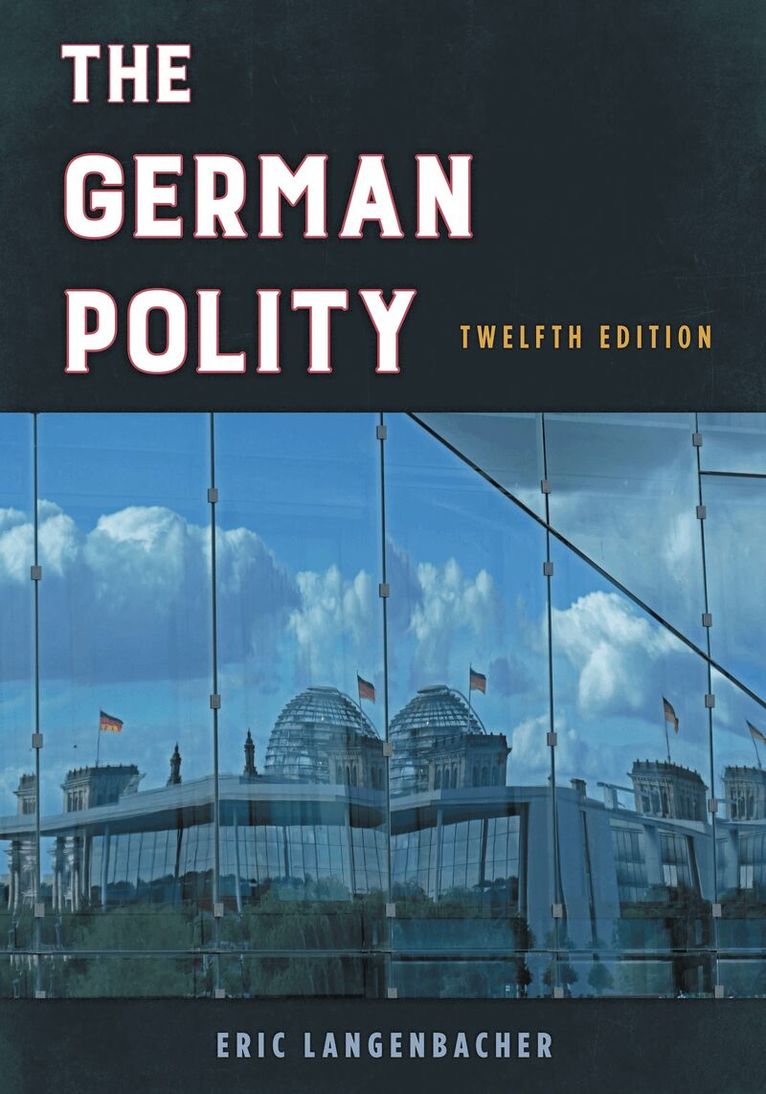
    German Polity

    AvEric Langenbacher

    Häftad, Engelska, 2021

    619 kr

    Beställningsvara. Skickas inom 10-15 vardagar. Fri frakt över 249 kr.

    Fler format och utgåvor

    Inbunden

    1 572 kr

    Beskrivning

    This thoroughly revised and updated edition provides a comprehensive introduction to contemporary Germany, one of the world’s foremost economic and political powers. During a series of profound crises over the last decade, including migration challenges, Brexit, and the Covid-19 pandemic, Germany has emerged as the undisputed leader of the European Union. One of the world’s strongest economies, it exports goods, services, and ideas around the world. In foreign policy, it has taken on a more prominent role, especially with its pursuit of soft power. Yet, as adept as German policy making has been, the challenges have produced strains that reveal the limits of German influence. Moreover, after sixteen years in power, Chancellor Angela Merkel will retire and new leadership will guide the country through the 2020s.Looking back, Eric Langenbacher traces the country’s transformation since the seminal turning points of 1945 after World War II and 1990 after reunification. Looking to the present, the author explains and assesses its major institutions, actors, and issues. Looking forward, he explores the looming economic, security, and demographic challenges Germany must address in the years to come.

    Produktinformation

    • Utgivningsdatum:2021-07-29
    • Mått:179 x 257 x 24 mm
    • Vikt:798 g
    • Format:Häftad
    • Språk:Engelska
    • Antal sidor:456
    • Upplaga:12
    • Förlag:Bloomsbury Publishing Plc
    • ISBN:9781538146606

    Utforska kategorier

    • Europas historia inom Historia och arkeologi
    • Statsvetenskap och politisk teori inom Samhälle och politik

    Mer om författaren

    Eric Langenbacher is a teaching professor in the Department of Government at Georgetown University and director of the Society, Culture, and Politics program at the American Institute for Contemporary German Studies in Washington, DC.

    Recensioner i media

    There is a reason this book is in its 12th edition. Its thoroughness makes it not only an obvious text for political science courses on Germany but also an excellent reference for scholars in general. The range of topics on contemporary German politics, about which the book gives a brief but thorough summary, is impressive, covering not only the formal parliamentary structures of government but also its administrative structure; overviews of the history, structure, and stances of the main political parties; local political structures and the roles of interest groups; and overviews of long-term trends in policy and voter behavior. No matter how much one may know about contemporary Germany, there are always points on which one’s own knowledge is not comprehensive or completely firm, and a reference book this useful remains welcome, even indispensable. For those needing to go further on a given topic, the book includes an excellent bibliography covering major historical and political science monographs and academic journals as well as websites for governmental agencies, major news media, foundations, and popular culture. Highly recommended. Advanced undergraduates through faculty; professionals.

    Innehållsförteckning

    • List of Tables and Figures Preface to the Twelfth Edition Introduction to the Twelfth Edition The Study of German Politics The Plan of This Book 1 The Historical Setting: Three Reichs The First Reich The Rise of Prussia The Empire (1871–1918) World War I and the Collapse of the Second ReichThe Weimar Republic (1919–1933) The Nazi Seizure of Power The Third Reich and World War II Summary and Conclusion 2 From Division to Reunification The Formation of the Federal Republic The Basic Law The German Democratic Republic Building Socialism: 1949–1961 After the Wall—Stability and Consolidation Crisis and Collapse of the Communist Regime: 1985–1989 The Unification Process Summary and Conclusion 3 The Social and Economic Setting Area and Population Urbanization and Industrialization An Export-Oriented Economy The Rural Sector Regionalism Occupational and Class Structure The Economy From Economic Basket Case to Savior of the Euro The Economy’s Hidden Champions: The Mittelstand Continued Challenges The Eastern German Economy since Reunification Income Structure Capital Resources Religious Composition Age and Family Structure Family Structure The Educational System Basic Structure Mass Media The Press Television and Radio Summary and Conclusion 4 Political Culture, Participation, and Civil Liberties Political Values National Identity and the Burden of the Past Legitimacy Democratic Values, Processes, and Institutions Conflict and Competition Representation and Parliament Democratic Support in East Germany Political Interest and Involvement The General Pattern Social Capital New Forms of Political Participation: Citizen Groups and Movements Civil Liberties and Human Rights Civil Liberties Controversies The Status and Role of Key Social Groups Residents with a Migration Background Women Youth Refugees and Resettlers Political Radicals and Extremists Summary and Conclusion 5 The Party System and the Representation of Interests The Party StateThe Party System The Christian Democrats The Social Democrats2017 and Beyond The Free Democrats The Greens The Left Party The Alternative for Germany The Radical Right The Representation of Interests Extent of Interest Groups Major Interest Alignments Summary and Conclusion 6 Elections and Voting Behavior Electoral Mechanics The Electoral SystemNomination and Candidate Selection Criteria for Selection Electoral Politics and Campaign Styles Media Campaign and Party Finance The Pattern of Federal Elections Elections after Reunification The First Merkel Elections: The End of Two-Party Dominance? Merkel’s Republic: The 2013 and 2017 Elections Basic Orientations of the Electorate Ideology Party Preference Determinants of Voting Behavior Sociodemographic Factors Voter Dynamics Summary and Conclusion 7 Policy-Making Institutions I: Parliament and Executive Legislative Institutions The Bundestag: The Main Political Battleground The Bundesrat: The “Quiet” Second Chamber FunctionsFormal versus Actual Composition of Membership Expansion of Veto Power Divided Parliamentary Control Executive Institutions: Chancellor and Cabinet Chancellor Democracy The Chancellors of the Federal Republic The Federal President Summary and Conclusion The Formal Lawmaking Process 8 Policy-Making Institutions II: Administration, Semipublic Institutions, and Courts Development of the German Administrative and Judicial System State Administration Structure Personnel Pressures for Reform Semipublic Institutions The Social Security and Health Systems The Federal Employment Agency The Bundesbank The Judiciary and the Court System The Character of German Law The Judiciary Court Structure Judicial Review and the Federal Constitutional Court Summary and Conclusion 9 Subnational Units: Federalism and Local Government The Development of German Federalism State-Level Politics Unity and Diversity among German States The Constitutional Structure of the States State-Level Party Systems Electoral Politics in the States Leaders and Policies Federal-State Integration: Revenue Sharing Vertical Equalization and Tax Sharing The Future of Federalism Recent Federalism Reforms Local Government Structures and Functions Challenges to Local Government Summary and Conclusion 10 The Increase and Limits of German Power: The Federal Republic’s Foreign and European Policy The German Question Postwar Transformation Institutions and Socialization Soft Power Multilateralism The Postunification Period: A New Version of the German Question From the 1991 Gulf War to Kosovo Into the Twenty-First Century The European Union The Impact of European Integration on Germany German Federalism and Europe The Euro The Euro Crisis Recent Crises and the Strengthening of German Power The Migration Crisis Brexit The Trump Administration Summary and Conclusion 11 Conclusion: Germany’s Challenging Future The Past and Future of German Exceptionalism Insufficient Reforms?The Future of the Welfare State and the New Poverty Germany after Merkel Looking Back and Looking Forward: The German Experience of Political Development and the Future of German Power Bibliography Index About the Author