• Fri frakt över 249 kr
  • •
  • Snabba leveranser
  • •
  • Billiga böcker
Kundservice

Du är på sajten för privatpersoner.

Företag, bibliotek eller offentlig verksamhet?

Du handlar på classic.bokus.com, där alla dina funktioner finns intakta.
Till classic.bokus.com
Bokus logotyp. Gå till startsidan.
  • Erbjudanden
  • Nyheter
  • Student
  • Topplistor
  • Barn & ungdom
  • Bokus Play
  • E-böcker
  • Pocketböcker
  • Spel & pussel

10% rabatt på allt med kod NYSTART10 →

Sidfot

Mina sidor

    Hjälp

    • Kundservice
    • Vanliga frågor och svar
    • Frakt och leverans
    • Retur vid ångerrätt
    • Reklamera vara
    • Betalning
    • Köpvillkor
    • Allmänna villkor
    • Information om webbplatsens tillgänglighet

    Om Bokus

    • Om oss
    • Pressrum
    • För studenter
    • För företag
    • För bibliotek och offentlig verksamhet
    • För leverantörer
    • Hållbarhet

    Populärt

    • Aktuella erbjudanden
    • Presentkort
    • Studentlitteratur
    • Nya böcker
    • Topplistor
    • Signerade böcker
    • Engelska böcker

    Inspiration

    • Boktips
    • BookTok
    • Populära bokserier
    • Barnbokskaraktärer
    • Populära författare
    Logotyp för Bokus
    Följ oss på Facebook (extern länk)Följ oss på Instagram (extern länk)Följ oss på YouTube (extern länk)Följ oss på TikTok (extern länk)
    bokus @ CookiesAnpassa cookiesIntegritetspolicyKöpvillkor
    Till Citymail hemsida (extern länk)Till Budbee hemsida (extern länk)Till Postnord hemsida (extern länk)Till Schenker hemsida (extern länk)Till Early Bird hemsida (extern länk)Till Walleys hemsida (extern länk)
    1. Historia och arkeologi
    2. Historia
    3. Historia: särskilda händelser och ämnen

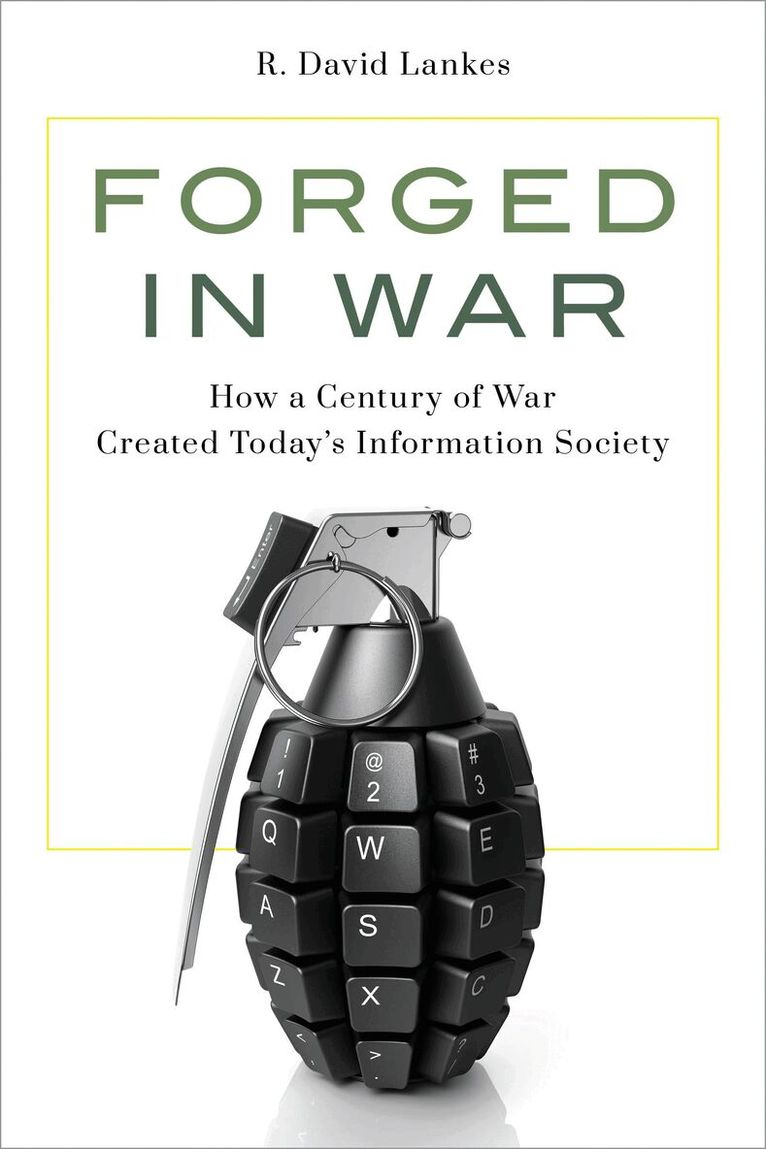
    Forged in War

    How a Century of War Created Today’s Information Society

    AvR. David Lankes

    Inbunden, Engelska, 2021

    465 kr

    Beställningsvara. Skickas inom 10-15 vardagar. Fri frakt över 249 kr.

    Fler format och utgåvor

    Häftad

    293 kr

    Beskrivning

    "[I]deal for readers seeking a more comprehensive look at information dissemination technology, its context, and its impact on the way in which we now live." Library Journal, Starred ReviewMany of what we think of as Information Age tools and media — computers, cell phones, the internet, encryption, and more — evolved directly out of modern warfare. These tools started with World War I (which began not with arms, but with England cutting off underwater cables to Germany and isolating it), accelerated through World War II and the Cold War, and now play a center role in both declared and non-declared conflicts like election interference and cyberbattles.We buy phones and smart speakers because they are new and unlock great potential. Voice assistants like Siri and Alexa help us do our work and answer that one piece of trivia that bugs us. Yet these devices are data gatherers. They collect, repackage, and monetize our questions, purchases, photographs, web surfing to form a data industry now larger than the oil industry. Well over 100 years ago the data industry put in place a business model that trades our attention for news and entertainment. That model has evolved into a complex art and science of message targeting and content ownership that has splintered communities while simultaneously concentrating media ownership to a few massive corporations. Forged in War takes a critical look at the systems we use and how we ended up in a society that values data over personal liberty and commerce over the public good. It tells a compelling and previously story of how our ideas of information and knowledge reflect the century of war that has militarized our worldview.Author David Lankes’s work has been funded by organizations such as The MacArthur Foundation, The Institute for Library and Museum Services, NASA, The U.S. Department of Education, The U.S. Department of Defense, The National Science Foundation, and The U.S. State Department. This, his latest book will help all of us learn how war has shaped our world and how to begin to create an agenda to stand down weaponized data and a media that seeks to own our personal, even intimate data like one owns a gold mine.

    Produktinformation

    • Utgivningsdatum:2021-05-15
    • Mått:162 x 238 x 28 mm
    • Vikt:590 g
    • Format:Inbunden
    • Språk:Engelska
    • Antal sidor:304
    • Förlag:Bloomsbury Publishing Plc
    • ISBN:9781538148952

    Utforska kategorier

    • Historia: särskilda händelser och ämnen inom Historia och arkeologi
    • Medievetenskap inom Samhälle och politik
    • Referensverk och tvärvetenskap inom Samhälle och politik

    Mer om författaren

    R. David Lankes is a professor and the director of the University of South Carolina’s School of Library and Information Science. Lankes has always been interested in combining theory and practice to create active research projects that make a difference. His work has been funded by organizations such as The MacArthur Foundation, The Institute for Library and Museum Services, NASA, The U.S. Department of Education, The U.S. Department of Defense, The National Science Foundation, The U.S. State Department, and The American Library Association.Lankes is a passionate advocate for libraries and their essential role in today’s society, earning him the American Library Association’s Ken Haycock Award for Promoting Librarianship in 2016. He also seeks to understand how information approaches and technologies can be used to transform industries. In this capacity he has served on advisory boards and study teams in the fields of libraries, telecommunications, education, and transportation including at the National Academies. He has been a visiting fellow at the National Library of Canada, The Harvard School of Education, and was the first fellow of ALA’s Office for Information Technology Policy. His book The Atlas of New Librarianship won the 2012 ABC-CLIO/Greenwood Award for the Best Book in Library Literature.

    Recensioner i media

    With this latest book, Lankes tells the history of several high-level technologies that are popular in the 21st century. He writes that data and media were supposed to bring communities together, yet they have often does the opposite. In this wide-ranging account, the author reexamines the histories of mobile phones, the internet, data (and its collection), web standards such as HTML, and more. He sheds light on the downsides of the information world we live in now, such as data monetization, attacks on privacy, and erosion of widespread public trust in information sources. In a manner similar to previous works on the subject, Lankes clearly argues that technology, data, and information sharing have human bias and are not objective. After detailing the rise of misinformation and disinformation, as well as the history of public libraries in the 20th century, Lankes concludes his multifaceted, intelligent work with the comment that his book is itself a context-based effort. This most recent book by Lankes is ideal for readers seeking a more comprehensive look at information dissemination technology, its context, and its impact on the way in which we now live.

    Innehållsförteckning

    • Table of ContentsIntroduction: From Alert to a Promise to the ReaderDataChapter 1 Common Carriers: From Telegraphs to Internet Kill SwitchesChapter 2 Encryption: From Zimmerman to the Monetized SelfChapter 3 Massive Scale Computing: From Depth Bombs to Deep LearningChapter 4 The Internet: From Hydrogen Bombs to 5GChapter 5 The World Wide Web: From CERN to Facial RecognitionChapter 6 Dataism: From Reducing Noise to Reducing PeopleData Waypoint: The Span of the Knowledge InfrastructureMediaChapter 7 Propaganda: From Influencing Minds to Manipulating BrainsChapter 8 Memory Organizations: From Weaponized Librarianship to a Digital Dark AgeFrom Collecting Books to Collecting IntelligenceChapter 9 Media Consolidation: From Steamboat Willie to Disney +Chapter 10 Trust: From Walter Cronkite to Saul AlinskyMedia Waypoint: The Weaponized Knowledge InfrastructureSocietyChapter 11 Certainty: From Clockwork to ComplexityChapter 12 Pandemic: From the Spanish Flu to COVID-19Chapter 13 People: From Empty Campuses to Open ArmsChapter 14 Technology: From Zoom Bombs to the Shin BetChapter 15 Sources: From Swans in Venice to Floods in New OrleansChapter 16 Policy: From a Commodity to a Public GoodChapter 17 A Choice: From Chemical Warfare to Healing the WorldSociety Waypoint: From Chemical Warfare to Healing the WorldExcursus: On the Joys of Writing and How to Check My FactsAbout the Author