Inbunden, Engelska, 2022
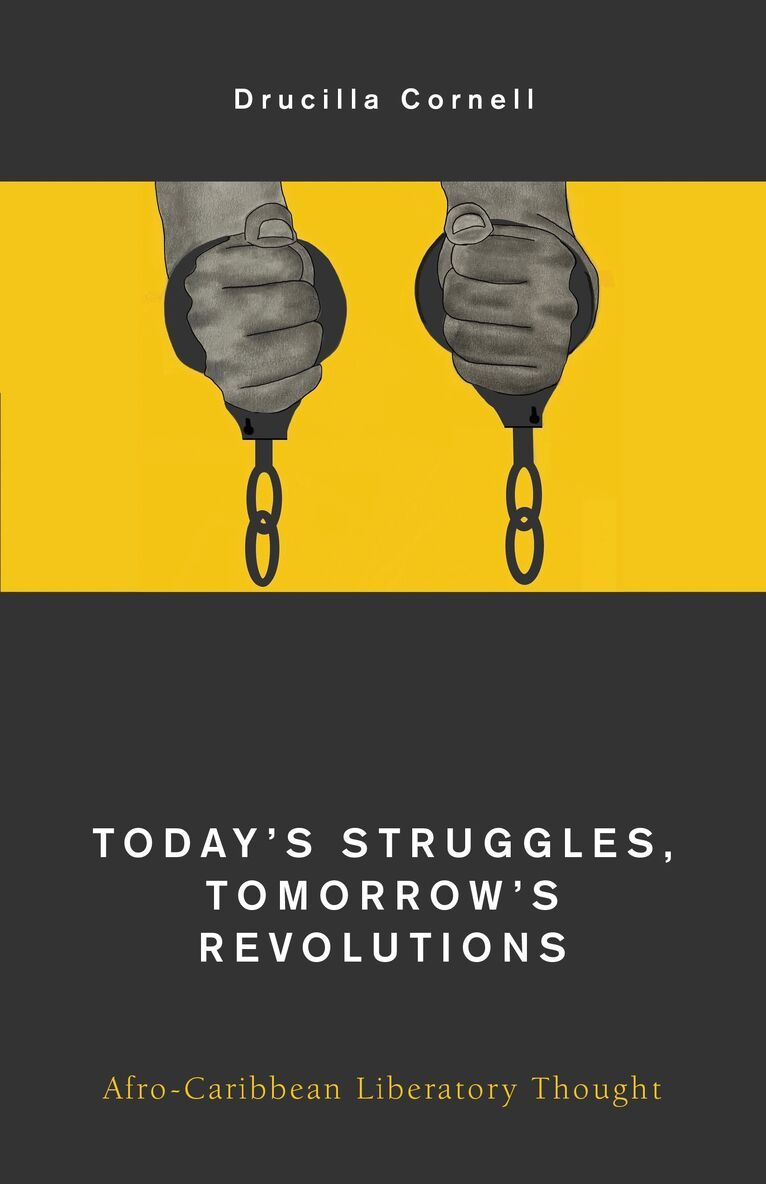
Today's Struggles, Tomorrow's Revolutions
Afro-Caribbean Liberatory Thought
Del i serien Global Critical Caribbean Thought
1133 kr
Beställningsvara. Skickas inom 10-15 vardagar. Fri frakt över 249 kr.
Beskrivning
Produktinformation
- Utgivningsdatum: 2022-10-26
- Mått: 148 x 223 x 18 mm
- Vikt: 363 g
- Format: Inbunden
- Språk: Engelska
- Serie: Global Critical Caribbean Thought
- Antal sidor: 154
- Förlag: Bloomsbury Publishing Plc
- ISBN: 9781538168486
Utforska kategorier
Mer om författaren
Drucilla Cornell was a distinguished Professor Emerita of Political Science, Women’s and Gender Studies, and Comparative Literature at Rutgers University as well as Professor Extraordinaire of Law at the University of Pretoria (South Africa) and visiting professor at Birkbeck, University of London. She was the author and editor of over twenty books and numerous articles and was widely influential in the fields of feminist theory, legal theory, Continental philosophy, and South African jurisprudence. Her most prominent books include Beyond Accommodation: Ethical Feminism, Deconstruction, and the Law (1991; 2nd ed: 1999); The Philosophy of the Limit (1992); The Imaginary Domain: Abortion, Pornography & Sexual Harassment (1995); Moral Images of Freedom (2008); Clint Eastwood and Issues of American Masculinity (2009); and Law and Revolution in South Africa (2014). She was also the director of the uBuntu Project, a research and advocacy project into the role of indigenous values in the new constitutional dispensation in South Africa, which she founded in 2002.
Recensioner i media
Across four chapters and a conclusion, Cornell explores revolutions involving diverse nations, theorists, and writers. The introduction details racism, decolonization, socialism, and the queer movement’s role in forging revolutions and mentions many renowned theorists, including Toni Morrison. The first chapter examines violence and nonviolence using theories of Frantz Fanon, Max Weber, Thomas Hobbes, Hannah Arendt, Angela Davis, and Étienne Balibar, who propose collective action to address ethnic and political struggles and violence. Citing C. L. R. James's socialist ideology, the second chapter recounts revolutions in Europe and Black liberations. The following chapter addresses revolutions and organizations and considers the role of political parties in insurrections. The final chapter centers on feminism, particularly Black feminism, and mentions the works of Barbara Smith and bell hooks. Another focus of the book is on ethics and morals and includes citations from Immanuel Kant, Carol Gilligan, and Lawrence Kohlberg. The conclusion, “Tomorrow’s Revolution,” sounds the revolutionary call for democratic socialism. Recommended. Undergraduates through faculty and general readers.
Betyg & recensioner
0 recensioner
Inga recensioner tillgängliga.