• Fri frakt över 249 kr
  • •
  • Snabba leveranser
  • •
  • Billiga böcker
Kundservice

Du är på sajten för privatpersoner.

Företag, bibliotek eller offentlig verksamhet?

Du handlar på classic.bokus.com, där alla dina funktioner finns intakta.
Till classic.bokus.com
Bokus logotyp. Gå till startsidan.
  • Erbjudanden
  • Student
  • Topplistor
  • Barn & ungdom
  • Bokus Play
  • E-böcker
  • Ljudböcker
  • Pocketböcker
  • Spel & pussel

Upp till 25% på utvalda nyheter →

Sidfot

Mina sidor

    Hjälp

    • Kundservice
    • Vanliga frågor och svar
    • Frakt och leverans
    • Retur vid ångerrätt
    • Reklamera vara
    • Betalning
    • Köpvillkor
    • Allmänna villkor
    • Information om webbplatsens tillgänglighet

    Om Bokus

    • Om oss
    • Pressrum
    • För studenter
    • För företag
    • För bibliotek och offentlig verksamhet
    • För leverantörer
    • Hållbarhet

    Populärt

    • Aktuella erbjudanden
    • Presentkort
    • Studentlitteratur
    • Nya böcker
    • Topplistor
    • Signerade böcker
    • Engelska böcker

    Inspiration

    • Boktips
    • BookTok
    • Populära bokserier
    • Barnbokskaraktärer
    • Populära författare
    Logotyp för Bokus
    Följ oss på Facebook (extern länk)Följ oss på Instagram (extern länk)Följ oss på YouTube (extern länk)Följ oss på TikTok (extern länk)
    bokus @ CookiesAnpassa cookiesIntegritetspolicyKöpvillkor
    Till Citymail hemsida (extern länk)Till Budbee hemsida (extern länk)Till Postnord hemsida (extern länk)Till Schenker hemsida (extern länk)Till Early Bird hemsida (extern länk)Till Walleys hemsida (extern länk)
    1. Historia och arkeologi
    2. Arkeologi

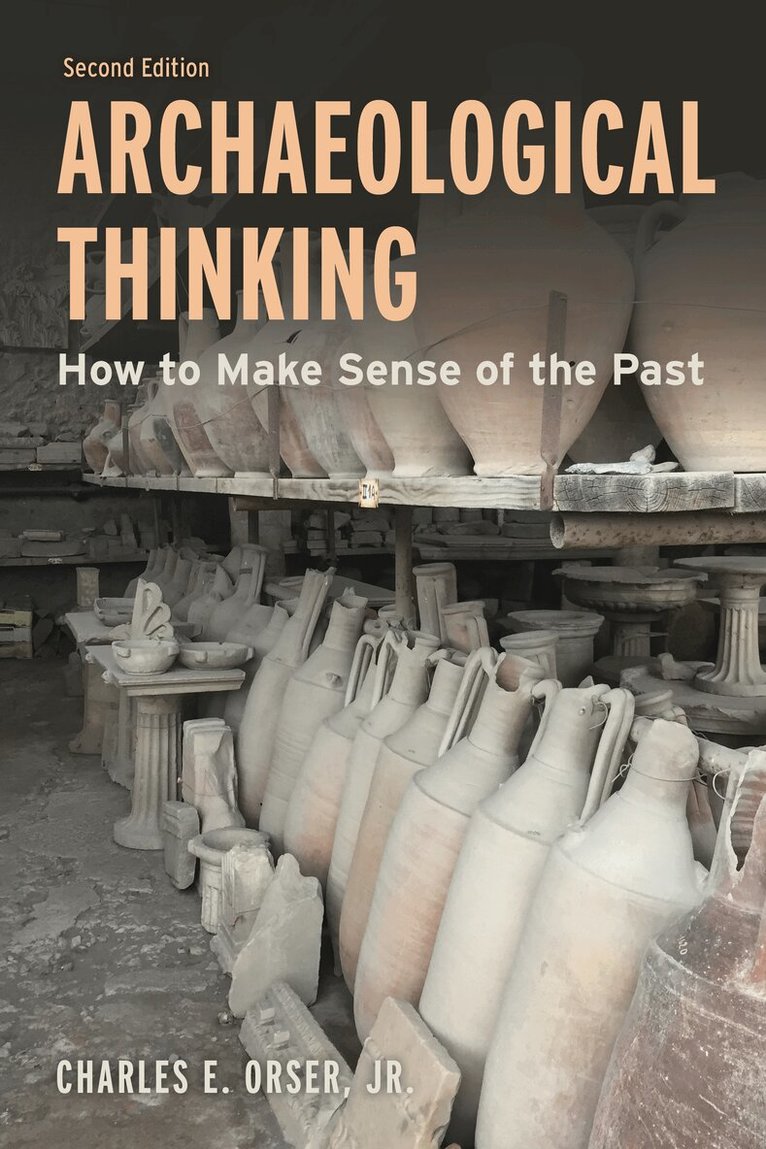
    Archaeological Thinking

    How to Make Sense of the Past

    AvCharles E. Orser Jr.

    Häftad, Engelska, 2023

    465 kr

    Beställningsvara. Skickas inom 10-15 vardagar. Fri frakt över 249 kr.

    Fler format och utgåvor

    Inbunden

    1 008 kr

    E-bok

    499 kr

    Beskrivning

    How do archaeologists think? How do archaeologists take the scattered and fragmentary remains collected from past settlements and create meaningful, reasonable interpretations of past human history? In the second edition of Archaeological Thinking, Charles E. Orser, Jr. provides answers to these questions and more by explaining in non-technical language the most basic elements of critical thinking in archaeology. This book explores and explains such topics as:the use of logic in framing argumentsthe curious issue of fact selectionthe use of analogiesthe role of archaeology in contemporary society and among present-day communitiesapproaches to understanding the pastand the dangers of deceitful archaeological thinking.Examples taken from the world of ancient aliens, mythical sunken cities, and mysterious creatures help readers learn how to separate reality from fiction regardless of their desire to become a professional archaeologist.

    Produktinformation

    • Utgivningsdatum:2023-07-18
    • Mått:152 x 229 x 11 mm
    • Vikt:295 g
    • Format:Häftad
    • Språk:Engelska
    • Antal sidor:196
    • Upplaga:2
    • Förlag:Bloomsbury Publishing Plc
    • ISBN:9781538177235

    Utforska kategorier

    • Arkeologi inom Historia och arkeologi
    • Samhälle och kultur inom Samhälle och politik
    • Referensverk och tvärvetenskap inom Samhälle och politik

    Mer om författaren

    Charles E. Orser, Jr. is an anthropological archaeologist who investigates the modern world as it was created after about 1492. A retired Distinguished Professor at Illinois State University, he is now affiliated with the School of Human Evolution and Social Change at Arizona State University. He is the author of one hundred professional articles and several books and is the founder and editor of the International Journal of Historical Archaeology.

    Recensioner i media

    The second edition of Orser’s Archaeological Thinking has been significantly updated and enhanced from the 2015 edition (CH, May'15, 52-4848). It retains the first edition's focus on using archaeological examples to promote critical thinking. Orser wisely continues to use examples from pseudo-historical or pseudoscientific theories and ideas that have become part of popular culture. In this second edition, he includes examples from the Ancient Aliens TV series, which prodigiously uses archaeological sites and discoveries to bolster its dubious contentions. The Netflix documentary Ancient Apocalypse (2022) gets a timely mention as one of the book’s examples of dubious scholarship, although a detailed critique would have provided a fine demonstration of critical thinking. Another useful addition is the up-to-date and concise account of the Kennewick Man controversy which pitted Native American religious beliefs against anthropologists. The second edition contains 10 chapters, of which four are new. Two chapters from the first edition have been dropped. Orser also provides an excellent discussion of the various schools of archaeological thought in the new chapter 7. Any library looking to build up its resources on critical thinking and archaeology will want to add this new edition to its collections. Recommended. Undergraduates and graduate students

    Innehållsförteckning

    • PrefaceChapter 1. Thinking in ArchaeologyA Question of Belief?Science and HistoryThinking to Some PurposeThe Process of Clear ThinkingSources for Continued ReadingChapter 2. A Brief History of Archaeological ThinkingThe Early YearsThe Middle YearsThe Recent YearsSeriationThe Conjunctive ApproachPostmodern ThinkingArchaeological Thinking in the New MillenniumSources for Continued Reading Chapter 3. Archaeology and the Evaluation of ClaimsSEARCHingStep 1: State the ClaimStep 2: Examine the EvidenceStep 3: Consider Alternative ClaimsStep 4: Rate each ClaimPlausibilityThe Exeter MysteryThe On-Going Battle Between Evidence and PerspectiveSources for Continued ReadingChapter 4. Understanding and Selecting FactsFact SelectionIs Fact Selection Dishonest?Clovis PointsGlass Trade BeadsSources for Continued ReadingChapter 5. Archaeological Thinking and LogicThe Importance of Logical ThinkingDeductionInductionAbductionSources for Continued ReadingChapter 6. Analogy and Archaeological ThinkingArchaeologists and AnalogyArtifact Analogies Ethnographic AnalogiesThe Direct Historical ApproachMore Recent Comparative Ethnographic AnalogyEvaluating Analogy StrengthWhat Is the Purpose of Analogy in Archaeology?Sources for Continued ReadingChapter 7. Thinking with ThingsA Cultural Systems ApproachA Behavioral ApproachA Commodities ApproachA Semiotics ApproachA Social Activism ApproachSources for Continued Reading Chapter 8. Deceitful Archaeological ThinkingGreat Zimbabwe and Silencing the African PastPseudo-archaeology in Nazi HandsThe Dangers of Deceitful Archaeological ThinkingSources for Continued Reading Chapter 9. Archaeological Thinking in PublicBones of ContentionThe Cheyenne Outbreak of 1879Timbuctoo, New JerseySources for Continued ReadingChapter 10. Archaeological Thinking for the Twenty-First CenturySources for Continued Reading