• Fri frakt över 249 kr
  • •
  • Snabba leveranser
  • •
  • Billiga böcker
Kundservice

Du är på sajten för privatpersoner.

Företag, bibliotek eller offentlig verksamhet?

Du handlar på classic.bokus.com, där alla dina funktioner finns intakta.
Till classic.bokus.com
Bokus logotyp. Gå till startsidan.
  • Erbjudanden
  • Nyheter
  • Student
  • Topplistor
  • Barn & ungdom
  • Bokus Play
  • E-böcker
  • Pocketböcker
  • Spel & pussel

10% rabatt på allt med kod: NYSTART10 →

Sidfot

Mina sidor

    Hjälp

    • Kundservice
    • Vanliga frågor och svar
    • Frakt och leverans
    • Retur vid ångerrätt
    • Reklamera vara
    • Betalning
    • Köpvillkor
    • Allmänna villkor
    • Information om webbplatsens tillgänglighet

    Om Bokus

    • Om oss
    • Pressrum
    • För studenter
    • För företag
    • För bibliotek och offentlig verksamhet
    • För leverantörer
    • Hållbarhet

    Populärt

    • Aktuella erbjudanden
    • Presentkort
    • Studentlitteratur
    • Nya böcker
    • Topplistor
    • Signerade böcker
    • Engelska böcker

    Inspiration

    • Boktips
    • BookTok
    • Populära bokserier
    • Barnbokskaraktärer
    • Populära författare
    Logotyp för Bokus
    Följ oss på Facebook (extern länk)Följ oss på Instagram (extern länk)Följ oss på YouTube (extern länk)Följ oss på TikTok (extern länk)
    bokus @ CookiesAnpassa cookiesIntegritetspolicyKöpvillkor
    Till Citymail hemsida (extern länk)Till Budbee hemsida (extern länk)Till Postnord hemsida (extern länk)Till Schenker hemsida (extern länk)Till Early Bird hemsida (extern länk)Till Walleys hemsida (extern länk)
    1. Psykologi och pedagogik
    2. Psykologi
    3. Åldrandets psykologi

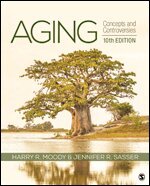
    Aging

    Concepts and Controversies

    AvHarry R. Moody,Jennifer R. Sasser

    Häftad, Engelska, 2025

    1 838 kr

    Beställningsvara. Skickas inom 5-8 vardagar. Fri frakt över 249 kr.

    Beskrivning

    Winner of the 2022 Textbook & Academic Authors Association's The McGuffey Longevity Award

    Aging: Concepts and Controversies is structured to encourage a style of teaching and learning that goes beyond conveying facts and methods. This innovative text focuses on controversies and questions rather than on assimilating facts or creating a single “correct” view about aging or older people. Drawing on their extensive expertise, authors Harry R. Moody and Jennifer R. Sasser first provide an overview of aging in three domains: aging over the life course, health care, and socioeconomic trends. Each section then includes data and conceptual frameworks, helping students to make sense of the controversies and understand their origin, engage in critical thinking, and develop their own views. The Tenth Edition of this hallmark textbook includes amplified discussions focused on differences, diversity, structural inequalities, and inclusion, as well as contemporary issues, including climate change and immigration.


    Included with this title:

    The password-protected Instructor Resource Site (formally known as SAGE Edge) offers access to all text-specific resources, including a test bank and editable, chapter-specific PowerPoint® slides.

    Produktinformation

    • Utgivningsdatum:2025-05-12
    • Mått:187 x 231 x undefined mm
    • Vikt:1 080 g
    • Format:Häftad
    • Språk:Engelska
    • Antal sidor:640
    • Upplaga:10
    • Förlag:SAGE Publications
    • ISBN:9781544371719

    Utforska kategorier

    • Åldrandets psykologi inom Psykologi och pedagogik
    • Sociala grupper och identitet inom Samhälle och politik
    • Barnpsykologi och utvecklingspsykologi inom Psykologi och pedagogik

    Mer om författaren

    Harry R. Moody is a graduate of Yale University and received his Ph.D. in philosophy from Columbia University. He has taught philosophy at Columbia University, Hunter College, New York University, and the University of California at Santa Cruz.  He recently retired as Vice President and Director of Academic Affairs for AARP in Washington, DC.  He is currently Visiting Professor at Tohoku University in Japan, and Distinguished Visiting Professor at Fielding Graduate University.  Dr. Moody previously served as Executive Director of the Brookdale Center on Aging at Hunter College and Chairman of the Board of Elderhostel (now Road Scholar). Moody is the author of over 100 scholarly articles, as well as a number of books including: Abundance of Life: Human Development Policies for an Aging Society (Columbia University Press, 1988) and Ethics in an Aging Society (Johns Hopkins University Press, 1992). His most recent book, The Five Stages of the Soul, was published by Doubleday Anchor Books and has been translated into seven languages worldwide.  He is the editor of a newsletter, "Human Values in Aging," reaching 10,000 subscribers each month. In 2011 he received the Lifetime Achievement Award from the American Society on Aging and in 2008 he was named by Utne Reader Magazine as one of  “50 Visionaries Who Are Changing Your World.”Jennifer R. Sasser is Chair and Associate Professor in the Department of Human Sciences at Marylhurst University in Portland, Oregon, where she coordinates the gerontology program. She joined the Marylhurst faculty in 1997 and since that time has been involved in the design and implementation of many on-campus and Web-based courses and programs for adult learners, including the graduate and undergraduate certificate programs in gerontology. While conducting her doctoral work at Oregon State University, she was a graduate teaching and research fellow, as well as the first recipient of the AARP/Andrus Foundation Graduate Fellowship in Gerontology. Over the past 20 years, Dr. Sasser has studied and written about creativity in later life; older women’s embodiment; critical gerontological theory; and transformational adult learning practices. She served on the Oregon Gerontological Association Board of Directors starting in 2005 and was President of the Board for three years. In 2012, she received a Distinguished Teacher award from the Association for Gerontology in Higher Education.

    Recensioner i media

    "[Moody and Sasser] is very relevant and relatable for the graduate students. They appreciate the diverse perspectives on various issues affecting the aging population."

    Innehållsförteckning

    • PrefaceAcknowledgmentsAbout the AuthorsPart 1: Basic Concepts I. A Life Course Perspective on AgingAge IdentificationThe Stages of LifeThe Life Course and AgingTraditional Theories of AgingInfluences on the Life CourseAging in the 21st CenturyThe Biology of AgingAging and Psychological FunctioningConclusionChapter 1: Controversy 1. Does Old Age Have Meaning?The Meaning of AgeLeisure Activities in Later LifeReligion and SpiritualityGerontology and the Meaning of AgeActivity or Reflection?Questions for Writing, Reflection, and DebateChapter 2: Controversy 2. Why Do Our Bodies Grow Old?The Process of Biological AgingBiological Theories of AgingIs Aging Inevitable?Compression or Prolongation of Morbidity?Questions for Writing, Reflection, and DebateChapter 3: Controversy 3. Do Intelligence and Creativity Decline With Age?Elements of Cognitive FunctionThe Classic Aging PatternMeasures of Late-Life IntelligenceStudies of Age and Cognitive FunctionCorrelates of Cognitive StabilityCreativity in an Aging PopulationQuestions for Writing, Reflection, and DebatePart 2: Basic Concepts II. Aging, Health Care, and SocietyThe Challenge of LongevityEpidemiology of AgingEconomics of Health CareLong-Term CareSelf-Determined DeathConclusionChapter 4: Controversy 4. Should We Ration Health Care for Older People?Precedents for Health Care RationingThe Justification for Age-Based RationingRationing as a Cost-Saving PlanThe Impetus for RationingCost Versus AgeAlternative Approaches to RationingEuthanasia and Assisted SuicideThe Debate Over Age-Based RationingQuestions for Writing, Reflection, and DebateChapter 5: Controversy 5. Should Families Provide for Their Own?Aging and the American FamilyAbandonment or Independence?Family ResponsibilityMedicaid and Long-Term CareFinancing Long-Term CareMedicaid PlanningQuestions for Writing, Reflection, and DebateChapter 6: Controversy 6. Should Older People Be Protected From Bad Choices?The Vulnerabilities of Older PeopleInterfering When People Make Bad ChoicesElder Abuse and MistreatmentPerceptions of Quality of LifeSexuality in Later LifeCrime and Older AdultsIntervention in the Lives of Vulnerable Older AdultsQuestions for Writing, Reflection, and DebateChapter 7: Controversy 7. Should People Have the Choice to End Their Lives?Depression and SuicideThe “Right to Die”Outlook for the FutureQuestions for Writing, Reflection, and DebatePart 3: Basic Concepts III. Social and Economic Outlook for an Aging SocietyThe Varieties of Aging ExperienceThe Economic Status of Older AmericansPublic Policy on AgingConclusionChapter 8: Controversy 8. Should Age or Need Be the Basis for Entitlement?A Tale of Two GenerationsJustice Between GenerationsThe Least-Advantaged Older AdultsHelp for Those Most in NeedThe Targeting DebateQuestions for Writing, Reflection, and DebateChapter 9: Controversy 9. What Is the Future for Social Security?Main Features of Social SecuritySuccess—and DoubtPay as You GoSocial Security Trust FundEligibilityPrivatizationWomen and Social SecurityDebate Over Social SecurityQuestions for Writing, Reflection, and DebateChapter 10: Controversy 10. Is Retirement Obsolete?History of RetirementOrigins of Late-Life LeisureChanges in the American EconomyA New View of RetirementDebate Over Retirement PolicyQuestions for Writing, Reflection, and DebateChapter 11: Controversy 11. Aging Boomers: Boom or Bust?Who Are the Boomers?What Is a Generation? Age-Period-Cohort AnalysisSocial Construction of the Boomer PhenomenonBoomers in the Years AheadQuestions for Writing, Reflection, and DebateChapter 12: Controversy 12. The New Aging Marketplace: Hope or Hype?The New Customer MajorityMarket Sectors Likely to GrowWhat Do Older Consumers Want?Limits of the Marketplace ModelQuestions for Writing, Reflection, and DebateEpilogue: Finding Your Place in an Aging SocietyAppendix: Tips for Conducting Your Own Research in GerontologyGlossaryBibliographyIndex