• Fri frakt över 249 kr
  • •
  • Snabba leveranser
  • •
  • Billiga böcker
Kundservice

Du är på sajten för privatpersoner.

Företag, bibliotek eller offentlig verksamhet?

Du handlar på classic.bokus.com, där alla dina funktioner finns intakta.
Till classic.bokus.com
Bokus logotyp. Gå till startsidan.
  • Erbjudanden
  • Student
  • Topplistor
  • Barn & ungdom
  • Bokus Play
  • E-böcker
  • Ljudböcker
  • Pocketböcker
  • Spel & pussel

10% rabatt på allt med kod NYSTART10 →

Sidfot

Mina sidor

    Hjälp

    • Kundservice
    • Vanliga frågor och svar
    • Frakt och leverans
    • Retur vid ångerrätt
    • Reklamera vara
    • Betalning
    • Köpvillkor
    • Allmänna villkor
    • Information om webbplatsens tillgänglighet

    Om Bokus

    • Om oss
    • Pressrum
    • För studenter
    • För företag
    • För bibliotek och offentlig verksamhet
    • För leverantörer
    • Hållbarhet

    Populärt

    • Aktuella erbjudanden
    • Presentkort
    • Studentlitteratur
    • Nya böcker
    • Topplistor
    • Signerade böcker
    • Engelska böcker

    Inspiration

    • Boktips
    • BookTok
    • Populära bokserier
    • Barnbokskaraktärer
    • Populära författare
    Logotyp för Bokus
    Följ oss på Facebook (extern länk)Följ oss på Instagram (extern länk)Följ oss på YouTube (extern länk)Följ oss på TikTok (extern länk)
    bokus @ CookiesAnpassa cookiesIntegritetspolicyKöpvillkor
    Till Citymail hemsida (extern länk)Till Budbee hemsida (extern länk)Till Postnord hemsida (extern länk)Till Schenker hemsida (extern länk)Till Early Bird hemsida (extern länk)Till Walleys hemsida (extern länk)
    1. Psykologi och pedagogik
    2. Pedagogik
    3. Pedagogisk metodik

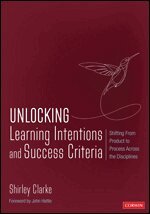
    Unlocking: Learning Intentions

    Shifting From Product to Process Across the Disciplines

    AvShirley Clarke

    Häftad, Engelska, 2021

    Del i serien Corwin Teaching Essentials

    406 kr

    Beställningsvara. Skickas inom 5-8 vardagar. Fri frakt över 249 kr.

    Beskrivning

    The expert’s guide to making LISC work for you!

    Learning intentions and success criteria can have an enormous positive impact on student learning—you know that, in theory. This practical how-to guide helps turn that theory into practice.

    In over twenty years of research, Shirley Clarke has found that the key to understanding, creating, and implementing learning intentions and success criteria is to focus on the process of learning rather than the product, or end result. Here she shows you:

    • How to phrase learning intentions, organize and plan for them, and share them with students
    • How to create success criteria to fit each learning intention
    • How to adapt these practices to different disciplines—with examples
    • Implementation strategies based on real-life teacher success stories

    Let the expert do the research for you. With Shirley’s guidance, you’ll discover a simple process that leads to teacher clarity—and student success.

    Produktinformation

    • Utgivningsdatum:2021-05-13
    • Mått:177 x 254 x 15 mm
    • Vikt:320 g
    • Format:Häftad
    • Språk:Engelska
    • Serie:Corwin Teaching Essentials
    • Antal sidor:176
    • Upplaga:1
    • Förlag:SAGE Publications
    • ISBN:9781544399683

    Utforska kategorier

    • Pedagogisk metodik inom Psykologi och pedagogik

    Mer om författaren

    SHIRLEY CLARKE (M.ED., HON.DOC) is a world expert in formative assessment, specializing in the practical application of its principles. Many thousands of teachers have worked with Shirley or read her books and, through them, the practice of formative assessment is continually evolving, developing and helping to transform students’ achievements.Shirley’s latest publications are Visible Learning Feedback with John Hattie and Thinking Classrooms with Katherine Muncaster Her website www.shirleyclarke-education.org contains a videostreaming platform of clips of formative assessment in action as well as detailed feedback from her action research teams.

    Innehållsförteckning

    • ForewordPrefaceThe Background and Lead-Up to This BookHow This Book Is OrganizedAcknowledgmentsPART I: SETTING THE SCENEChapter 1: Summary of the Key MessagesWhy the Move From Product to Process?What We Know About Learning Intentions and Success CriteriaChapter 2: Learning, Not Doing: The EvidenceClarityKnowing How to Get ThereThe Evidence for Learning Intentions and Success CriteriaPART II: LEARNING INTENTIONS: A CLOSER LOOKChapter 3: Planning the LearningThe Big PictureKnowledge and SkillsThe Differences in Planning for Primary and SecondaryGetting the Wording RightChapter 4: Sharing Learning Intentions With the StudentsIn-Lesson OrganizationIn-Lesson Feedback and EvaluationThe Impact of Sharing and Clarifying Learning IntentionsPART III: SUCCESS CRITERIA: A CLOSER LOOKChapter 5: Process Success Criteria: A Framework for Learning and Self-RegulationDefining Process Success CriteriaPlanning Process Success Criteria for SkillsWriting Learning Intentions and the Implications for Their Success CriteriaInclude Knowledge Key Points Alongside Skill Success CriteriaEverlasting Learning IntentionsChapter 6: Co-Constructing Success CriteriaWhy Take the Time to Co-Construct?Strategies for Whole-Class Co-ConstructionExamples of Co-Constructed Success Criteria Across All Ages and SubjectsWhat Happens to the Co-Constructed Success Criteria?The Impact of Co-Constructed Process Success CriteriaChapter 7: Planning a LessonFollow the Path for Skills, Knowledge, or BothHow Do Learning Intentions and Success Criteria Work in the Flow of a Lesson?PART IV: DIFFERENCES BETWEEN SUBJECTSChapter 8: Literacy: WritingPlanning Graphic for WritingSkills—Open or ClosedExamples of Literacy Skills With Knowledge LinksBreaking Down Success Criteria for Closer FocusThe Critical Issue of Quality and Knowing What Good Examples Look LikeComparing Good and Poor ExamplesHow to Compare and Analyze Contrasting Examples of the Previous Class’s WritingChapter 9: MathematicsPlanning GraphicExamples of Lesson-Based Skill Learning Intentions and Process Success CriteriaIntervention When Students Need More SupportWorked Examples and the Use of Success CriteriaDon’t Have Too Many Criteria!Incorporating Decision-MakingStudents Create Their Own Success CriteriaFrom Specific Skill Teaching to Application Problem-SolvingChapter 10: ScienceThe Planning GraphicFrom Primary to SecondaryGiving the Game AwayExamples of Science Learning Intentions and Success CriteriaChapter 11: History and GeographyHistory ExamplesGeography ExamplesChapter 12: Examples From Other SubjectsArtMusicDramaDesign TechnologyPART V: IMPLEMENTATIONChapter 13: Whole-School DevelopmentA Culture for ChangeSupport of School LeadersResourcingStaff MeetingsTimescale: What Should We Do First, Next, and So On?Whole-School SuccessChapter 14: Teachers’ Anecdotes About Implementing These StrategiesAnecdotes From Teachers in Learning Teams From 2017 Through 2020 . . .Final WordsReferencesIndex