• Fri frakt över 249 kr
  • •
  • Snabba leveranser
  • •
  • Billiga böcker
Kundservice

Du är på sajten för privatpersoner.

Företag, bibliotek eller offentlig verksamhet?

Du handlar på classic.bokus.com, där alla dina funktioner finns intakta.
Till classic.bokus.com
Bokus logotyp. Gå till startsidan.
  • Erbjudanden
  • Nyheter
  • Student
  • Topplistor
  • Barn & ungdom
  • Bokus Play
  • E-böcker
  • Pocketböcker
  • Spel & pussel

10% studentrabatt med kod TERM26

Sidfot

Mina sidor

    Hjälp

    • Kundservice
    • Vanliga frågor och svar
    • Frakt och leverans
    • Retur vid ångerrätt
    • Reklamera vara
    • Betalning
    • Köpvillkor
    • Allmänna villkor
    • Information om webbplatsens tillgänglighet

    Om Bokus

    • Om oss
    • Pressrum
    • För studenter
    • För företag
    • För bibliotek och offentlig verksamhet
    • För leverantörer
    • Hållbarhet

    Populärt

    • Aktuella erbjudanden
    • Presentkort
    • Studentlitteratur
    • Nya böcker
    • Topplistor
    • Signerade böcker
    • Engelska böcker

    Inspiration

    • Boktips
    • BookTok
    • Populära bokserier
    • Barnbokskaraktärer
    • Populära författare
    Logotyp för Bokus
    Följ oss på Facebook (extern länk)Följ oss på Instagram (extern länk)Följ oss på YouTube (extern länk)Följ oss på TikTok (extern länk)
    bokus @ CookiesAnpassa cookiesIntegritetspolicyKöpvillkor
    Till Citymail hemsida (extern länk)Till Budbee hemsida (extern länk)Till Postnord hemsida (extern länk)Till Schenker hemsida (extern länk)Till Early Bird hemsida (extern länk)Till Walleys hemsida (extern länk)
    1. Språk och ordböcker
    2. Språkvetenskap och lingvistik

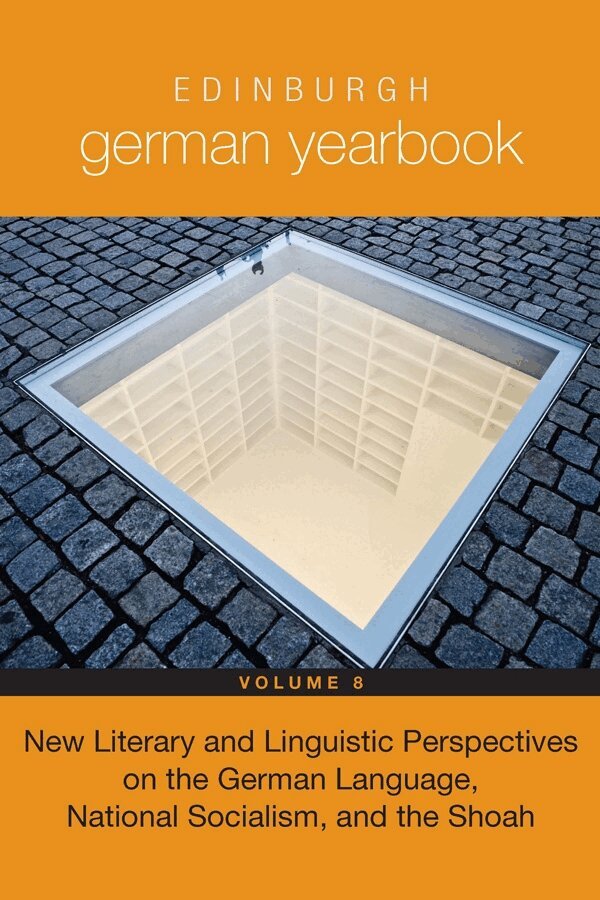
    Edinburgh German Yearbook 8

    New Literary and Linguistic Perspectives on the German Language, National Socialism, and the Shoah

    AvPeter Davies,Andrea Hammel

    Inbunden, Engelska, 2014

    Del 8 i serien Edinburgh German Yearbook

    1 261 kr

    Beställningsvara. Skickas inom 10-15 vardagar. Fri frakt över 249 kr.

    Beskrivning

    New perspectives on the relationship - or the perceived relationship - between the German language and the causes, nature, and legacy of National Socialism and the Shoah.There is seemingly no escaping the association of the language of Goethe with the language of Hitler: the two leaden clichés seem to be inseparable, suggesting a Sonderweg between enlightened sophistication and subtle beauty on the one hand and linguistic barbarism on the other. Victor Klemperer suggested that the Lingua Tertii Imperii was a perversion of German that needed to be purged from the language, but does the notion of "Nazi language" as an identifiably separate entity really hold water, or does it only reflect a desire to construct a clear demarcation line between "Germans" and "Nazis"? What new linguistic, literary, or historical perspectives are availableon the functioning of language during and after the Third Reich? Must German always be the "language of the perpetrators," entailing a constant state of heightened self-awareness or vigilance against contamination, or is neutral,objective speech about National Socialism possible in German?This collection provides new perspectives on the relationship - or the perceived relationship - between the German language in all its manifestations and the causes, nature, and legacy of National Socialism and the Shoah.Contributors: Ian Biddle and Beate Müller, Mary Cosgrove, Peter Davies, Sylvia Degen, Andrea Hammel, Geraldine Horan, Teresa Ludden, Dora Osborne, Marko Pajevic, James Parsons, Simone Schroth, Arvi Sepp, Simon Ward, Jenny Watson.Peter Davies is Professor of Modern German Studies at the University of Edinburgh. Andrea Hammel is Senior Lecturer in German at Aberystwyth University.

    Produktinformation

    • Utgivningsdatum:2014-11-28
    • Mått:152 x 229 x 25 mm
    • Vikt:586 g
    • Format:Inbunden
    • Språk:Engelska
    • Serie:Edinburgh German Yearbook
    • Antal sidor:256
    • Förlag:Boydell & Brewer Ltd
    • ISBN:9781571135971

    Utforska kategorier

    • Språkvetenskap och lingvistik inom Språk och ordböcker
    • Litteraturvetenskap inom Skönlitteratur

    Innehållsförteckning

    • Introduction: The German Language, National Socialism, and the ShoahGerman Language and National Socialism Today: Still a German "Sonderweg"?Clear Wording or "Historical" Euphemisms? Conceptual Controversies Surrounding the Naming of National Socialist Memorial Sites in Germany"Lieber, guter Onkel Hitler": A Linguistic Analysis of the Letter as a National Socialist Text-Type and a Re-evaluation of the "Sprache im/des Nationalsozialismus" Debate"German was heard so often in our Dutch home": German Nazi Refugees in the Netherlands and Their Ambivalent Relationship with Their Mother Tongue"Whose text is it anyway?" Influences on a Refugee MemoirStigma and Performance: Victor Klemperer's Language-Critical Reflections on Anti-Semitic Hate SpeechReinventing Invented Tradition: Vergangenheitsbewältigung and the Literature of Melancholy"Even the word 'und' has to be re-invented somehow": Quoting the Language of the Perpetrators in Texts by Anne Duden"Reden ist Silber, Schweigen ist Gold": German as a Site of Fascist Nostalgia and Romanian as the Language of Dictatorship in the Work of Herta MüllerThe Power of Language and Silence: Reinhard Jirgl's Die Stille"Disrupted Language, Disrupted Culture": Hanns Eisler's Hollywooder Liederbuch (1942 43)"and all of a sudden, in the middle of it, they began singing . . .": Languages and Commemoration in Arnold Schoenberg's Cantata A Survivor from Warsaw (Op. 46)Understanding a Perpetrator in Translation: Presenting Rudolf Höß, Commandant of Auschwitz, to Readers of EnglishTranslating Testimony: Jakob Littner's Typescript and the Versions of Wolfgang Koeppen and Kurt Nathan Grübler