• Fri frakt över 249 kr
  • •
  • Snabba leveranser
  • •
  • Billiga böcker
Kundservice

Du är på sajten för privatpersoner.

Företag, bibliotek eller offentlig verksamhet?

Du handlar på classic.bokus.com, där alla dina funktioner finns intakta.
Till classic.bokus.com
Bokus logotyp. Gå till startsidan.
  • Erbjudanden
  • Nyheter
  • Student
  • Topplistor
  • Barn & ungdom
  • Bokus Play
  • E-böcker
  • Pocketböcker
  • Spel & pussel

10% rabatt på allt med kod: NYSTART10 →

Sidfot

Mina sidor

    Hjälp

    • Kundservice
    • Vanliga frågor och svar
    • Frakt och leverans
    • Retur vid ångerrätt
    • Reklamera vara
    • Betalning
    • Köpvillkor
    • Allmänna villkor
    • Information om webbplatsens tillgänglighet

    Om Bokus

    • Om oss
    • Pressrum
    • För studenter
    • För företag
    • För bibliotek och offentlig verksamhet
    • För leverantörer
    • Hållbarhet

    Populärt

    • Aktuella erbjudanden
    • Presentkort
    • Studentlitteratur
    • Nya böcker
    • Topplistor
    • Signerade böcker
    • Engelska böcker

    Inspiration

    • Boktips
    • BookTok
    • Populära bokserier
    • Barnbokskaraktärer
    • Populära författare
    Logotyp för Bokus
    Följ oss på Facebook (extern länk)Följ oss på Instagram (extern länk)Följ oss på YouTube (extern länk)Följ oss på TikTok (extern länk)
    bokus @ CookiesAnpassa cookiesIntegritetspolicyKöpvillkor
    Till Citymail hemsida (extern länk)Till Budbee hemsida (extern länk)Till Postnord hemsida (extern länk)Till Schenker hemsida (extern länk)Till Early Bird hemsida (extern länk)Till Walleys hemsida (extern länk)
    1. Samhälle och politik
    2. Sociologi och antropologi
    3. Sociologi

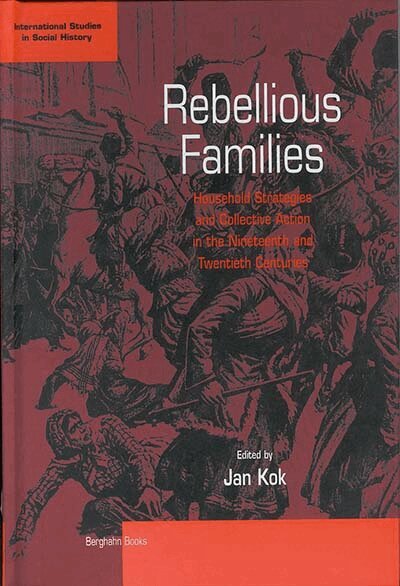
    Rebellious Families

    Household Strategies and Collective Action in the 19th and 20th Centuries

    AvJan Kok

    Häftad, Engelska, 2003

    Del i serien International Studies in Social History

    526 kr

    Beställningsvara. Skickas inom 5-8 vardagar. Fri frakt över 249 kr.

    Beskrivning

    Why do people rebel? This is one of the most important questions historians and social scientists have been grappling with over the years. It is a question to which no satisfactory answer has been found, despite more than a century of research. However, in most cases the research has focused on what people do if they rebel but hardly ever, why they rebel.The essays in this volume offer an alternative perspective, based on the question at what point families decided to add collective action to their repertoires of survival strategies, In this way this volume opens up a promising new field of historical research: the intersection of labour and family history. The authors offer fascinating case studies in several countries spanning over four continents during the last two centuries. In an extensive introduction the relevant literature on households and collective action is discussed, and the volume is rounded off by a conclusion that provides methodological and theoretical suggestions for the further exploration of this new field in social history.

    Produktinformation

    • Utgivningsdatum:2003-01-16
    • Mått:152 x 229 x 27 mm
    • Vikt:354 g
    • Format:Häftad
    • Språk:Engelska
    • Serie:International Studies in Social History
    • Antal sidor:256
    • Förlag:Berghahn Books, Incorporated
    • ISBN:9781571815293

    Utforska kategorier

    • Sociologi inom Samhälle och politik

    Mer om författaren

    Jan Kok received his doctorate from the Free University of Amsterdam where he also taught history before moving to the International Institute of Social History where he combined studies in historical demography with work on a large database, the Historical Sample of the Netherlands. Since 1999 he has also been research director of the program "Household and Labour" of the N.W. Posthumus Institute.

    Recensioner i media

    “... opens up a promising new field of historical research: the intersection of labor and family history. The authors provide insightful case studies in several countries ... [They] offer a wealth of new perspectives and disclose a number of aspects neglected by social historians ... A worthwhile and welcome book.”·  International Academy for Marital Spirituality Review"The book makes a valuable contribution to labor history by broadening the range of factors – family structure, community solidarity, and gender – that researchers need to consider when accounting for collective action. It will benefit university students as well as professional historians."   · History: Review of New Books

    Innehållsförteckning

    • List of Tables, Figures and MapsPrefaceJan KokChapter 1. IntroductionMarcel van der LindenChapter 2. Early British Labour Movements in Relation to Family NeedsEileen Janes YeoChapter 3. Weaving Survival in the Tapestry of Village Life. Strategies and Status in the Silesian Weaver Revolt of 1844Christina von HodenbergChapter 4. The Case of Clarinna Stringer: Strategic Options and the Household Economy in Late Nineteenth-Century AustraliaBruce ScatesChapter 5. Family and Unionisation in the Bricklaying Trade in Turn-of-the-Century MadridJustin ByrneChapter 6. ‘Who Will Look after the Kiddies?’ Households and Collective Action during the Dublin Lockout, 1913Theresa MoriartyChapter 7. Family Ties and Labour Activism among Silk Workers in Northeastern Pennsylvania, U.S.A., 1900–1920Bonnie StepenoffChapter 8. The Trade Union as Survival Strategy. The Case of Amsterdam Construction Workers in the First Quarter of the Twentieth CenturyHenk WalsChapter 9. High-Cost Activism and the Worker Household: Interests, Commitment, and the Costs of Revolutionary Activism in a Philippine Plantation RegionRosanne RuttenChapter 10. Retreat from Collective Protest: Household, Gender, Work and Popular Opposition in Stalinist HungaryMark PittawayChapter 11. ConclusionMarcel van der LindenNotes on ContributorsIndex