• Fri frakt över 249 kr
  • •
  • Snabba leveranser
  • •
  • Billiga böcker
Kundservice

Du är på sajten för privatpersoner.

Företag, bibliotek eller offentlig verksamhet?

Du handlar på classic.bokus.com, där alla dina funktioner finns intakta.
Till classic.bokus.com
Bokus logotyp. Gå till startsidan.
  • Erbjudanden
  • Nyheter
  • Student
  • Topplistor
  • Barn & ungdom
  • Bokus Play
  • E-böcker
  • Pocketböcker
  • Spel & pussel

10% rabatt på allt med kod NYSTART10 →

Sidfot

Mina sidor

    Hjälp

    • Kundservice
    • Vanliga frågor och svar
    • Frakt och leverans
    • Retur vid ångerrätt
    • Reklamera vara
    • Betalning
    • Köpvillkor
    • Allmänna villkor
    • Information om webbplatsens tillgänglighet

    Om Bokus

    • Om oss
    • Pressrum
    • För studenter
    • För företag
    • För bibliotek och offentlig verksamhet
    • För leverantörer
    • Hållbarhet

    Populärt

    • Aktuella erbjudanden
    • Presentkort
    • Studentlitteratur
    • Nya böcker
    • Topplistor
    • Signerade böcker
    • Engelska böcker

    Inspiration

    • Boktips
    • BookTok
    • Populära bokserier
    • Barnbokskaraktärer
    • Populära författare
    Logotyp för Bokus
    Följ oss på Facebook (extern länk)Följ oss på Instagram (extern länk)Följ oss på YouTube (extern länk)Följ oss på TikTok (extern länk)
    bokus @ CookiesAnpassa cookiesIntegritetspolicyKöpvillkor
    Till Citymail hemsida (extern länk)Till Budbee hemsida (extern länk)Till Postnord hemsida (extern länk)Till Schenker hemsida (extern länk)Till Early Bird hemsida (extern länk)Till Walleys hemsida (extern länk)
    1. Historia och arkeologi
    2. Historia
    3. Europas historia

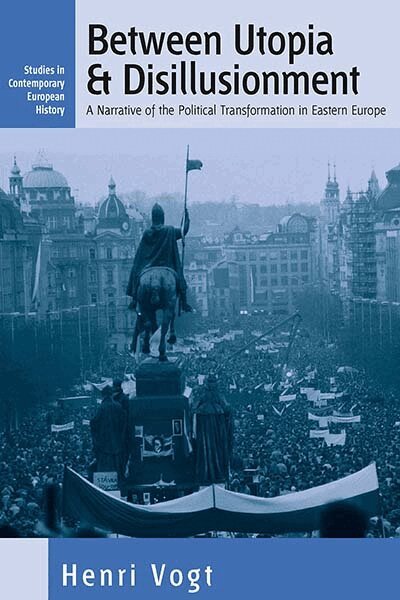
    Between Utopia and Disillusionment

    A Narrative of the Political Transformation in Eastern Europe

    AvHenri Vogt

    Inbunden, Engelska, 2004

    Del i serien Studies in Contemporary European History

    1 916 kr

    Beställningsvara. Skickas inom 5-8 vardagar. Fri frakt över 249 kr.

    Beskrivning

    Scholarly interpretations of the collapse of communism and developments thereafter have tended to be primarily concerned with people’s need to rid themselves of the communist system, of their past. The expectations, dreams, and hopes that ordinary Eastern Europeans had when they took to the streets in 1989, and have had ever since, have therefore been overlooked – and our understanding of the changes in post-communist Europe has remained incomplete. Focusing primarily on five key areas, such as the heritage of 1989 revolutions, ambivalence, disillusionment, individualism, and collective identities, this book explores the expectations and goals that ordinary Eastern Europeans had during the 1989 revolutions and the decade thereafter, and also the problems and disappointments they encountered in the course of the transformation. The analysis is based on extensive interviews with university students and young intellectuals in the Czech Republic, Eastern Germany and Estonia in the 1990s, which in themselves have considerable value as historical documents.

    Produktinformation

    • Utgivningsdatum:2004-12-16
    • Mått:152 x 229 x 24 mm
    • Vikt:649 g
    • Format:Inbunden
    • Språk:Engelska
    • Serie:Studies in Contemporary European History
    • Antal sidor:320
    • Förlag:Berghahn Books, Incorporated
    • ISBN:9781571818959

    Utforska kategorier

    • Europas historia inom Historia och arkeologi
    • Politik och statsskick inom Samhälle och politik

    Mer om författaren

    Henri Vogt is Professor of International Politics at the University of Turku, Finland. He received his doctorate from the University of Oxford, and has previously worked, inter alia, as Visiting Professor of European Studies at the University of the Saarland, Germany, and Senior Researcher at the Finnish Institute of International Affairs. His other books include A Responsible Europe? Ethical Foundations of EU External Affairs (coedited with Hartmut Mayer; Palgrave Macmillan 2006).

    Recensioner i media

    "Vogt listens, and he does it brilliantly thus providing the reader with a truly unique narrative that is both analytically deep and enjoyable to read…Thanks to Vogt's confident, forceful and lucid style, the narrative never loses its grip on the academic debate; it incorporates an enormous body of the relevant literature in political science, philosophy, cultural anthropology, and social psychology. Yet, the text clearly gives priority to what makes this study exceptional: the live experiences of Eastern Europeans."  ·  Kosmopolis. The Finnish Journal of Peace, Conflict and Global Politics Research

    Innehållsförteckning

    • List of Figures and TablesAcknowledgementsIntroductionBackgroundThe Rejection of UtopiaEmpirical Sources and NarrativityThe Structure of the StudyConcluding RemarksChapter 1. Narratives of the RevolutionsEstonia – the Singing RevolutionThe German Democratic Republic – die sanfte RevolutionCzechoslovakia – the Velvet RevolutionBy Way of ConclusionChapter 2. Revolution as a UtopiaThe Notion of UtopiaFreedomFutureConcluding RemarksChapter 3. Utopia Not Yet Fulfilled: Ambivalence after the RevolutionsPost-revolutionary AmbivalencePostmodern AmbivalenceConcluding RemarksExcursus: Ambivalence in Ivan Klíma’s Poslední stupenv du° vevrnostiChapter 4. Utopia Not Fulfilled: DisillusionmentMaterial Reasons for DisillusionmentAtomisationAlienationExcursus: Diachronic and Synchronic Alienation in Post-communistNovelsAcceptance: SacrificeConcluding RemarksChapter 5. Individualism as a UtopiaThe Notion of IndividualismIndividualism and CommunismIndividualism and Post-communismIndividualism, Politics and DemocracyChapter 6. Collective Utopias: From National Independence to EuropeNationalism and CommunismThe Idea of the Nation: Present and Not Yet PresentThe Utopian StruggleNational Identity: Universal or Particular?Concluding RemarksConclusion: Politics between Utopia and DisillusionmentUnderstanding Post-communist PoliticsThe Utopia of PoliticsFinal RemarksAppendicesThe Interviews and the Method of AnalysisThemes of the InterviewsThemes for the Czech essayistsPresident Lennart Meri’s Speeches Analysed in Chapter 6.Translations of the German Interview PassagesNotesBibliographyIndex