• Fri frakt över 249 kr
  • •
  • Snabba leveranser
  • •
  • Billiga böcker
Kundservice

Du är på sajten för privatpersoner.

Företag, bibliotek eller offentlig verksamhet?

Du handlar på classic.bokus.com, där alla dina funktioner finns intakta.
Till classic.bokus.com
Bokus logotyp. Gå till startsidan.
  • Erbjudanden
  • Nyheter
  • Student
  • Topplistor
  • Barn & ungdom
  • Bokus Play
  • E-böcker
  • Pocketböcker
  • Spel & pussel

10% rabatt på allt med kod NYSTART10 →

Sidfot

Mina sidor

    Hjälp

    • Kundservice
    • Vanliga frågor och svar
    • Frakt och leverans
    • Retur vid ångerrätt
    • Reklamera vara
    • Betalning
    • Köpvillkor
    • Allmänna villkor
    • Information om webbplatsens tillgänglighet

    Om Bokus

    • Om oss
    • Pressrum
    • För studenter
    • För företag
    • För bibliotek och offentlig verksamhet
    • För leverantörer
    • Hållbarhet

    Populärt

    • Aktuella erbjudanden
    • Presentkort
    • Studentlitteratur
    • Nya böcker
    • Topplistor
    • Signerade böcker
    • Engelska böcker

    Inspiration

    • Boktips
    • BookTok
    • Populära bokserier
    • Barnbokskaraktärer
    • Populära författare
    Logotyp för Bokus
    Följ oss på Facebook (extern länk)Följ oss på Instagram (extern länk)Följ oss på YouTube (extern länk)Följ oss på TikTok (extern länk)
    bokus @ CookiesAnpassa cookiesIntegritetspolicyKöpvillkor
    Till Citymail hemsida (extern länk)Till Budbee hemsida (extern länk)Till Postnord hemsida (extern länk)Till Schenker hemsida (extern länk)Till Early Bird hemsida (extern länk)Till Walleys hemsida (extern länk)
    1. Filosofi och religion
    2. Religion och tro
    3. Religion: allmänt

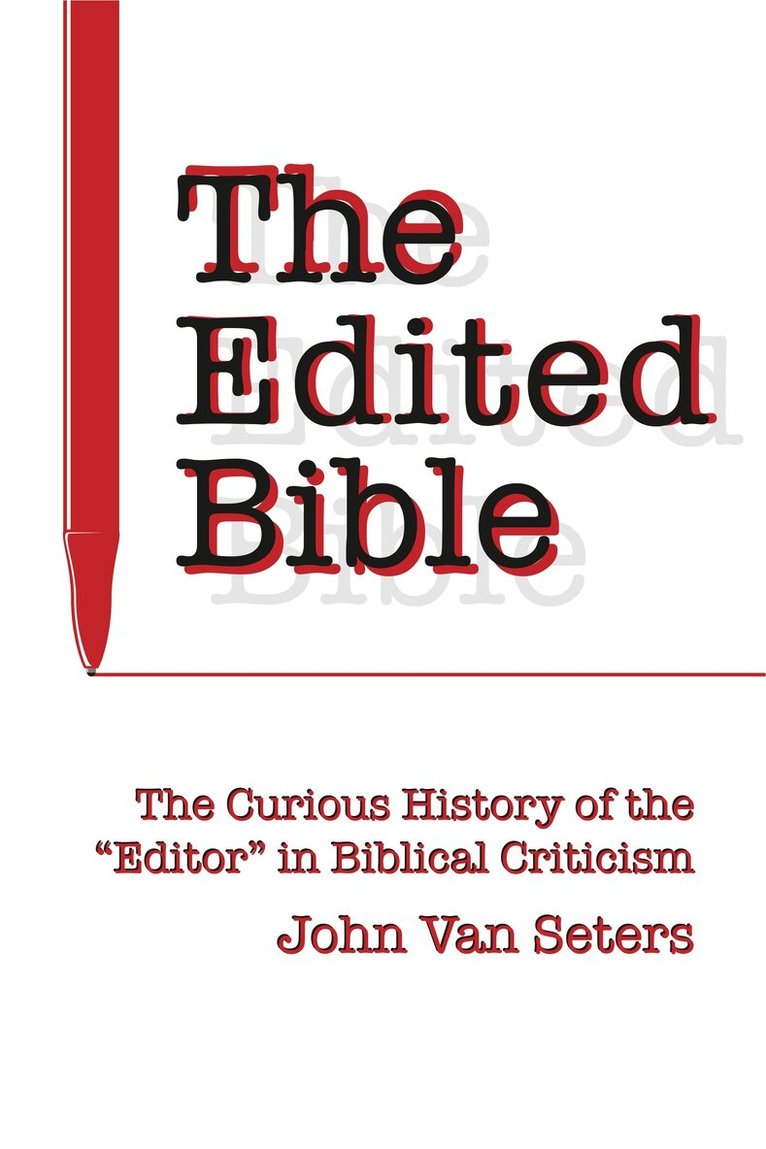
    Edited Bible

    The Curious History of the “Editor” in Biblical Criticism

    AvJohn Van Seters

    Inbunden, Engelska, 2006

    869 kr

    Beställningsvara. Skickas inom 5-8 vardagar. Fri frakt över 249 kr.

    Beskrivning

    There is a generally accepted notion in biblical scholarship that the Bible as we know it today is the product of editing from its earliest stages of composition through to its final, definitive and “canonical” textual form. So persistent has been this idea since the rise of critical study in the seventeenth century and so pervasive has it become in all aspects of biblical study that there is virtually no reflection on the validity of this idea” (from the Introduction). Van Seters proceeds to survey the history of the idea of editing, from its origins in the pre-Hellenistic Greek world, through Classical and Medieval times, into the modern era. He discusses and evaluates the implications of the common acceptance of “editing” and “editors/redactors” and concludes that this strand of scholarship has led to serious misdirection of research in modern times.

    Produktinformation

    • Utgivningsdatum:2006-06-30
    • Mått:152 x 229 x 38 mm
    • Vikt:907 g
    • Format:Inbunden
    • Språk:Engelska
    • Antal sidor:448
    • Förlag:Pennsylvania State University Press
    • ISBN:9781575061122

    Utforska kategorier

    • Religion: allmänt inom Filosofi och religion
    • Kristendom inom Filosofi och religion

    Innehållsförteckning

    • AbbreviationsPreface1. IntroductionThe Problem of Definition in Old Testament HandbooksEtymologies and MeaningsUnderstanding Ancient Book Production, Dissemination, and DistributionThe Revival of Scholarship in the Renaissance and Editing the ClassicsEditing the Scriptures in Judaism and ChristianityAdditions and EditionsThe Task before Us2. The Early History of EditingThe Rise of Homeric Scholarship in the Pre-Hellenistic PeriodAlexandrian Scholars and the Editing of HomerHomeric Scholarship in Pergamum and RomeEditing and Its Influence on the Vulgate and the Book TradeEditing Classical Texts in the Roman PeriodConclusion3. Jewish and Christian Scholarship and Standardization of Biblical TextsThe Sopherim as “Editors” of the Hebrew BibleScribal Signs and CorrectionsEditing and Translating the Sacred Texts among the Church FathersConclusion4. Classical and Biblical Text Editions: Editing in the Age of the Printing PressThe Revival of Classical Learning and the Publication of Editiones PrincipesThe Textus Receptus of the New Testament and the Hebrew BibleEditing Classical Texts and the Education of the GentlemanRichard Bentley and the Critical Editing of TextsEditors and the Collection of Manuscripts5. Editing Homer: The Rise of Historical Criticism in Classical StudiesF. A. Wolf and the Homeric ProblemThe Editor in Homer after WolfThe Demise of the Redactor in Homeric Studies6. The History of the “Editor” in Biblical Criticism from Simon to WellhausenRichard Simon: Editing Historical DocumentsEditor as Compiler of Fragments and Documents: From Eichhorn to VaterW. M. L. de Wette: Pioneer of Historical CriticismHeinrich Ewald: Conservative ReactionHermann Hupfeld: Editor as Conflator of DocumentsWellhausen and Kuenen: The Redactor in the Documentary HypothesisSummary and Conclusion7. The History of Redaction in the Twentieth Century: Crisis in Higher CriticismThe Wellhausen Legacy in the Twentieth Century: Driver, Eissfeldt, and PfeifferForm Criticism and the Editor: Hermann GunkelForm Criticism of the Hexateuch: Authors and Editors in G. von RadEditors and Historians in the History of Traditions: Martin NothThe Revisionist Successors of von Rad and Noth and the Triumph of the EditorThe Composition of the Pentateuch: Neither Authors nor Editors—Erhard BlumWellhausen and the Rise of Redaction Criticism in New Testament StudiesSummary and Conclusion8. Editing the Bible and Textual CriticismEditors in the History of Textual CriticismEditors, Urtext, Recensions, and the Problem of Textual Diversity: Emanuel TovEditors in the Book of JeremiahEditing the Bible and the Dead Sea ScrollsThe Editions of the Septuagint and Other Early Greek RecensionsConclusion9. Editors and the Creation of the CanonThe Problem of Definition: “Canon” and “Canonical”The History of the Canon as a Restricted Corpus of Sacred BooksCanonical Criticism, Canonical Process, and the Editing of the BibleThe Role of the Editor in Innerbiblical ExegesisConclusion10. Summary and ConclusionAppendix: Original Text of Translated ExcerptsIndexesIndex of AuthorsIndex of ScriptureIndex of Other Ancient SourcesIndex of Topics