• Fri frakt över 249 kr
  • •
  • Snabba leveranser
  • •
  • Billiga böcker
Kundservice

Du är på sajten för privatpersoner.

Företag, bibliotek eller offentlig verksamhet?

Du handlar på classic.bokus.com, där alla dina funktioner finns intakta.
Till classic.bokus.com
Bokus logotyp. Gå till startsidan.
  • Erbjudanden
  • Nyheter
  • Student
  • Topplistor
  • Barn & ungdom
  • Bokus Play
  • E-böcker
  • Pocketböcker
  • Spel & pussel

10% studentrabatt med kod TERM26

Sidfot

Mina sidor

    Hjälp

    • Kundservice
    • Vanliga frågor och svar
    • Frakt och leverans
    • Retur vid ångerrätt
    • Reklamera vara
    • Betalning
    • Köpvillkor
    • Allmänna villkor
    • Information om webbplatsens tillgänglighet

    Om Bokus

    • Om oss
    • Pressrum
    • För studenter
    • För företag
    • För bibliotek och offentlig verksamhet
    • För leverantörer
    • Hållbarhet

    Populärt

    • Aktuella erbjudanden
    • Presentkort
    • Studentlitteratur
    • Nya böcker
    • Topplistor
    • Signerade böcker
    • Engelska böcker

    Inspiration

    • Boktips
    • BookTok
    • Populära bokserier
    • Barnbokskaraktärer
    • Populära författare
    Logotyp för Bokus
    Följ oss på Facebook (extern länk)Följ oss på Instagram (extern länk)Följ oss på YouTube (extern länk)Följ oss på TikTok (extern länk)
    bokus @ CookiesAnpassa cookiesIntegritetspolicyKöpvillkor
    Till Citymail hemsida (extern länk)Till Budbee hemsida (extern länk)Till Postnord hemsida (extern länk)Till Schenker hemsida (extern länk)Till Early Bird hemsida (extern länk)Till Walleys hemsida (extern länk)
    1. Historia och arkeologi
    2. Historia
    3. Forntidens historia

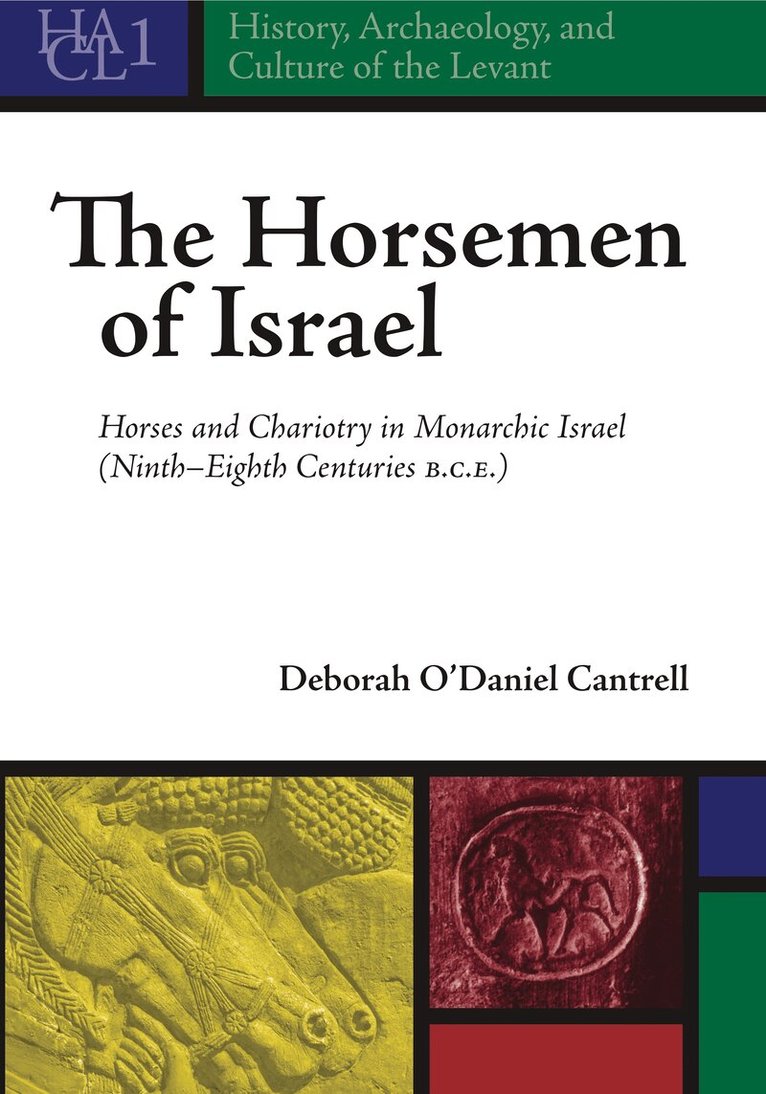
    Horsemen of Israel

    Horses and Chariotry in Monarchic Israel (Ninth-Eighth centuries B.C.E)

    AvDeborah O’Daniel Cantrell

    Inbunden, Engelska, 2011

    Del 1 i serien History, Archaeology, and Culture of the Levant

    420 kr

    Beställningsvara. Skickas inom 5-8 vardagar. Fri frakt över 249 kr.

    Beskrivning

    Almost every book in the Hebrew Bible mentions horses and chariots in some manner, usually in a military context. However, the importance of horses, chariots, and equestrians in ancient Israel is typically mentioned only in passing, if at all, by historians, hippologists, and biblical scholars. When it is mentioned, the topic engenders a great deal of confusion.Notwithstanding the substantial textual and archaeological evidence of the horse’s historic presence, recent scholars seem to be led by a general belief that there were very few horses in Iron Age Israel and that Israel’s chariotry was insignificant. The reason for this current sentiment is tied primarily to the academic controversy of the past 50 years over whether the 17 tripartite-pillared buildings excavated at Megiddo in the early 20th century were, in fact, stables. Although the original excavators, archaeologists from the University of Chicago, designated these buildings as stables, a number of scholars (and a few archaeologists) later challenged this view and adopted alternative interpretations. After they “reassessed” the Megiddo stables as “storehouses,” “marketplaces,” or “barracks,” the idea developed that there was no place for the horses to be kept and, therefore, there must have been few horses in Israel. The lack of stables, when added to the suggestion that Iron Age Israel could not have afforded to buy expensive horses and maintain an even more expensive chariotry, led to a dearth of horses in ancient Israel; or so the logic goes that has permeated the literature. Cantrell’s book attempts to dispel this notion.Too often today, scholars ignore or diminish the role of the horse in battle. It is important to remember that ancient historians took for granted knowledge about horses that modern scholars have now forgotten or never knew. Cantrell’s involvement with horses as a rider, competitor, trainer, breeder, and importer includes equine experience ranging from competitive barrel-racing to jumping, and for the past 25 years, dressage. The Horsemen of Israel relies on the author’s knowledge of and experience with horses as well as her expertise in the field of ancient Near Eastern languages, literature, and archaeology.

    Produktinformation

    • Utgivningsdatum:2011-06-30
    • Mått:178 x 254 x 18 mm
    • Vikt:522 g
    • Format:Inbunden
    • Språk:Engelska
    • Serie:History, Archaeology, and Culture of the Levant
    • Antal sidor:162
    • Förlag:Pennsylvania State University Press
    • ISBN:9781575062044

    Utforska kategorier

    • Forntidens historia inom Historia och arkeologi
    • Hästböcker inom Djur och Natur

    Innehållsförteckning

    • AbbreviationsIntroductionBackgroundModern HorsemanshipAncient ScholarshipCurrent ScholarshipHistorical SettingBiblical TextChronology MattersHorse-Related ArchitectureContentsThe Nature of the War-HorseThe Sights of BattleThe Noise of BattleThe Smells of BattleThe Sex of the War-HorseThe Horse in BattleThe Limitations of the Horse in BattleKilling a Horse in BattleHorses in Iron Age Israel and JudahKurkh MonolithTel Dan SteleHebrew Bible TextsCaptured HorsesHorse TradingHorse PricesHorse BreedingSize and Breed of HorsesEconomic and Practical ConsiderationsReligious ConcernsChariotry in Iron Age IsraelOrigin of Monarchic ChariotrySuitability for ChariotryTopographyShort DistancesChariot Cost, Manufacture, and RepairChariots in BattleArchitectural Advances for the Israelite ChariotrySix-Chambered GatesChambered Gate DimensionsStables of Israel: The Case of MegiddoStabled HorsesFeeding TroughsFeeding RegimensWater SystemsTethering HolesStall FloorsRemoval of Horses from StallsPresence of “Only” One Exit from the StableStabling of StallionsLack of Horse Paraphernalia at MegiddoLack of Horse Bones at MegiddoLack of Horse Teeth at MegiddoVentilationTraining ConsiderationsJezreel Military Headquarters and Cavalry DepotSummaryWarfare in Iron Age IsraelAramean InvasionsAssyrian InvasionsEgyptian InvasionsInvasion of Moab (2 Kings 3)From Chariotry to Mounted CombatConclusionIndexes