• Fri frakt över 249 kr
  • •
  • Snabba leveranser
  • •
  • Billiga böcker
Kundservice

Du är på sajten för privatpersoner.

Företag, bibliotek eller offentlig verksamhet?

Du handlar på classic.bokus.com, där alla dina funktioner finns intakta.
Till classic.bokus.com
Bokus logotyp. Gå till startsidan.
  • Erbjudanden
  • Nyheter
  • Student
  • Topplistor
  • Barn & ungdom
  • Bokus Play
  • E-böcker
  • Pocketböcker
  • Spel & pussel

10% rabatt på allt med kod NYSTART10 →

Sidfot

Mina sidor

    Hjälp

    • Kundservice
    • Vanliga frågor och svar
    • Frakt och leverans
    • Retur vid ångerrätt
    • Reklamera vara
    • Betalning
    • Köpvillkor
    • Allmänna villkor
    • Information om webbplatsens tillgänglighet

    Om Bokus

    • Om oss
    • Pressrum
    • För studenter
    • För företag
    • För bibliotek och offentlig verksamhet
    • För leverantörer
    • Hållbarhet

    Populärt

    • Aktuella erbjudanden
    • Presentkort
    • Studentlitteratur
    • Nya böcker
    • Topplistor
    • Signerade böcker
    • Engelska böcker

    Inspiration

    • Boktips
    • BookTok
    • Populära bokserier
    • Barnbokskaraktärer
    • Populära författare
    Logotyp för Bokus
    Följ oss på Facebook (extern länk)Följ oss på Instagram (extern länk)Följ oss på YouTube (extern länk)Följ oss på TikTok (extern länk)
    bokus @ CookiesAnpassa cookiesIntegritetspolicyKöpvillkor
    Till Citymail hemsida (extern länk)Till Budbee hemsida (extern länk)Till Postnord hemsida (extern länk)Till Schenker hemsida (extern länk)Till Early Bird hemsida (extern länk)Till Walleys hemsida (extern länk)
    1. Psykologi och pedagogik
    2. Pedagogik
    3. Pedagogisk psykologi

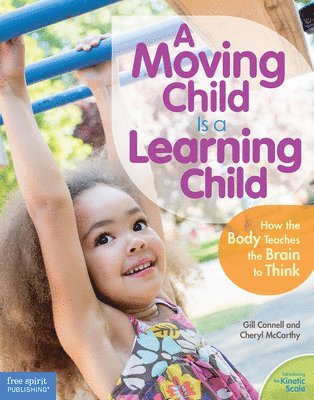
    Moving Child Is a Learning Child

    How the Body Teaches the Brain to Think (Birth to Age 7)

    AvGill Connell,Cheryl McCarthy

    Häftad, Engelska, 2013

    Del i serien Free Spirit Professional®

    459 kr

    Beställningsvara. Skickas inom 3-6 vardagar. Fri frakt över 249 kr.

    Beskrivning

    In order to learn, kids’ need to move! Grounded in best practices and current research, this hands-on resource connects the dots that link brain activity, movement, and early learning. The expert authors unveil the Kinetic Scale: a visual map of the active learning needs of infants, toddlers, preschoolers, and primary graders that fits each child’s individual timetable.Teachers, parents, and caregivers will find a wealth of information, actionable tips, and games they can use to support children’s healthy development—all presented in a lively, full-color format with demonstrative diagrams and photos. A final section offers easy-to-implement activities geared to the Kinetic Scale.Downloadable digital content includes printable charts, games, and activities from the book plus a PowerPoint presentation for professional development, parent handouts, and bonus activities. An ideal tool for coaches, mentors, and trainers.Introducing the Kinetic Scaleunique framework encompassing all the elements of movement: reflexes, sensory tools (sight, hearing, smell, taste, touch, balance, and intuition), motor tools (power, coordination, and control), and languagebased on six stages of movement development from birth to age 7: snugglers, squigglers, stompers, scampers, scooters, and skedaddlersdesigned to foster a balanced diet of physical activity that helps each child move, grow, and learn on the child’s individual timetable

    Produktinformation

    • Utgivningsdatum:2013-11-13
    • Mått:184 x 235 x 17 mm
    • Vikt:771 g
    • Format:Häftad
    • Språk:Engelska
    • Serie:Free Spirit Professional®
    • Antal sidor:336
    • Förlag:Teacher Created Materials, Inc
    • ISBN:9781575424354

    Utforska kategorier

    • Pedagogisk psykologi inom Psykologi och pedagogik
    • Skolan och förskolan inom Psykologi och pedagogik

    Mer om författaren

    Gill Connell is a globally recognized presenter and child development authority, specializing in the foundations of learning through movement and play. She provides developmental expertise to parents, preschools, schools, and companies such as Hasbro, Inc., based on her more than thirty years in preschool and primary education.She is the former national director of Gymbaroo Preschool Activity Centers and the founder of Moving Smart, Ltd., which offers resources, tools, trainings, and workshops. She coauthored the book Moving to Learn: An Essential Guide for All Parents, Carers and Educators, A Moving Child is a Learning Child: How the Body Teaches the Brain to Think, and Move, Play, Learn with Smart Steps: Sequenced Activities to Build the Body and the Brain.Gill lives in Christchurch, New Zealand, and travels regularly to the United States.Cheryl McCarthy is a former vice president of intellectual property development for Hasbro, Inc.She is a thirty-year veteran of the world of children’s play, specializing in young children’s storytelling and entertainment. As executive producer, she managed the creative development of properties such as My Little Pony, Candy Land, Mr. Potato Head, and many other beloved children’s icons.She is currently the creative director at Moving Smart, Ltd. Cheryl lives in Attleboro, Massachusetts.

    Recensioner i media

    “Everyone knows that a healthy diet is important for a growing child, but did you know that physical activity is absolutely essential for brain development? Many don’t, but Gill Connell and Cheryl McCarthy aim to fix that with A Moving Child Is a Learning Child . . . With a wealth of information and a plethora of ideas for implementation, this book is a must-read for parents as well as anyone working with young children.”

    Innehållsförteckning

    • List of Figures List of Reproducible Forms Foreword by Marcia Gentry Introduction Chapter 1: Giftedness Defined in Diverse Groups Definition of Gifts and TalentsIdentifying Giftedness Across Cultural, Linguistic, and Socioeconomic CommunitiesTwice-Exceptional Learners: Gifted Students with Learning or Behavior ChallengesChapter SummaryChapter 2: Using Brain Research to Improve DifferentiationBrain Research and GiftednessPutting the Research to PracticeChapter SummaryChapter 3: The Common Core State Standards and Gifted Education How Common Core State Standards Affect Gifted StudentsResponding to the Common CoreConsiderations in Reframing Curriculum for Gifted StudentsChapter SummaryChapter 4: Defensible Programs and ServicesGeneral Characteristics of Gifted Elementary StudentsGeneral Characteristics of Gifted Secondary StudentsGifted Programming ModelsEffective Grouping Practices within Gifted Program OptionsChapter SummaryChapter 5: Creating Authentic Honors Courses Articulation: Clearly Defining the Rigors of an Honors CourseDifferentiating an Honors CourseAlignment: Effective Practices in Student SelectionAccountability: Continuous Review for Continuous ImprovementChapter SummaryChapter 6: Changing Roles for Educators of Gifted StudentsDefining the Role of the TeacherTeacher as Mindset ShifterTeacher as Knowledge GuideChapter SummaryChapter 7: Co-Teaching: A Collaborative Approach to Differentiation The Roles of Classroom Teacher and Gifted SpecialistCo-Teaching Strategies for Addressing Learning DifferencesCo-Planning Lessons for Gifted LearnersChapter SummaryChapter 8: Understanding and Reversing Underachievement Defining UnderachievementFactors That Influence Academic Achievement Potential Risks for UnderachievementReversing UnderachievementChapter SummaryChapter 9: Assessment and the Gifted Learner Types of AssessmentIntegrating Assessment into InstructionUsing Assessment with Gifted StudentsAssessment That Builds AutonomyChapter SummaryChapter 10: LeadershipGifted Education Specialist: Administrator or Teacher Leader?Embedding Differentiation for Gifted Learners into Classroom PracticeInstructional CoachingLesson StudyChapter SummaryChapter 11: Next StepsReferences and Resources Index About the Authors