• Fri frakt över 249 kr
  • •
  • Snabba leveranser
  • •
  • Billiga böcker
Kundservice

Du är på sajten för privatpersoner.

Företag, bibliotek eller offentlig verksamhet?

Du handlar på classic.bokus.com, där alla dina funktioner finns intakta.
Till classic.bokus.com
Bokus logotyp. Gå till startsidan.
  • Erbjudanden
  • Nyheter
  • Student
  • Topplistor
  • Barn & ungdom
  • Bokus Play
  • E-böcker
  • Pocketböcker
  • Spel & pussel

10% rabatt på allt med kod: NYSTART10 →

Sidfot

Mina sidor

    Hjälp

    • Kundservice
    • Vanliga frågor och svar
    • Frakt och leverans
    • Retur vid ångerrätt
    • Reklamera vara
    • Betalning
    • Köpvillkor
    • Allmänna villkor
    • Information om webbplatsens tillgänglighet

    Om Bokus

    • Om oss
    • Pressrum
    • För studenter
    • För företag
    • För bibliotek och offentlig verksamhet
    • För leverantörer
    • Hållbarhet

    Populärt

    • Aktuella erbjudanden
    • Presentkort
    • Studentlitteratur
    • Nya böcker
    • Topplistor
    • Signerade böcker
    • Engelska böcker

    Inspiration

    • Boktips
    • BookTok
    • Populära bokserier
    • Barnbokskaraktärer
    • Populära författare
    Logotyp för Bokus
    Följ oss på Facebook (extern länk)Följ oss på Instagram (extern länk)Följ oss på YouTube (extern länk)Följ oss på TikTok (extern länk)
    bokus @ CookiesAnpassa cookiesIntegritetspolicyKöpvillkor
    Till Citymail hemsida (extern länk)Till Budbee hemsida (extern länk)Till Postnord hemsida (extern länk)Till Schenker hemsida (extern länk)Till Early Bird hemsida (extern länk)Till Walleys hemsida (extern länk)
    1. Psykologi och pedagogik
    2. Pedagogik
    3. Utbildningsstrategier och utbildningspolitik

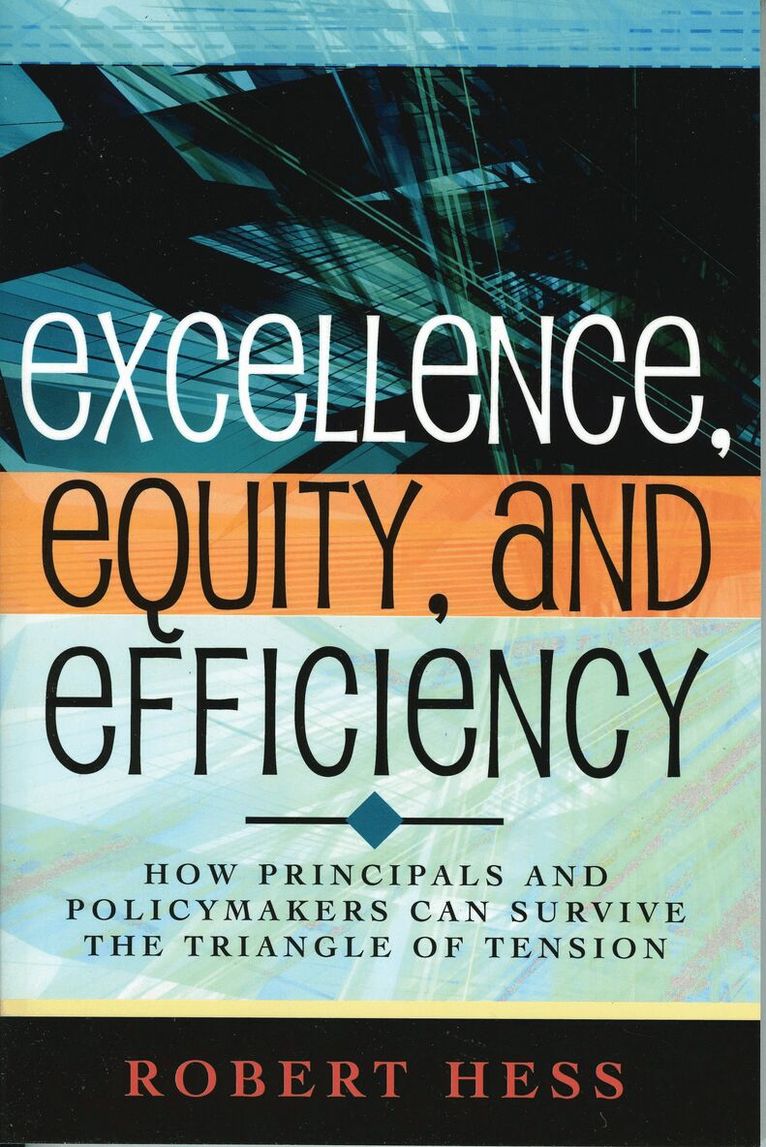
    Excellence, Equity, and Efficiency

    How Principals and Policymakers Can Survive the Triangle of Tension

    AvRobert Hess

    Häftad, Engelska, 2005

    Del i serien R&L Education

    573 kr

    Beställningsvara. Skickas inom 10-15 vardagar. Fri frakt över 249 kr.

    Beskrivning

    Public education in America has undergone a vast series of changes during the last four decades. The majority of these changes are driven by policy—the most recent, No Child Left Behind—but regardless of laws passed, principals and school leaders across the country are scrambling to discover ways to unleash the next breakthrough in public education—success for all. In many parts of the country, that success must come on dwindling resources. Over the years much has been written about excellence, equity, and efficiency. The ongoing struggle for administrators and educational leaders is to discover how these apparent conflicting values can not only be survived but also managed to produce unprecedented results in school improvement. Excellence, Equity, and Efficiency presents a "Quality School Improvement" (QSI) framework for overcoming the conflict that exists between these values and provides recommendations for principals and policymakers to meet the demands for accountability and continuous improvement based upon that framework. Researched and written by a fulltime practicing principal in the field, this book: documents hundreds of actual events and struggles that principals have faced while attempting to manage the demands these values present, includes a story of the author's school and district that is successfully rejecting both the notion of social promotion and retention in their attempt to reconcile excellence, equity, and efficiency through the concept of priority leadership.

    Produktinformation

    • Utgivningsdatum:2005-01-12
    • Mått:153 x 228 x 13 mm
    • Vikt:245 g
    • Format:Häftad
    • Språk:Engelska
    • Serie:R&L Education
    • Antal sidor:160
    • Förlag:Bloomsbury Publishing Plc
    • ISBN:9781578862023

    Utforska kategorier

    • Utbildningsstrategier och utbildningspolitik inom Psykologi och pedagogik

    Mer om författaren

    Robert Hess is currently the principal at Pioneer School, a K-8 school of 500 students in Lebanon, Oregon and an adjunct professor at Oregon State University. He has spoken on a variety of school improvement topics throughout the state of Oregon, and is the founder of BreakthroughSchools.org a grassroots effort of networking among schools that are seeking extraordinary results for their students. For the past 17 years, he has served children as a teacher and administrator at the elementary, middle, and high school levels.

    Recensioner i media

    This resource for education professionals examines the values of excellence, equity, and efficiency and presents a quality school improvement (QSI) framework that reconciles their conflicting demands.

    Innehållsförteckning

    • Part 1 IntroductionChapter 2 1 Values That Drive Change: The Triangle of TensionPart 3 Tension Generators: Excellence, Equity, and EfficiencyPart 4 The Triangle of TensionPart 5 The Tension Between Excellence and EquityPart 6 The Tension Between Efficiency and EquityPart 7 The Tension Between Efficiency and ExcellencePart 8 How the Triangle of Tension FunctionsPart 9 ConclusionPart 10 Discussion PointsChapter 11 2 The Pursuit of ExcellencePart 12 Historical ExcellencePart 13 Demonstrations of ExcellencePart 14 ConclusionPart 15 Discussion PointsChapter 16 3 The Promise of EquityPart 17 Historical EquityPart 18 The Pressure of EquityPart 19 Equal Opportunity through the Meeting of NeedsPart 20 ConclusionPart 21 Discussion PointsPart 22 4 The Power of EfficiencyPart 23 Efficiency DeniedPart 24 Education Costs Over TimePart 25 The Effect of Increased Spending on AchievementPart 26 How Districts Spend Their MoneyPart 27 How Principals View EfficiencyPart 28 Strategies for Improving Financial EfficiencyPart 29 ConclusionPart 30 Discussion PointsChapter 31 5 Surviving the Triangle of TensionPart 32 A Culture of AccountabilityPart 33 The Birth of Standardized TestingPart 34 The Importance of AccountabilityPart 35 How Principals Successfully Navigate the TrianglePart 36 Excellence: Standards-Based InstructionPart 37 Innovations Related to ExcellencePart 38 Providing EquityPart 39 Equal TreatmentPart 40 Equal Opportunity to Achieve SuccessPart 41 Efficiency: Positive EffectsPart 42 Increased Support Through EfficiencyPart 43 ConclusionPart 44 Discussion PointsChapter 45 6 Quality School Improvement FrameworkPart 46 Renewal, Reform, and RestructuringPart 47 True EquityPart 48 Quality School ImprovementPart 49 Managing the Triangle of TensionPart 50 Analyzing Quality According to the School-Improvement FrameworkPart 51 Quality of ProductPart 52 Quality of ExperiencePart 53 Restructuring to QualityPart 54 Breakthrough SchoolsPart 55 Discussion PointsChapter 56 7 Priority Leadership: How Lebanon Schools Manage the Triangle of TensionPart 57 Generating Tension in LebanonPart 58 Priority 1—The Student Achievement System (SAS): A Quest for EquityPart 59 Efficiency Takes Its Toll: No new MoneyPart 60 Meeting Student Needs Becomes the Focus: A Reflection of EquityPart 61 Lebanon's Cnotinuous Progress Model of InstructionPart 62 Breakthrough ResultsPart 63 Priority 2—Signature Schools: A Quest for ExcellencePart 64 Priority 3—Effective Instruction: Professional Growth and Accountability (PGA) SystemPart 65 ConclusionPart 66 Discussion PointsChapter 67 8 Applying the QSI in the School SettingPart 68 Pioneer School—My StoryPart 69 Puzzle BuildingPart 70 Bottom Border: RelationshipsPart 71 Instruction: Time and How You Use ItPart 72 Pushing the Borders of TimePart 73 After-School ProgramPart 74 Summer SchoolPart 75 Intersession CalendarPart 76 More Pieces to PuzzlePart 77 ConclusionPart 78 Discussion PointsChapter 79 9 Principals: Recommendations for RestructuringPart 80 Invest in Quality TeachersPart 81 Stress Client Service Throughout the SchoolPart 82 Provide Priority Leadership: Determine a Vision, Build It, and Communicate It EffectivelyPart 83 Build Leadership Capacity and TeamingPart 84 Emphasize Continuous Improvement in All Areas by Focusing on Data-Driven ResultsPart 85 Move Away from "Boss Management" to "Lead Management"Part 86 Work with the Central OfficePart 87 Build a Sense of Community and Create SmallnessPart 88 Build and Use NetworksPart 89 Use Tension Generated from External Demands as Impetus for GrowthPart 90 Instill Hope and Make It FunPart 91 ConclusionPart 92 Discussion PointsChapter 93 10 Recommendations for PolicymakersPart 94 Continue to Support the Development of External StandardsPart 95 Adopt Teacher Evaluation Systems That Reinforce Quality InstructionPart 96 Develop Meaningful Individual and Collective Incentives for Students and Schools That Reward Innovation and Risk TakingPart 97 Keep Informed About the Needs and Wants of School Leaders, Teachers, Parents, and StudentsPart 98 Develop Effective Statewide Assessment ToolsPart 99 Increase Receptivity to Change Through Statewide Communication ForumsPart 100 Be Committed to the Restructuring of Public EducationPart 101 ConclusionPart 102 Equity: Meeting Student NeedsPart 103 Excellence: Achievement (Learning) Relative to PotentialPart 104 Efficiency: Maximizing the Use of Time, Money, Staff, and Resources to Meet Student NeedsPart 105 Discussion PointsPart 106 Glossary of TermsPart 107 ReferencesPart 108 IndexPart 109 About the Author