• Fri frakt över 249 kr
  • •
  • Snabba leveranser
  • •
  • Billiga böcker
Kundservice

Du är på sajten för privatpersoner.

Företag, bibliotek eller offentlig verksamhet?

Du handlar på classic.bokus.com, där alla dina funktioner finns intakta.
Till classic.bokus.com
Bokus logotyp. Gå till startsidan.
  • Erbjudanden
  • Nyheter
  • Student
  • Topplistor
  • Barn & ungdom
  • Bokus Play
  • E-böcker
  • Pocketböcker
  • Spel & pussel

10% rabatt på allt med kod: NYSTART10 →

Sidfot

Mina sidor

    Hjälp

    • Kundservice
    • Vanliga frågor och svar
    • Frakt och leverans
    • Retur vid ångerrätt
    • Reklamera vara
    • Betalning
    • Köpvillkor
    • Allmänna villkor
    • Information om webbplatsens tillgänglighet

    Om Bokus

    • Om oss
    • Pressrum
    • För studenter
    • För företag
    • För bibliotek och offentlig verksamhet
    • För leverantörer
    • Hållbarhet

    Populärt

    • Aktuella erbjudanden
    • Presentkort
    • Studentlitteratur
    • Nya böcker
    • Topplistor
    • Signerade böcker
    • Engelska böcker

    Inspiration

    • Boktips
    • BookTok
    • Populära bokserier
    • Barnbokskaraktärer
    • Populära författare
    Logotyp för Bokus
    Följ oss på Facebook (extern länk)Följ oss på Instagram (extern länk)Följ oss på YouTube (extern länk)Följ oss på TikTok (extern länk)
    bokus @ CookiesAnpassa cookiesIntegritetspolicyKöpvillkor
    Till Citymail hemsida (extern länk)Till Budbee hemsida (extern länk)Till Postnord hemsida (extern länk)Till Schenker hemsida (extern länk)Till Early Bird hemsida (extern länk)Till Walleys hemsida (extern länk)
    1. Medicin
    2. Andra medicinska specialiteter
    3. Neurologi och klinisk neurofysiologi

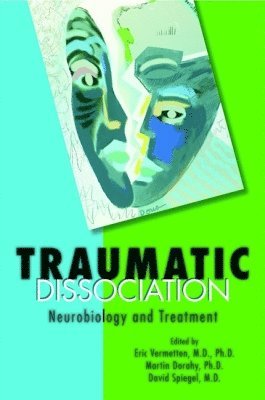
    Traumatic Dissociation

    Neurobiology and Treatment

    AvEric Vermetten,Martin J. Dorahy

    Häftad, Engelska, 2007

    905 kr

    Beställningsvara. Skickas inom 7-10 vardagar. Fri frakt över 249 kr.

    Beskrivning

    Traumatic Dissociation: Neurobiology and Treatment offers an advanced introduction to this symptom, process, and pattern of personality organization seen in several trauma-related disorders, including acute stress disorder, posttraumatic stress disorder (PTSD), and the dissociative disorders. Our understanding of traumatic dissociation has recently been advanced by neuroimaging technology, empirically-based investigation, and an acknowledgment of its importance in psychopathology. The authors of this volume tie these findings together, tracking the condition from its earliest historical conceptualization to its most recent neurobiological understanding to provide even greater insight into traumatic dissociation and its treatment.Bringing together for the first time theoretical, cognitive, and neurobiological perspectives on traumatic dissociation, this volume is designed to provide both empirical and therapeutic insights by drawing on the work of many of the main contributors to the field. Opening chapters examine historical, conceptual, and theoretical issues and how other fields, such as cognitive psychology, have been applied to the study of traumatic dissociation. The following section focuses specifically on how neurobiological investigations have deepened our understanding of dissociation and concluding chapters explore issues pertinent to the assessment and treatment of traumatic dissociation. The interacting effects of traumatic experience, developmental history, neurobiological function, and specific vulnerabilities to dissociative processes that underlie the occurrence of traumatic dissociation are among some of the key issues covered. The book's significant contributions include ; A review of cognitive experimental findings on attention and memory functioning in dissociative identity disorder; An appreciation of how the literature on hypnosis provides a greater understanding of perceptual processing and traumatic stress; Ascertaining symptoms of dissociation in a military setting and in other situations of extreme stress; An outline of key issues for planning assessment of traumatic dissociation, including a critique of its primary empirically supported standardized measures; An examination of the association between child abuse or neglect and the development of eating disorders, suggesting ways to therapeutically deal with negative body experience to reduce events that trigger dissociation; A description of neuroendocrine alterations associated with stress, pointing toward a better understanding of the developmental effects of deprivation and trauma on PTSD and dissociation; A review of the relation of attachment and dissociation; A discussion of new research findings in the neuroimaging of dissociation and a link between cerebellar functioning and specific peritraumatic experiences Useful as a clinical reference or as ancillary textbook, Traumatic Dissociation reorganizes phenomenological observations that have been overlooked, misunderstood, or neglected in traditional training. The research and clinical experience described here will provide the basis for further clinical and theoretical formulations of traumatic dissociation and will advance empirical examination and treatment of the phenomenon.

    Produktinformation

    • Utgivningsdatum:2007-03-30
    • Mått:155 x 229 x 21 mm
    • Vikt:640 g
    • Format:Häftad
    • Språk:Engelska
    • Antal sidor:398
    • Förlag:American Psychiatric Association Publishing
    • ISBN:9781585621965

    Utforska kategorier

    • Neurologi och klinisk neurofysiologi inom Medicin

    Mer om författaren

    Eric Vermetten, M.D., Ph.D., is Head of Research for Military Mental Health at Central Military Hospital and Associate Professor of Psychiatry at the University Medical Center Utrecht in Utrecht, the Netherlands.Martin J. Dorahy, Ph.D., is Clinical and Research Psychologist at the Trauma Resource Centre, North & West Belfast Health and Social Services Trust, and Research Tutor in the School of Psychology at The Queen's University of Belfast in Northern Ireland.David Spiegel, M.D., is Jack, Lulu, and Sam Wilson Professor at the School of Medicine, Associate Chair of Psychiatry and Behavioral Sciences, and Medical Director at the Center for Integrative Medicine at Stanford University in Stanford, California.

    Recensioner i media

    This book attempts to compile the most current knowledge about dissociation, and while there are likely others that address similar topics, this one dose so relatively completely and concisely.Traumatic Dissociation: Neurobiology and Treatment provides the reader with a complexhistory of the field of traumatic dissociation along with new empirical and therapeutic insights, bringing together theoretical, cognitive, and neurobiological perspectives. This advanced introductory text assesses phenomenological observations that have been overlooked or neglected in past research.

    Innehållsförteckning

    • Contributors PrefaceIntroductionPart 1: Conceptual Domain of DissociationChapter 1. Relationship Between Trauma and Dissociation: A Historical AnalysisChapter 2. Attachment, Disorganization, and DissociationChapter 3. Memory and Attentional Processes in Dissociative Identity Disorder: A Review of the Empirical LiteratureChapter 4. Relationships Between Dissociation and Posttraumatic Stress DisorderChapter 5. Perceptual Processing and Traumatic Stress: Contributions From HypnosisPart II: Neurobiology of Traumaand DissociationChapter 6. Translational Research Issues in DissociationChapter 7. Neuroendocrine Markers of Early Trauma: Implications for Posttraumatic Stress DisordersChapter 8. Symptoms of Dissociation in Healthy Military Populations: Why and How Do War Fighters Differ in Responses to Intense Stress?Chapter 9. Peritraumatic Dissociation: Time Perception and Cerebellar Regulation of Psychological, Interpersonal, and Biological ProcessesChapter 10. Posttraumatic Stress Disorder Symptom Provocation and Neuroimaging: Heterogeneity of ResponseChapter 11. Psychobiology of Traumatization and Trauma-Related Structural Dissociation of the PersonalityPart III: Contemporary Implications for Assessment and TreatmentChapter 12. Psychiatric Approaches to Dissociation: Integrating History, Biology, and Clinical AssessmentChapter 13. Psychological Assessment of Posttraumatic DissociationChapter 14. Dissociative Identity Disorder: Issues in the Iatrogenesis ControversyChapter 15. Applications of Innate Affect Theory to the Understanding and Treatment of Dissociative Identity DisorderChapter 16. Trauma, Dissociation, and Impulse Dyscontrol: Lessons From the Eating Disorders FieldChapter 17. Treatment of Traumatic DissociationAfterwordIndex