• Fri frakt över 249 kr
  • •
  • Snabba leveranser
  • •
  • Billiga böcker
Kundservice

Du är på sajten för privatpersoner.

Företag, bibliotek eller offentlig verksamhet?

Du handlar på classic.bokus.com, där alla dina funktioner finns intakta.
Till classic.bokus.com
Bokus logotyp. Gå till startsidan.
  • Erbjudanden
  • Nyheter
  • Student
  • Topplistor
  • Barn & ungdom
  • Bokus Play
  • E-böcker
  • Pocketböcker
  • Spel & pussel

10% rabatt på allt med kod NYSTART10 →

Sidfot

Mina sidor

    Hjälp

    • Kundservice
    • Vanliga frågor och svar
    • Frakt och leverans
    • Retur vid ångerrätt
    • Reklamera vara
    • Betalning
    • Köpvillkor
    • Allmänna villkor
    • Information om webbplatsens tillgänglighet

    Om Bokus

    • Om oss
    • Pressrum
    • För studenter
    • För företag
    • För bibliotek och offentlig verksamhet
    • För leverantörer
    • Hållbarhet

    Populärt

    • Aktuella erbjudanden
    • Presentkort
    • Studentlitteratur
    • Nya böcker
    • Topplistor
    • Signerade böcker
    • Engelska böcker

    Inspiration

    • Boktips
    • BookTok
    • Populära bokserier
    • Barnbokskaraktärer
    • Populära författare
    Logotyp för Bokus
    Följ oss på Facebook (extern länk)Följ oss på Instagram (extern länk)Följ oss på YouTube (extern länk)Följ oss på TikTok (extern länk)
    bokus @ CookiesAnpassa cookiesIntegritetspolicyKöpvillkor
    Till Citymail hemsida (extern länk)Till Budbee hemsida (extern länk)Till Postnord hemsida (extern länk)Till Schenker hemsida (extern länk)Till Early Bird hemsida (extern länk)Till Walleys hemsida (extern länk)
    1. Data och IT
    2. Nätverk och kommunikation

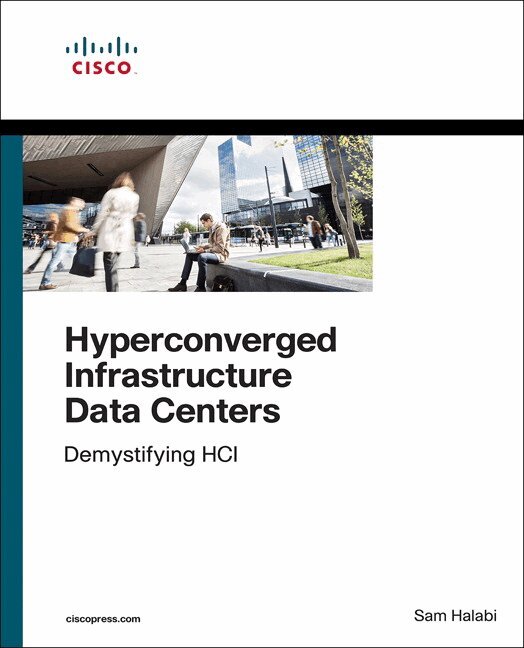
    Hyperconverged Infrastructure Data Centers

    Demystifying HCI

    AvSam Halabi

    Häftad, Engelska, 2019

    Del i serien Networking Technology

    409 kr

    Beställningsvara. Skickas inom 7-10 vardagar. Fri frakt över 249 kr.

    Fler format och utgåvor

    Övrigt

    467 kr

    Beskrivning

    This book approaches the HCI topic from the point of view that any individual working this field needs to have enough knowledge in all the different areas such as storage, storage networking, compute, virtualization, switching and routing and automation. The book will explain each area in the context of a legacy data center design, detailing the problem statement for the particular technology and how HCI solves the problem and to what extent. Equipped with such knowledge the IT professional whether at a technical or management level will be well prepared to evaluate the need to move into the HCI and to find the best approach and timeline to move from a legacy data center design to an HCI design.

    The HCI for Data center book will be the bible for IT professionals, technical and management, in all technology areas, and will guide them through the decision process to move in the HCI direction.

    Produktinformation

    • Utgivningsdatum:2019-02-18
    • Mått:188 x 231 x 2 mm
    • Vikt:860 g
    • Format:Häftad
    • Språk:Engelska
    • Serie:Networking Technology
    • Antal sidor:544
    • Upplaga:1
    • Förlag:Pearson Education
    • ISBN:9781587145100

    Utforska kategorier

    • Nätverk och kommunikation inom Data och IT

    Mer om författaren

    Sam Halabi is a well-known industry figure with many years of experience in the field of information technology, multicloud, hyperconvergence, enterprise software, and data networking. Sam is a trusted advisor, capable of establishing close relationships with customers at the executive level, linking complex technologies with business benefits. Sam has worked at major companies in the U.S. and international markets, where he led sales, presales, consulting, marketing, and business development efforts targeting enterprises building scalable data centers. Sam is the founder of VirtuService (www.virtuservice.com), a provider of customer service and IT consulting in the areas of private, hybrid, public cloud, and multicloud. Sam has authored many Cisco Press books, including the bestseller Internet Routing Architectures and Metro Ethernet. Follow Sam Halabi on Twitter @VirtuService.

    Innehållsförteckning

    • Introduction     xxiv PART I:  BASICS OF DATA CENTER NETWORKING AND STORAGE     1Chapter 1  Data Networks: Existing Designs     3 Information Technology Equipment of a Data Center     4 Network Equipment     4 Networking Services     4 Multitier Data Networking Architecture     6 Logical Server Grouping     8 Challenges of Existing Designs     9 Oversubscription Between the Tiers     9 Large Flat L2 Networks with Stretched VLANs     10 Traffic Hopping Between Tiers, Inducing Latency     11 Complexity of Mechanisms Used for IPv4 Address Scarcity     12 Flooding of Broadcast, Unknown Unicast, and Multicast (BUM) Traffic     15 Loop Prevention Via Spanning Tree     16 Firewall Overload     17 Chapter 2  Storage Networks: Existing Designs     19 The Storage View of Multitier Designs     20 Types of Disk Drives     21 Hard Disk Drives     22 Solid-State Drives     23 Disk Performance     23 Throughput or Transfer Speed     24 Access Time     24 Latency and IOPS     24 RAID     26 RAID 0     26 RAID 1     26 RAID 1+0     26 RAID 0+1     27 RAID 5     28 RAID 6     29 Storage Controllers     30 Logical Unit Numbers     31 Logical Volume Manager     33 Block-, File-, and Object-Level Storage     35 Block-Level Storage     35 File-Level Storage     35 Object-Based Storage     36 Storage-to-Server Connectivity     37 Direct-Attached Storage (DAS)     38 Network-Attached Storage     39 Storage Area Networks     40 iSCSI SANs     46 Fibre Channel over Ethernet SANs     49 Storage Efficiency Technologies     50 Thin Provisioning     50 Snapshots     51 Cloning     55 Replication     55 Deduplication     55 Data Compression     58 Disk Encryption     59 Storage Tiering     59 Caching Storage Arrays     60 PART II:  EVOLUTION IN HOST HARDWARE AND SOFTWARE     63Chapter 3  Host Hardware Evolution     65 Advancements in Compute     65 x86 Standard Architecture     66 Single-, Multi-, and Many-Cores CPUs     66 Physical Cores Versus Virtual Cores Versus Logical Cores     67 Virtual CPU     68 Evolution in Host Bus Interconnect     70 Non-Volatile Memory Express     71 Emergence of Flash-Based Products     72 Enhancement in Flash Technology     73 New Breed of Storage Arrays Falls Short     73 Chapter 4  Server Virtualization     77 The Virtualization Layer     78 Type 1 Hypervisor     79 Type 2 Hypervisor     80 Docker Containers     80 Datastores     82 Virtual Machine Creation     84 Virtualization Services     86 Clusters of Servers or Nodes     86 VM Migration     87 High Availability     88 Fault Tolerance     89 Compute Load Balancing     89 Storage Migration     90 Storage Load Balancing     90 Provisioning and Management     90 Virtual Switching     90 Chapter 5  Software-Defined Storage     95 SDS Objectives     96 Preserving the Legacy and Offering New Features     97 vSphere APIs for Storage Awareness (VASA) and VVols     99 Creating More Granular Volumes with VVols     100 Learning Storage Array Capabilities Through VASA     102 Integration with Storage Policy-Based Management     103 PART III:  HYPERCONVERGED INFRASTRUCTURE     105Chapter 6  Converged Infrastructure     107 Cisco UCS–The First Step in Convergence     108 The Converged Systems     112 Pros of Converged Systems     114 Converged Systems Cons     114 Chapter 7  HCI Functionality     117 Distributed DAS Architecture     118 Distributed Controllers     119 Scale-Out Architecture     120 HCI Performance     120 Resiliency Against Hardware Failures via Replication     121 File Systems     122 Change in the Provisioning Model     124 Hardware Acceleration     125 Networking Integration     125 Advanced Data Storage Functionality     127 Deduplication and Compression     128 Erasure Coding     128 Replication and Backup for Disaster Recovery     129 HCI Security     130 HCI Provisioning, Management, and Monitoring     131 Chapter 8  HCI Business Benefits and Use Cases     135 HCI Business Benefits     136 Fast Deployment     136 Easier-to-Scale Infrastructure     136 Enhanced IT Operational Model     137 Easier System Management     138 Public Cloud Agility in a Private Cloud     138 Higher Availability at Lower Costs     139 Low-Entry Cost Structure     139 Reduced Total Cost of Ownership     140 HCI Use Cases     140 Server Virtualization     140 DevOps     141 Virtual Desktop Infrastructure     141 Remote Office Business Office (ROBO)     144 Edge Computing     146 Tier-1 Enterprise Class Applications     146 Data Protection and Disaster Recovery     148 PART IV:  CISCO HYPERFLEX     151Chapter 9  Cisco HyperFlex     153 HyperFlex Physical Components     154 Cisco HyperFlex Hybrid Nodes     156 Cisco HyperFlex All-Flash Nodes     156 Cisco HyperFlex Edge Nodes     157 Cisco HyperFlex Compute-Only Nodes     157 Cisco UCS 6200 and 6300 Fabric Interconnect     158 Cisco C220/C240 M4/M5 Rack Servers     158 Cisco VIC MLOM Interface Card     159 Cisco UCS 5108 Blade Chassis     159 HyperFlex Performance Benchmarks     160 Integration with UCS     162 Logical Network Design     162 Service Templates and Profiles     164 vNIC Templates     166 HyperFlex Integration with External Storage     167 Cisco’s HX Data Platform     168 HX Data Platform Controller     169 HyperFlex in VMware ESXi Environment     170 HyperFlex in Hyper-V Environment     171 Docker Containers Support and Volume Driver     172 HyperFlex Data Distribution     174 Details of Read and Write Operations     181 Advanced Data Services     187 Deduplication and Compression     187 Snapshots     188 Cloning     189 Asynchronous Native Replication for DR with Remote Clusters     189 Synchronous Native Replication for DR with Stretched Clusters     190 Integration with Third-Party Backup Tools     191 HyperFlex Security     192 Chapter 10  Deploying, Provisioning, and Managing HyperFlex     197 Installation Phase     197 HyperFlex Workload Profiler     199 HyperFlex Sizer     199 Management Provisioning and Monitoring     199 Cisco HyperFlex Connect HTML5 Management     200 VMware vSphere Management Plug-In     203 Cisco Intersight     204 Chapter 11  HyperFlex Workload Optimization and Efficiency     211 Enterprise Workload Issues     211 HyperFlex with Cisco Tetration     212 Data Collection     214 Tetration Analytics Cluster     214 Open Access     215 Using the Data     215 Cisco Workload Optimizer     216 Cisco AppDynamics     217 PART V:  ALTERNATIVE HCI IMPLEMENTATIONS     221Chapter 12  VMware vSAN     223 vSAN Physical Components     224 vSAN Hyperconvergence Software     225 The Object File System     226 vSAN Datastore     228 vSAN Storage Policies     228 Caching     232 I/O Operation Details     232 vSAN Advanced Functionality     233 Data Integrity     234 Data Encryption     234 Deduplication and Compression     235 Erasure Coding     236 Snapshots     236 Cloning     236 vSAN Replication for Disaster Recovery via Stretched Clusters     238 vSAN Backup for Disaster Recovery     241 Integration with Legacy SAN and NAS     243 vSAN iSCSI Target     243 vSAN and VVols     243 SMB and NFS Support     244 Persistent Storage for Containers     244 vSAN Management     244 Graphical Interfaces     244 Ease of Installation     245 Cloud-Connected Health Checks     245 Performance Diagnostics     245 VMware Update Manager     245 vSAN vRealize Operations and Log Insight     245 Thoughts on vSAN Versus HyperFlex     246 Hardware Comparison     247 Scaling Up     247 vSAN In-Kernel Versus Controller-Based Solutions     248 Distributed Versus Not-So-Distributed File System     249 One-to-One Versus Many-to-Many Rebuild     250 Implementations of Compute-Only Nodes     250 Advanced Data Services     251 Management Software     252 Networking     252 Chapter 13  Nutanix Enterprise Cloud Platform     255 Nutanix Enterprise Cloud Platform     256 ECP Hyperconvergence Software     257 Distributed Storage Fabric     257 Nutanix Cluster Components     258 Physical Drive Breakdown     260 I/O Path     261 Write I/O     261 Read I/O     262 Data Protection     262 Metadata     263 Availability Domains     263 Data Path Resiliency     264 Nutanix Advanced Functionality     264 Deduplication     264 Data Compression     265 Erasure Coding     266 Disk Balancing     266 Storage Tiering     267 Snapshots and Clones     268 Shadow Clones     269 Era Database Services     269 Backup and Restore, Replication, and Disaster Recovery     270 Metro Availability: Stretch Clustering     271 Data At Rest Encryption     272 Nutanix Acropolis Block Services     272 Nutanix Acropolis File Services     273 Support for Hyper-V     274 Docker Containers     275 Provisioning, Managing, and Monitoring     275 Infrastructure Management     276 Operational Insight     277 Nutanix Tools     278 Calm Orchestration Tool     278 The Nutanix Competitive Landscape     279 Hardware Comparison     280 Distributed Architecture     281 Log-Structured Versus Write-in-Place File System     282 Data Tiering     282 Deduplication     283 Data Locality     285 Chapter 14  Open Source–Compute and Storage     289 OpenStack     290 Nova     294 Cinder Block Storage     296 Swift     297 Proxy Server     298 Ceph     300 PART VI:  HYPERCONVERGED NETWORKING     305Chapter 15  Software-Defined Networking and Open Source     307 The SDN Background     308 The Overlay and Microsegmentation Edge     309 Host-Based Networking     310 Switch-Based Networking     312 The Switching Fabric     313 The Underlay Network     315 The Overlay Network     315 Microsegmentation in the Data Center     319 Networking Open Source Initiatives     320 Neutron     320 OVS Architecture     322 OVN–The Open Source SDN     324 Open vSwitch     325 OVN     326 State of Vendors with Open Source     331 Chapter 16  VMware NSX     335 Setting and Enforcing Policies in NSX     336 Security Groups     336 Security Policy     337 Policy Enforcement     338 The NSX Manager and Controller Cluster     339 NSX Manager     339 The NSX Controller Cluster     340 Enhancements for vDS     341 Flooding Avoidance     342 NSX L2 Switching and L3 Routing     343 NSX L2 Switching     343 NSX IP Routing     343 Handling of Multidestination Traffic     346 Chapter 17  Application-Centric Infrastructure     351 Cisco Application-Centric Infrastructure     352 ACI Microsegmentation Constructs     353 The Endpoint Groups     353 Application Network Profile     355 Service Graphs     358 ACI Tetration Model     360 Cisco Application Policy Infrastructure Controller     360 ACI Domains     362 Virtual Machine Manager Domain     362 Physical and External Domains     364 The ACI Fabric Switching and Routing Constructs     365 Tenant     366 VRF     366 Bridge Domain     366 EPG     366 Virtual and Physical Connectivity to the ACI Fabric     367 Virtual Connectivity to the Fabric     367 Physical Connectivity to the Fabric     368 The ACI Switching and Routing Terminology     369 The ACI Underlay Network     371 Handling External Routes     372 ACI Fabric Load Balancing     373 The ACI Overlay and VXLAN     373 The VXLAN Instance ID     376 L2 Switching in the Overlay     378 L3 Switching/Routing in the Overlay     380 Multicast in the Overlay Versus Multicast in the Underlay     383 ACI Multi-PoD     383 ACI Multi-Site     384 ACI Anywhere     386 High-Level Comparison Between ACI and NSX     386 Policy Setting     387 Policy Enforcement     388 Performance Requirement for VXLAN     388 Control Plane     389 Performance of Data Forwarding     390 Automation and Visibility in the Fabric     390 Networking Learning Curve     391 PART VII:  PUBLIC, PRIVATE, HYBRID, AND MULTICLOUD     393Chapter 18  The Public Cloud     395 The Cloud Services     395 Infrastructure as a Service     396 Platform as a Service     397 Software as a Service     397 Amazon Web Services     398 AWS Global Infrastructure with Regions and Availability Zones     399 Networking     401 Storage     404 Launching Multitier Applications in AWS     409 Compute Instances     409 Amazon Machine Images     410 Security Groups     410 Identity and Access Management     411 Launching an EC2 Instance     412 Cloud Monitoring     416 Cloud Automation     416 Infrastructure as a Code     417 Software Development Kits     420 Chapter 19  The Private Cloud     423 What Is a Private Cloud?     423 Convergence and Hyperconvergence     425 Automation and Orchestration     425 Cisco UCS Director     427 UCS Director Policies     427 Virtual Data Center     429 Orchestration Concepts     430 Catalogs     431 Integration Between UCSD and HyperFlex     431 UCSD Interfaces     433 APIs and Infrastructure as a Code     434 Chapter 20  Hybrid Cloud and Multicloud     439 Why Hybrid Cloud?     440 Why Multicloud?     442 Cisco CloudCenter     446 Looking Ahead     450 Glossary     451Index     475