• Fri frakt över 249 kr
  • •
  • Snabba leveranser
  • •
  • Billiga böcker
Kundservice

Du är på sajten för privatpersoner.

Företag, bibliotek eller offentlig verksamhet?

Du handlar på classic.bokus.com, där alla dina funktioner finns intakta.
Till classic.bokus.com
Bokus logotyp. Gå till startsidan.
  • Erbjudanden
  • Nyheter
  • Student
  • Topplistor
  • Barn & ungdom
  • Bokus Play
  • E-böcker
  • Pocketböcker
  • Spel & pussel

10% rabatt på allt med kod NYSTART10 →

Sidfot

Mina sidor

    Hjälp

    • Kundservice
    • Vanliga frågor och svar
    • Frakt och leverans
    • Retur vid ångerrätt
    • Reklamera vara
    • Betalning
    • Köpvillkor
    • Allmänna villkor
    • Information om webbplatsens tillgänglighet

    Om Bokus

    • Om oss
    • Pressrum
    • För studenter
    • För företag
    • För bibliotek och offentlig verksamhet
    • För leverantörer
    • Hållbarhet

    Populärt

    • Aktuella erbjudanden
    • Presentkort
    • Studentlitteratur
    • Nya böcker
    • Topplistor
    • Signerade böcker
    • Engelska böcker

    Inspiration

    • Boktips
    • BookTok
    • Populära bokserier
    • Barnbokskaraktärer
    • Populära författare
    Logotyp för Bokus
    Följ oss på Facebook (extern länk)Följ oss på Instagram (extern länk)Följ oss på YouTube (extern länk)Följ oss på TikTok (extern länk)
    bokus @ CookiesAnpassa cookiesIntegritetspolicyKöpvillkor
    Till Citymail hemsida (extern länk)Till Budbee hemsida (extern länk)Till Postnord hemsida (extern länk)Till Schenker hemsida (extern länk)Till Early Bird hemsida (extern länk)Till Walleys hemsida (extern länk)
    1. Samhälle och politik
    2. Politik och statsskick
    3. Statsvetenskap och politisk teori

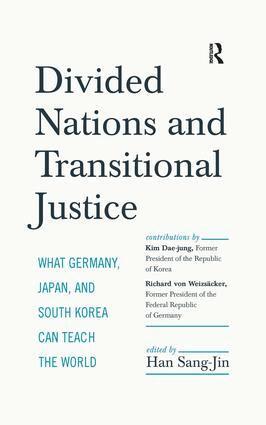
    Divided Nations and Transitional Justice

    What Germany, Japan and South Korea Can Teach the World

    AvSang-Jin Han

    Inbunden, Engelska, 2012

    2 957 kr

    Beställningsvara. Skickas inom 10-15 vardagar. Fri frakt över 249 kr.

    Fler format och utgåvor

    E-bok

    1 025 kr

    E-bok

    1 028 kr

    Häftad

    808 kr

    Beskrivning

    Divided Nations and Transitional Justice considers how Korea, Germany and Japan have moved to address - and come to terms with - their wartime past. Asking what we can learn from the experiences of these countries, this collection considers issues relating to unification, peace, justice and reconciliation. It includes contributions from Kim Dae-jung (President of South Korea, 1998-2003) and Richard von Weizsaecker (President of Germany, 1984-1994), with their lifetime career experiences bringing added insight to the volume. This book moves to deliver messages of hope and vision on how to further the values of peace, reconciliation and cooperation in the 21st century.

    Produktinformation

    • Utgivningsdatum:2012-03-30
    • Mått:152 x 229 x 18 mm
    • Vikt:498 g
    • Format:Inbunden
    • Språk:Engelska
    • Antal sidor:272
    • Förlag:Taylor & Francis Inc
    • ISBN:9781594519000

    Utforska kategorier

    • Statsvetenskap och politisk teori inom Samhälle och politik
    • Internationella relationer inom Samhälle och politik

    Mer om författaren

    Kim Dae-jung, Richard von Weizsäcker, Han Sang-Jin

    Recensioner i media

    “This timely book shows how two great presidential former leaders, Kim Dae-Jung (1925–2009) of Korea and Richard von Weizsäcker (1920– ) of Germany coped with the historic legacies of their countries on the basis of firm personal moral principles and despite being subject to institutional constraints and pressures from both inside and outside.” —Political Studies Review

    Innehållsförteckning

    • Chapter 1 Divided Nation, Unification and Transitional Justice: Why Do We Need a Communicative Approach?, Han Sang-Jin; Chapter 2 Three Objectives of Transitional Justice Today, Claus Offe; Part 1 Two Presidents on Peace and Unification of Divided Nations; Chapter 3 Ardent Dream of Divided Countries: Germany and Korea, KimDae-jung; Chapter 4 Willy Brandt’s Ostpolitik and the Sunshine Policy: What Can the Koreas Learn?, KimDae-jung; Chapter 5 Reflections on the End of the War That Divided Germany, R.von Weizsäcker; Chapter 6 Power of Dialogue for Peace, KimDae-jung; Chapter 7 Beyond Divided Nations: Reflection on Ostpolitik and Sunshine Policy, R.von Weizsäcker; Chapter 8 Four Conditions of Global Peace on the Korean Peninsula, KimDae-jung; Chapter 9 Reflection on Reconciliation Approaches in South Korea, KimDae-jung; Chapter 10 The Historical Summit Meeting 2000: A Dawn of Hope Is Breaking, KimDae-jung; Chapter 11 Toward Peace on the Korean Peninsula, KimDae-jung; Chapter 12 German Unification and Korean Dream: Six Days with Kim Dae-jung in Berlin, HanSang-Jin; Part 2 Two Presidents on Transitional Justice and Reconciliation; Chapter 13 Germany and Japan 50 Years after the End of Their Imperial Ambitions, R. von Weizsäcker; Chapter 14 Germany, Europe, and Japan at the Beginning of the 21st Century: Lessons, Chances, and Challenges, R. von Weizsäcker; Chapter 15 Memory of War and Reconciliation in Europe: Interview with Asahi Shimbun, R. von Weizsäcker; Chapter 16 Toward a New Relation with Japan: Future Possibilities, Kim Dae-jung; Chapter 17 Resolving to Build a New Partnership: Joint Declaration on a New ROK-Japan Partnership for the 21st Century, Kim Dae-jung, Obuchi Keizo; Chapter 18 The Joint Resolution: Ten Years Later, Kim Dae-jung; Part 3 Can Japan Learn from Germany? Toward a Trustful Japan with Global Leadership; Chapter 19 How to Remember the Nazi Crimes? The German Compensation of Forced Labor, Martin Salm; Chapter 20 Overcoming the Past? The Postwar Japan and Germany, Yuji Ishida; Chapter 21 Japan’s Pathway to Imperial Power, Ito Narihiko; Chapter 22 Japan’s Unresolved Colonial Past and the North Korea Problem, Gavan McCormack; Chapter 23 Can Japan Overcome the Ghost of the Past? A Communicative Approach, Han Sang-Jin; Part 4 The Younger Generation Takes Its Stand; Chapter 24 Global Standard of Human Rights and “Comfort Women”, Kim Jongdae; Chapter 25 A Chinese Perspective: No More Excuses for Japan, Chu Tsz Kwan; Chapter 26 A Southeast Asian Perspective: Why Is a Genuine Apology So Important?, Yvonne Chee Huisan; Chapter 27 Why Do Filipinos Remember the Past in Their Own Way?, Park Sae-Seul; Chapter 28 The History Textbook Controversy and Its Solution, Lee Soo-Yun; Chapter 29 Japan’s Dogeza and an Apology Consensus, Lim Yei-Won; Chapter 30 A Trial of Failures: A Deeper Look into the Tokyo Trials, LeeYae-Rim; Chapter 31 Germany Is Still a Model for Japan to Follow, Lee Shan-Hoo; Chapter 32 Transitional Justice on the Atomic Bombing of Hiroshima, Shin Hyun-Seung; Chapter 33 Reconciliation Triangle, Kim Keon-Woong; Part 5 Conclusion; Chapter 34 Reflexive Modernization and the Future of East Asia, Han Sang-Jin;