• Fri frakt över 249 kr
  • •
  • Snabba leveranser
  • •
  • Billiga böcker
Kundservice

Du är på sajten för privatpersoner.

Företag, bibliotek eller offentlig verksamhet?

Du handlar på classic.bokus.com, där alla dina funktioner finns intakta.
Till classic.bokus.com
Bokus logotyp. Gå till startsidan.
  • Erbjudanden
  • Nyheter
  • Student
  • Topplistor
  • Barn & ungdom
  • Bokus Play
  • E-böcker
  • Pocketböcker
  • Spel & pussel

Må bättre, för mindre! Upp till 50% rabatt på hälsoböcker

Sidfot

Mina sidor

    Hjälp

    • Kundservice
    • Vanliga frågor och svar
    • Frakt och leverans
    • Retur vid ångerrätt
    • Reklamera vara
    • Betalning
    • Köpvillkor
    • Allmänna villkor
    • Information om webbplatsens tillgänglighet

    Om Bokus

    • Om oss
    • Pressrum
    • För studenter
    • För företag
    • För bibliotek och offentlig verksamhet
    • För leverantörer
    • Hållbarhet

    Populärt

    • Aktuella erbjudanden
    • Presentkort
    • Studentlitteratur
    • Nya böcker
    • Topplistor
    • Signerade böcker
    • Engelska böcker

    Inspiration

    • Boktips
    • BookTok
    • Populära bokserier
    • Barnbokskaraktärer
    • Populära författare
    Logotyp för Bokus
    Följ oss på Facebook (extern länk)Följ oss på Instagram (extern länk)Följ oss på YouTube (extern länk)Följ oss på TikTok (extern länk)
    bokus @ CookiesAnpassa cookiesIntegritetspolicyKöpvillkor
    Till Citymail hemsida (extern länk)Till Budbee hemsida (extern länk)Till Postnord hemsida (extern länk)Till Schenker hemsida (extern länk)Till Early Bird hemsida (extern länk)Till Walleys hemsida (extern länk)
    1. Medicin
    2. Klinisk medicin och internmedicin
    3. Oftalmologi

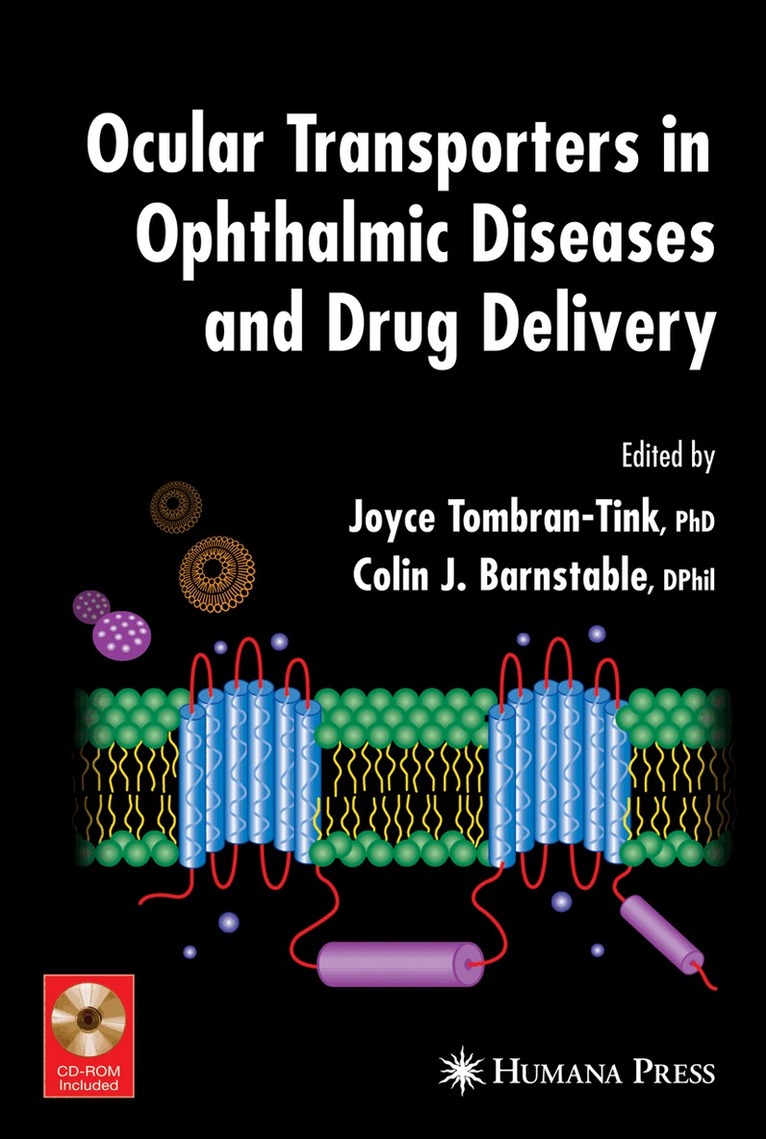
    Ocular Transporters in Ophthalmic Diseases and Drug Delivery

    AvColin J. Barnstable,Joyce Tombran-Tink

    E-bok
    PDF, Engelska, 2008

    2 822 kr

    Läs direkt i Bokus Reader – eller ladda ned till din enhet (PDF kräver ofta zoom och scroll på små skärmar).

    Beskrivning

    Detection and responses to light are common features found throughout the plant and animal kingdoms. In most primitive life forms, a patch of light-sensitive cells make up a region containing a cell sheet devoid of any specialized anatomical structure. With the development of the eyes in more advanced life forms, light-sensing structures became more complex but primitive eyes are still in contiguity with other body tissues and fluids. The evolution of the eyeball promoted an increase in visual acuity and visual processing that, in turn, allowed vision to become the dominant sensory system for many species, including humans. The formation of a totally enclosed structure, however, required a unique set of solutions to enable the eye to control its environment. Like most organs, the eye evolved a series of homeostatic mechanisms to regulate its environment within tightly controlled limits. Unlike most organs, however, this advanced light-sensing structure has a series of requirements that place a tremendous burden on molecules that are responsible for controlling ocular homeostasis. There are many sig naling molecules and pathways that work in parallel or through crosstalk to maintain the normal ocular environment required for visual function. Perhaps none are so critical as the group of membrane molecules that are collectively termed transporters. These molecules are responsible for the controlled and selective movements of ions, nutrients, and fluid across various ocular layers necessary to optimize the internal milieu to p- serve visual function.

    Produktinformation

    • Utgivningsdatum:2008-04-09
    • Språk:Engelska
    • Filformat:PDF
    • Kopieringsskydd:LCP
    • ISBN:9781597453752
    • Förlag:Humana Press

    Utforska kategorier

    • Oftalmologi inom Medicin
    • Cellbiologi inom Naturvetenskap och teknik