• Fri frakt över 249 kr
  • •
  • Snabba leveranser
  • •
  • Billiga böcker
Kundservice

Du är på sajten för privatpersoner.

Företag, bibliotek eller offentlig verksamhet?

Du handlar på classic.bokus.com, där alla dina funktioner finns intakta.
Till classic.bokus.com
Bokus logotyp. Gå till startsidan.
  • Erbjudanden
  • Nyheter
  • Student
  • Topplistor
  • Barn & ungdom
  • Bokus Play
  • E-böcker
  • Pocketböcker
  • Spel & pussel

10% studentrabatt med kod TERM26

Sidfot

Mina sidor

    Hjälp

    • Kundservice
    • Vanliga frågor och svar
    • Frakt och leverans
    • Retur vid ångerrätt
    • Reklamera vara
    • Betalning
    • Köpvillkor
    • Allmänna villkor
    • Information om webbplatsens tillgänglighet

    Om Bokus

    • Om oss
    • Pressrum
    • För studenter
    • För företag
    • För bibliotek och offentlig verksamhet
    • För leverantörer
    • Hållbarhet

    Populärt

    • Aktuella erbjudanden
    • Presentkort
    • Studentlitteratur
    • Nya böcker
    • Topplistor
    • Signerade böcker
    • Engelska böcker

    Inspiration

    • Boktips
    • BookTok
    • Populära bokserier
    • Barnbokskaraktärer
    • Populära författare
    Logotyp för Bokus
    Följ oss på Facebook (extern länk)Följ oss på Instagram (extern länk)Följ oss på YouTube (extern länk)Följ oss på TikTok (extern länk)
    bokus @ CookiesAnpassa cookiesIntegritetspolicyKöpvillkor
    Till Citymail hemsida (extern länk)Till Budbee hemsida (extern länk)Till Postnord hemsida (extern länk)Till Schenker hemsida (extern länk)Till Early Bird hemsida (extern länk)Till Walleys hemsida (extern länk)
    1. Medicin
    2. Medicin: allmänt

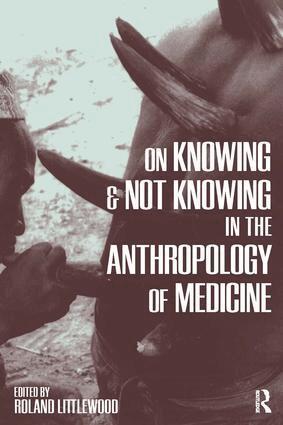
    On Knowing and Not Knowing in the Anthropology of Medicine

    AvRoland Littlewood

    Häftad, Engelska, 2007

    705 kr

    Beställningsvara. Skickas inom 10-15 vardagar. Fri frakt över 249 kr.

    Beskrivning

    Social scientific studies of medicine typically assume that systems of medical knowledge are uniform and consistent. But while anthropologists have long rejected the notion that cultures are discrete, bounded, and rule-drive entities, medical anthropology has been slower to develop alternative approaches to understanding cultures of health. This provocative volume considers the theoretical, methodological, and ethnographic implications of the fact that medical knowledge is frequently dynamic, incoherent, and contradictory, and that and our understanding of it is necessarily incomplete and partial. In diverse settings from indigenous cultures to Western medical industries, contributors consider such issues as how to define the boundaries of “medical” knowledge versus other kinds of knowledge; how to understand overlapping and shifting medical discourses; the medical profession’s need for anthropologists to produce “explanatory models”; the limits of the Western scientific method and the potential for methodological pluralism; constraints on fieldwork including violence and structural factors limiting access; and the subjectivity and interests of the researcher. On Knowing and Not Knowing in the Anthropology of Medicine will stimulate innovative thinking and productive debate for practitioners, researchers, and students in the social science of health and medicine.

    Produktinformation

    • Utgivningsdatum:2007-02-15
    • Mått:152 x 229 x 16 mm
    • Vikt:408 g
    • Format:Häftad
    • Språk:Engelska
    • Antal sidor:244
    • Förlag:Left Coast Press Inc
    • ISBN:9781598742756

    Utforska kategorier

    • Medicin: allmänt inom Medicin
    • Antropologi inom Samhälle och politik

    Mer om författaren

    Roland Littlewood is professor of anthropology and psychiatry and director of the Medical Anthropology Centre at University College London. He has conducted fieldwork in Trinidad, Haiti, Lebanon, Albania, and Italy.

    Recensioner i media

    'Editor Littlewood has gathered an impressive group...to consider what can and cannot be known about sickness and social suffering in a range of locales (primarily African), based on fieldwork conducted over the last 25 years...Recommended.' CHOICE 'Medical knowledge is transient. Practices and protocols change, rapidly or over time, and old knowledge co-exists with the new. In addition, researchers may find conflicting data which co-exists for as long as those who learn it practice, and the field is rife with intuitive bits of information. And yet, medical anthropology is slow to change from the otherwise abandoned notion that cultures are discrete, bounded and rule-driven. This collection of 12 essays examines the ways a variety of cultures locate boundaries of medical knowledge, understand conflicts and changes, and create cultures of health. Topics include colonial and post-colonial medical thinking, bias in fieldwork, oversystematization, ambivalence in integrative medicine, the consequences of not knowing in medical and psychiatric settings, cultural forces on sexual knowledge, linking borders in indigenous health practices, the constraints of violence, treatment of youth, and the role of religious-based mores and standards and practices of care.' Book News, Inc. 'This edited compilation is a delightful text containing much \'food for thought.\' The readings range from discussing the problems with current theoretical models of medical anthropology to the conflicts and challenges of fieldwork.' American Anthropologist

    Innehållsförteckning

    • Chapter 1 The Importance of Knowing about not Knowing, Murray Last; Chapter 2 Coconuts and Syphilis: An Essay in Overinterpretation, Roland Littlewood; Chapter 3 On “Medical System” and Questions in Fieldwork, Gilbert Lewis; Chapter 4 Explanatory Models and Oversystematization in Medical Anthropology, Simon Dein; Chapter 5 The Ambivalence of Integrative Medicine, Guido Giarelli; Chapter 6 Not Knowing about Defecation, Sjaak van der Geest; Chapter 7 Christianity, Tradition, AIDS, and Pornography: Knowing Sex in Western Kenya, P. Wenzel Geissler, Ruth J. Prince; Chapter 8 Feeling and Borderlinking in Yaka Healing Arts, René Devisch; Chapter 9 On Knowing and Not Knowing in Latvian Psychiatric Consultations, Vieda Skultans; Chapter 10 Farewell to Fieldwork? Constraints in Anthropological Research in Violent Situations, Els van Dongen; Chapter 11 Neutralizing the Young: The South African Truth and Reconciliation Commission and Youth, Pamela Reynolds; Chapter 12 In Touch without Touching: Islam and Healing, David Parkin;