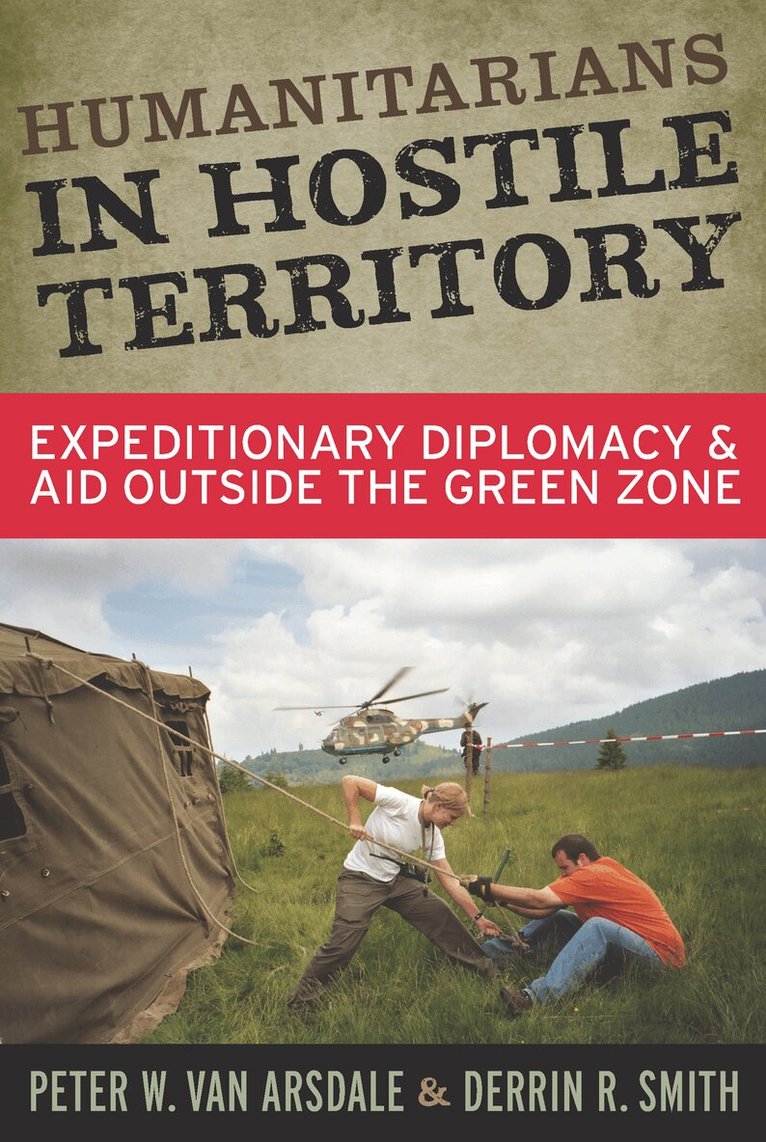
Humanitarians in Hostile Territory
Expeditionary Diplomacy and Aid Outside the Green Zone
AvPeter W Van Arsdale,Derrin R Smith
1 379 kr
Tillfälligt slut
Du är på sajten för privatpersoner.
AvPeter W Van Arsdale,Derrin R Smith
1 379 kr
Tillfälligt slut
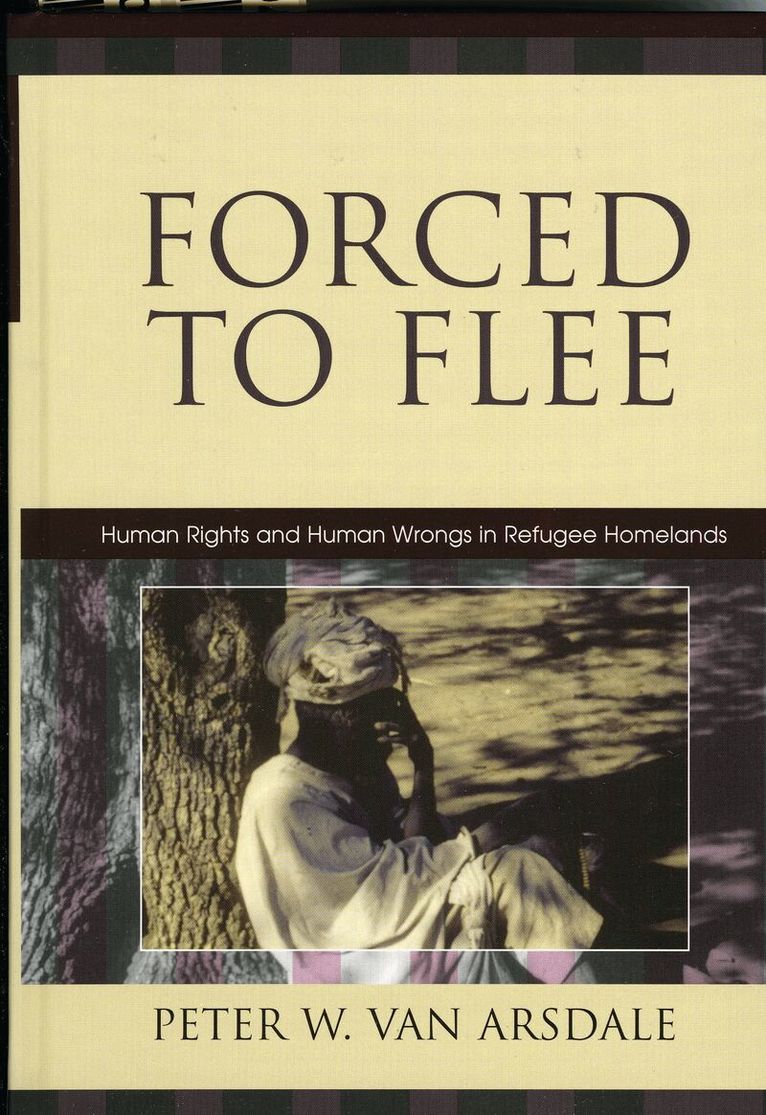
Peter W. Van Arsdale. Ph.D., is a senior lecturer at the Josef Korbel School of International Studies at the University of Denver and a senior researcher with eCrossCulture Corporation. He has conducted fieldwork in the United States, Romania, Bosnia, Indonesia, Sudan, Ethiopia, Guyana, Peru, and El Salvador, and recently helped initiate a program in East Timor with Nobel Peace Laureate Jose Ramos-Horta. He is chair of the Committee on Human Rights of the Society for Applied Anthropology and member of the Committee for Human Rights of the American Anthropological Association. Among his many publications in the field is Forced to Flee: Human Rights and Human Wrongs in Refugee Homelands (2006). Derrin R. Smith, Ph.D., is a political officer at the U.S. Embassy in Beirut, Lebanon, working on terrorism finance and sanctions, trafficking in persons, Iraqi refugees and internally displaced persons, and broader issues involving human rights, labor, and democracy.
"Van Arsdale and Smith bring a rare combination of qualities to the discussion of contemporary humanitarianism and development in volatile settings. This is a book that one can strongly recommend to applied social scientists, engaged civilian practitioners, government and military personnel, graduate students, and to all those who value reading important books. The content is conceptually sound, insightful, ethnographically enriched, methodologically informed, and ethically sensitive and aware. It articulates the interdependencies and complexities of applied work. This book is written with clarity and has broad application for persons working with diverse focal groups in high risk settings."--Walter Vannette, Northern Arizona University "This represents innovative work that is making a difference. Whether affiliated with NGOs, IGOs, government agencies, or academic institutions, humanitarians will benefit greatly."--Jose Ramos-Horta, President of the Democratic Republic of Timor-Leste and 1996 Nobel Peace Prize Laureate "Many of us believe we have a moral imperative to help those in need,and so it follows that this humanitarian obligation doesn't stop at the 'green zone'. How then do citizens safely and effectively step into unsafe territory to better assist the most vulnerable populations? Van Arsdale and Smith have studied and actually provided assistance in conflictive and post-conflictive areas since 1975. With the highest ethical standards, they report on what works and doesn't,using examples from their own overseas experience in hostile environments, to bring together current best practices when working at the civilian-military interface. The authors explain the essential need for collaboration and coordination of government and nongovernment organizations to promote human rights and dignityworldwide. They give the foreign assistance worker pragmatic and ethical guidance for a unified effort so that life affirming servicescan be provided wherever they are needed."--Linda Roan, President, eCrossCulture Corporation "...Within a certain stretch of territory governments and aid organizations establish a presence and provide humanitarian assistance and security to the local population. But what about those civilians living far from secured areas and relief operations? This book is designed to help governments and non-governmental organizations navigate this unfamiliar terrain. Especially important is the delicate subject of civilian-military relations. Van Arsdale and Smith supply ample guidelines and recommendations on how NGOs and governments should play their respective roles and work together toward a common goal. By and large, this is a detailed guide to cutting-edge humanitarian work based on years of experience and case studies, especially the U.S. experience in Iraq, and is recommended reading for Foreign Service personnel and NGOs operating in hostile territory."... - Foreign Service Journal
Du är på sajten för privatpersoner.
AvPeter W Van Arsdale,Derrin R Smith
1 379 kr
Tillfälligt slut
Peter W. Van Arsdale. Ph.D., is a senior lecturer at the Josef Korbel School of International Studies at the University of Denver and a senior researcher with eCrossCulture Corporation. He has conducted fieldwork in the United States, Romania, Bosnia, Indonesia, Sudan, Ethiopia, Guyana, Peru, and El Salvador, and recently helped initiate a program in East Timor with Nobel Peace Laureate Jose Ramos-Horta. He is chair of the Committee on Human Rights of the Society for Applied Anthropology and member of the Committee for Human Rights of the American Anthropological Association. Among his many publications in the field is Forced to Flee: Human Rights and Human Wrongs in Refugee Homelands (2006). Derrin R. Smith, Ph.D., is a political officer at the U.S. Embassy in Beirut, Lebanon, working on terrorism finance and sanctions, trafficking in persons, Iraqi refugees and internally displaced persons, and broader issues involving human rights, labor, and democracy.
"Van Arsdale and Smith bring a rare combination of qualities to the discussion of contemporary humanitarianism and development in volatile settings. This is a book that one can strongly recommend to applied social scientists, engaged civilian practitioners, government and military personnel, graduate students, and to all those who value reading important books. The content is conceptually sound, insightful, ethnographically enriched, methodologically informed, and ethically sensitive and aware. It articulates the interdependencies and complexities of applied work. This book is written with clarity and has broad application for persons working with diverse focal groups in high risk settings."--Walter Vannette, Northern Arizona University "This represents innovative work that is making a difference. Whether affiliated with NGOs, IGOs, government agencies, or academic institutions, humanitarians will benefit greatly."--Jose Ramos-Horta, President of the Democratic Republic of Timor-Leste and 1996 Nobel Peace Prize Laureate "Many of us believe we have a moral imperative to help those in need,and so it follows that this humanitarian obligation doesn't stop at the 'green zone'. How then do citizens safely and effectively step into unsafe territory to better assist the most vulnerable populations? Van Arsdale and Smith have studied and actually provided assistance in conflictive and post-conflictive areas since 1975. With the highest ethical standards, they report on what works and doesn't,using examples from their own overseas experience in hostile environments, to bring together current best practices when working at the civilian-military interface. The authors explain the essential need for collaboration and coordination of government and nongovernment organizations to promote human rights and dignityworldwide. They give the foreign assistance worker pragmatic and ethical guidance for a unified effort so that life affirming servicescan be provided wherever they are needed."--Linda Roan, President, eCrossCulture Corporation "...Within a certain stretch of territory governments and aid organizations establish a presence and provide humanitarian assistance and security to the local population. But what about those civilians living far from secured areas and relief operations? This book is designed to help governments and non-governmental organizations navigate this unfamiliar terrain. Especially important is the delicate subject of civilian-military relations. Van Arsdale and Smith supply ample guidelines and recommendations on how NGOs and governments should play their respective roles and work together toward a common goal. By and large, this is a detailed guide to cutting-edge humanitarian work based on years of experience and case studies, especially the U.S. experience in Iraq, and is recommended reading for Foreign Service personnel and NGOs operating in hostile territory."... - Foreign Service Journal
Du är på sajten för privatpersoner.
AvPeter W Van Arsdale,Derrin R Smith
1 379 kr
Tillfälligt slut
Peter W. Van Arsdale. Ph.D., is a senior lecturer at the Josef Korbel School of International Studies at the University of Denver and a senior researcher with eCrossCulture Corporation. He has conducted fieldwork in the United States, Romania, Bosnia, Indonesia, Sudan, Ethiopia, Guyana, Peru, and El Salvador, and recently helped initiate a program in East Timor with Nobel Peace Laureate Jose Ramos-Horta. He is chair of the Committee on Human Rights of the Society for Applied Anthropology and member of the Committee for Human Rights of the American Anthropological Association. Among his many publications in the field is Forced to Flee: Human Rights and Human Wrongs in Refugee Homelands (2006). Derrin R. Smith, Ph.D., is a political officer at the U.S. Embassy in Beirut, Lebanon, working on terrorism finance and sanctions, trafficking in persons, Iraqi refugees and internally displaced persons, and broader issues involving human rights, labor, and democracy.
"Van Arsdale and Smith bring a rare combination of qualities to the discussion of contemporary humanitarianism and development in volatile settings. This is a book that one can strongly recommend to applied social scientists, engaged civilian practitioners, government and military personnel, graduate students, and to all those who value reading important books. The content is conceptually sound, insightful, ethnographically enriched, methodologically informed, and ethically sensitive and aware. It articulates the interdependencies and complexities of applied work. This book is written with clarity and has broad application for persons working with diverse focal groups in high risk settings."--Walter Vannette, Northern Arizona University "This represents innovative work that is making a difference. Whether affiliated with NGOs, IGOs, government agencies, or academic institutions, humanitarians will benefit greatly."--Jose Ramos-Horta, President of the Democratic Republic of Timor-Leste and 1996 Nobel Peace Prize Laureate "Many of us believe we have a moral imperative to help those in need,and so it follows that this humanitarian obligation doesn't stop at the 'green zone'. How then do citizens safely and effectively step into unsafe territory to better assist the most vulnerable populations? Van Arsdale and Smith have studied and actually provided assistance in conflictive and post-conflictive areas since 1975. With the highest ethical standards, they report on what works and doesn't,using examples from their own overseas experience in hostile environments, to bring together current best practices when working at the civilian-military interface. The authors explain the essential need for collaboration and coordination of government and nongovernment organizations to promote human rights and dignityworldwide. They give the foreign assistance worker pragmatic and ethical guidance for a unified effort so that life affirming servicescan be provided wherever they are needed."--Linda Roan, President, eCrossCulture Corporation "...Within a certain stretch of territory governments and aid organizations establish a presence and provide humanitarian assistance and security to the local population. But what about those civilians living far from secured areas and relief operations? This book is designed to help governments and non-governmental organizations navigate this unfamiliar terrain. Especially important is the delicate subject of civilian-military relations. Van Arsdale and Smith supply ample guidelines and recommendations on how NGOs and governments should play their respective roles and work together toward a common goal. By and large, this is a detailed guide to cutting-edge humanitarian work based on years of experience and case studies, especially the U.S. experience in Iraq, and is recommended reading for Foreign Service personnel and NGOs operating in hostile territory."... - Foreign Service Journal