• Fri frakt över 249 kr
  • •
  • Snabba leveranser
  • •
  • Billiga böcker
Kundservice

Du är på sajten för privatpersoner.

Företag, bibliotek eller offentlig verksamhet?

Du handlar på classic.bokus.com, där alla dina funktioner finns intakta.
Till classic.bokus.com
Bokus logotyp. Gå till startsidan.
  • Erbjudanden
  • Nyheter
  • Student
  • Topplistor
  • Barn & ungdom
  • Bokus Play
  • E-böcker
  • Pocketböcker
  • Spel & pussel

10% rabatt på allt med kod: NYSTART10 →

Sidfot

Mina sidor

    Hjälp

    • Kundservice
    • Vanliga frågor och svar
    • Frakt och leverans
    • Retur vid ångerrätt
    • Reklamera vara
    • Betalning
    • Köpvillkor
    • Allmänna villkor
    • Information om webbplatsens tillgänglighet

    Om Bokus

    • Om oss
    • Pressrum
    • För studenter
    • För företag
    • För bibliotek och offentlig verksamhet
    • För leverantörer
    • Hållbarhet

    Populärt

    • Aktuella erbjudanden
    • Presentkort
    • Studentlitteratur
    • Nya böcker
    • Topplistor
    • Signerade böcker
    • Engelska böcker

    Inspiration

    • Boktips
    • BookTok
    • Populära bokserier
    • Barnbokskaraktärer
    • Populära författare
    Logotyp för Bokus
    Följ oss på Facebook (extern länk)Följ oss på Instagram (extern länk)Följ oss på YouTube (extern länk)Följ oss på TikTok (extern länk)
    bokus @ CookiesAnpassa cookiesIntegritetspolicyKöpvillkor
    Till Citymail hemsida (extern länk)Till Budbee hemsida (extern länk)Till Postnord hemsida (extern länk)Till Schenker hemsida (extern länk)Till Early Bird hemsida (extern länk)Till Walleys hemsida (extern länk)
    1. Naturvetenskap och teknik
    2. Teknik och industri
    3. Maskinteknik och material

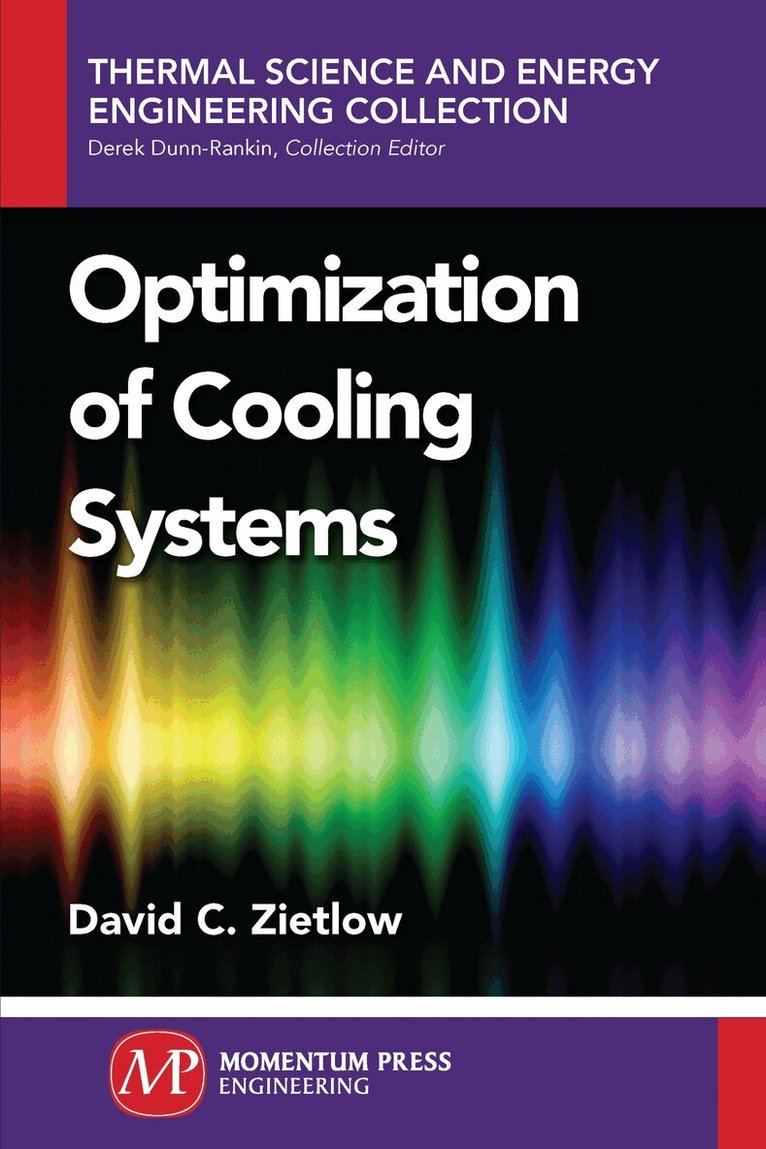
    Optimization of Cooling Systems

    AvDavid C. Zietlow

    Häftad, Engelska, 2016

    Del i serien Thermal Science and Energy Engineering Collection

    762 kr

    Beställningsvara. Skickas inom 3-6 vardagar. Fri frakt över 249 kr.

    Beskrivning

    Most energy systems are suboptimized. Businesses and consumers are so focused on initial costs that they underestimate the effect of operating the energy system over its life. This suboptimization creates a fantastic opportunity to not only make a wise decision financially but also reduce the environmental impact of energy systems. There are three simple tools, known to all mechanical engineers, that when added to traditional thermodynamics, enable an engineer to find the true optimum of an energy system. In this concise book, you will be equipped with these tools and will understand how they are applied to cooling systems. The target audiences for this book are mechanical engineering students in their first semester of thermodynamics through engineers with 20+ years of experience in the design of cooling systems. First semester thermodynamic students will benefit the most from Appendixes A and C in Chapter 1. The rest of Chapter 1 is written at a level where any undergraduate mechanical engineering student who is taking heat transfer will be able to quickly assimilate the knowledge. This book also has the depth to handle the latent load, which will provide the practicing engineer with the tools necessary to handle the complexity of real cooling systems.

    Produktinformation

    • Utgivningsdatum:2016-01-13
    • Mått:152 x 229 x 9 mm
    • Vikt:251 g
    • Format:Häftad
    • Språk:Engelska
    • Serie:Thermal Science and Energy Engineering Collection
    • Antal sidor:164
    • Förlag:Momentum Press
    • ISBN:9781606504741

    Utforska kategorier

    • Maskinteknik och material inom Naturvetenskap och teknik

    Mer om författaren

    Dr. David C. Zietlow is a professor of mechanical engineering at Bradley University in Peoria, IL. He has been teaching thermodynamics since 2000. From 2005 to the present, he has equipped his first semester thermodynamic students with the tools they need to optimize energy systems. He has 12 years of industrial experience with Sargent and Lundy, Central Illinois Light Company, Ford Motor Company, and Visteon. He has published 11 journal articles and 14 referred conference papers in the thermal science field. He is a member of the American Society of Heating, Refrigerating, and Air Conditioning Engineers (ASHRAE) and the American Society of Engineering Educators.