• Fri frakt över 249 kr
  • •
  • Snabba leveranser
  • •
  • Billiga böcker
Kundservice

Du är på sajten för privatpersoner.

Företag, bibliotek eller offentlig verksamhet?

Du handlar på classic.bokus.com, där alla dina funktioner finns intakta.
Till classic.bokus.com
Bokus logotyp. Gå till startsidan.
  • Erbjudanden
  • Nyheter
  • Student
  • Topplistor
  • Barn & ungdom
  • Bokus Play
  • E-böcker
  • Pocketböcker
  • Spel & pussel

10% rabatt på allt med kod: NYSTART10 →

Sidfot

Mina sidor

    Hjälp

    • Kundservice
    • Vanliga frågor och svar
    • Frakt och leverans
    • Retur vid ångerrätt
    • Reklamera vara
    • Betalning
    • Köpvillkor
    • Allmänna villkor
    • Information om webbplatsens tillgänglighet

    Om Bokus

    • Om oss
    • Pressrum
    • För studenter
    • För företag
    • För bibliotek och offentlig verksamhet
    • För leverantörer
    • Hållbarhet

    Populärt

    • Aktuella erbjudanden
    • Presentkort
    • Studentlitteratur
    • Nya böcker
    • Topplistor
    • Signerade böcker
    • Engelska böcker

    Inspiration

    • Boktips
    • BookTok
    • Populära bokserier
    • Barnbokskaraktärer
    • Populära författare
    Logotyp för Bokus
    Följ oss på Facebook (extern länk)Följ oss på Instagram (extern länk)Följ oss på YouTube (extern länk)Följ oss på TikTok (extern länk)
    bokus @ CookiesAnpassa cookiesIntegritetspolicyKöpvillkor
    Till Citymail hemsida (extern länk)Till Budbee hemsida (extern länk)Till Postnord hemsida (extern länk)Till Schenker hemsida (extern länk)Till Early Bird hemsida (extern länk)Till Walleys hemsida (extern länk)
    1. Medicin
    2. Klinisk medicin och internmedicin
    3. Sjukdomar och rubbningar
    4. Onkologi

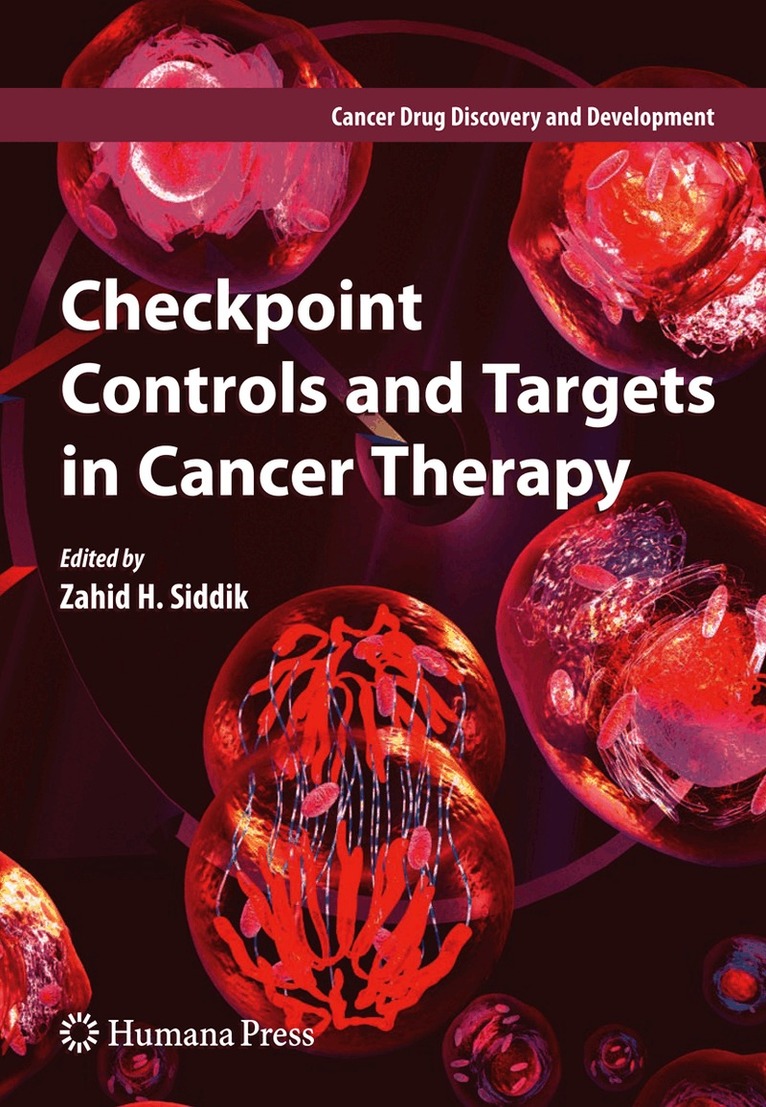
    Checkpoint Controls and Targets in Cancer Therapy

    AvZahid H. Siddik

    Inbunden, Engelska, 2009

    Del i serien Cancer Drug Discovery and Development

    1 674 kr

    Beställningsvara. Skickas inom 10-15 vardagar. Fri frakt över 249 kr.

    Beskrivning

    Much work over the last two decades has firmly established that loss of cell cycle checkpoint regulation, and resultant unabated cellular proliferation, is an inherent characteristic of cancer. This loss may occur through aberration in any single component involved in signal transduction pathways that orchestrate checkpoint regulation, which may manifest through either a failure to activate the checkpoint or a failure to respond to the activated checkpoint. In normal cells, checkpoint pathways are activated when genetic or cellular homeostasis is compromised, and signals are then transduced to re-stabilize homeostasis, and, failing this, to activate the apoptotic machinery to induce a cellular suicidal response. This implies that both survival and cell death pathways are induced following checkpoint activation, and that the final decision is dependant on the net result of integrating the two sets of signals.It is intriguing that checkpoint pathways are also critical in cancer therapy to provide an apoptotic stimulus when cellular damage induced by the therapeutic agent is detected by the sensor system. Therefore, it is not surprising that failure in pro-survival checkpoint response will render tumor cells hypersensitive to cytotoxics and, conversely, failure in pro-apoptotic checkpoint response will induce genetic instability and/or therapeutic resistance. Understanding the intricacies of checkpoint response is, therefore, central to the design of therapeutic regimen that will enhance antitumor effects. Although early versions of this design entail combination of cytotoxic agents with cell cycle or checkpoint inhibitors, a greater understanding of the concepts could make such combinations clinically more effective. The contributions in this book will consolidate the current state of knowledge on checkpoint responses that may lay the foundation for hypothesis-driven rational approaches in advancing the management of cancer. The immediate attraction of the book to the scientific community is that it represents a timely opportunity to build upon existing concepts of checkpoints to expand our understanding of the inner workings of the critical checkpoint machinery. The present understanding has provided ample appreciation that response to checkpoint activation is manifested through coordinated inhibition of cyclin-dependent kinase (CDK) complexes in G1, S and/or the G2 phase in order to arrest the cell cycle. Kinase inhibition can occur through several mechanisms, including inhibitory phosphorylation of CDK, destruction of the cognate cyclins, and recruitment of CDK inhibitors from the INK and WAF1/CIP1 families. However, the wealth of information from recent discoveries needs to be examined critically to consolidate our conceptual knowledge of checkpoints. At the same time, there is acute awareness in the diversity of checkpoint response between cytotoxic agents, and this serves as a reminder of the magnitude of complexity that is inherent in checkpoint regulation. This volume is intended to bring the cancer research community closer toward an improved understanding of this regulation, how checkpoint abnormalities can impact negatively on cancer therapy, and emerging strategies to target checkpoint response as a therapeutic end-point.

    Produktinformation

    • Utgivningsdatum:2009-09-07
    • Mått:178 x 254 x 23 mm
    • Vikt:809 g
    • Format:Inbunden
    • Språk:Engelska
    • Serie:Cancer Drug Discovery and Development
    • Antal sidor:274
    • Upplaga:2009
    • Förlag:Humana Press Inc.
    • ISBN:9781607611776

    Utforska kategorier

    • Onkologi inom Medicin
    • Farmakologi inom Medicin

    Recensioner i media

    From the reviews: "This nicely organized book focuses on cell cycle checkpoint and cancer biology/therapeutics. ... The book is written for graduate students, residents, and postdoctoral investigators in basic, translational, or clinical cancer research. The contributing authors are active investigators at the forefront of this field. ... This book presents timely, comprehensive reviews of the rapidly progressing field of checkpoint. It should be quite useful for readers who are seeking a solid grasp of updated information in this field." (Hiroaki Kiyokawa, Doody's Review Service, March, 2010)

    Innehållsförteckning

    • Circuitry of Checkpoint Response.- Evasion of G1 Checkpoints in Cancer.- Distinct Pathways Involved in S-Phase Checkpoint Control.- Mechanisms of G2 Phase Arrest in DNA Damage-Induced Checkpoint Response.- Centrosomes in Checkpoint Responses.- Interplay of 14-3-3 Family of Proteins with DNA Damage-Regulated Molecules in Checkpoint Control.- Checkpoint Response and the Aetiology of Cancer.- Chromatin Modifications and Orchestration of Checkpoint Response in Cancer.- DNA Damage Response and the Balance Between Cell Survival and Cell Death.- Dysfunction of the RB Retinoblastoma Gene in Cancer.- G1 Phase Cyclins in Cancer Development and Progression.- The BRCA1/2 Pathway Prevents Some Leukemias and Lymphomas in Addition to Breast/Ovarian Cancers: Malignancies that Overcome Checkpoint Controls.- Targeting Checkpoint Response in Cancer Therapy.- Regulation of p53 Activity and Associated Checkpoint Controls.- The Importance of p53 Signaling in the Response of Cells to Checkpoint Inhibitors.- Targeting p21-Dependent Pathways for Cell Death in Cancer Therapy.- p27Kip1 as a Biomarker and Target for Treatment of Cancer.- Targeting Cyclin-Dependent Kinases with Small Molecule Inhibitors.- Chk1 and Chk2 as Checkpoint Targets.- Targeting Cdc25 Phosphatases in Cancer Therapy.