• Fri frakt över 249 kr
  • •
  • Snabba leveranser
  • •
  • Billiga böcker
Kundservice

Du är på sajten för privatpersoner.

Företag, bibliotek eller offentlig verksamhet?

Du handlar på classic.bokus.com, där alla dina funktioner finns intakta.
Till classic.bokus.com
Bokus logotyp. Gå till startsidan.
  • Erbjudanden
  • Nyheter
  • Student
  • Topplistor
  • Barn & ungdom
  • Bokus Play
  • E-böcker
  • Pocketböcker
  • Spel & pussel

10% rabatt på allt med kod NYSTART10 →

Sidfot

Mina sidor

    Hjälp

    • Kundservice
    • Vanliga frågor och svar
    • Frakt och leverans
    • Retur vid ångerrätt
    • Reklamera vara
    • Betalning
    • Köpvillkor
    • Allmänna villkor
    • Information om webbplatsens tillgänglighet

    Om Bokus

    • Om oss
    • Pressrum
    • För studenter
    • För företag
    • För bibliotek och offentlig verksamhet
    • För leverantörer
    • Hållbarhet

    Populärt

    • Aktuella erbjudanden
    • Presentkort
    • Studentlitteratur
    • Nya böcker
    • Topplistor
    • Signerade böcker
    • Engelska böcker

    Inspiration

    • Boktips
    • BookTok
    • Populära bokserier
    • Barnbokskaraktärer
    • Populära författare
    Logotyp för Bokus
    Följ oss på Facebook (extern länk)Följ oss på Instagram (extern länk)Följ oss på YouTube (extern länk)Följ oss på TikTok (extern länk)
    bokus @ CookiesAnpassa cookiesIntegritetspolicyKöpvillkor
    Till Citymail hemsida (extern länk)Till Budbee hemsida (extern länk)Till Postnord hemsida (extern länk)Till Schenker hemsida (extern länk)Till Early Bird hemsida (extern länk)Till Walleys hemsida (extern länk)
    1. Naturvetenskap och teknik
    2. Geovetenskap
    3. Miljövetenskap och miljöpolitik

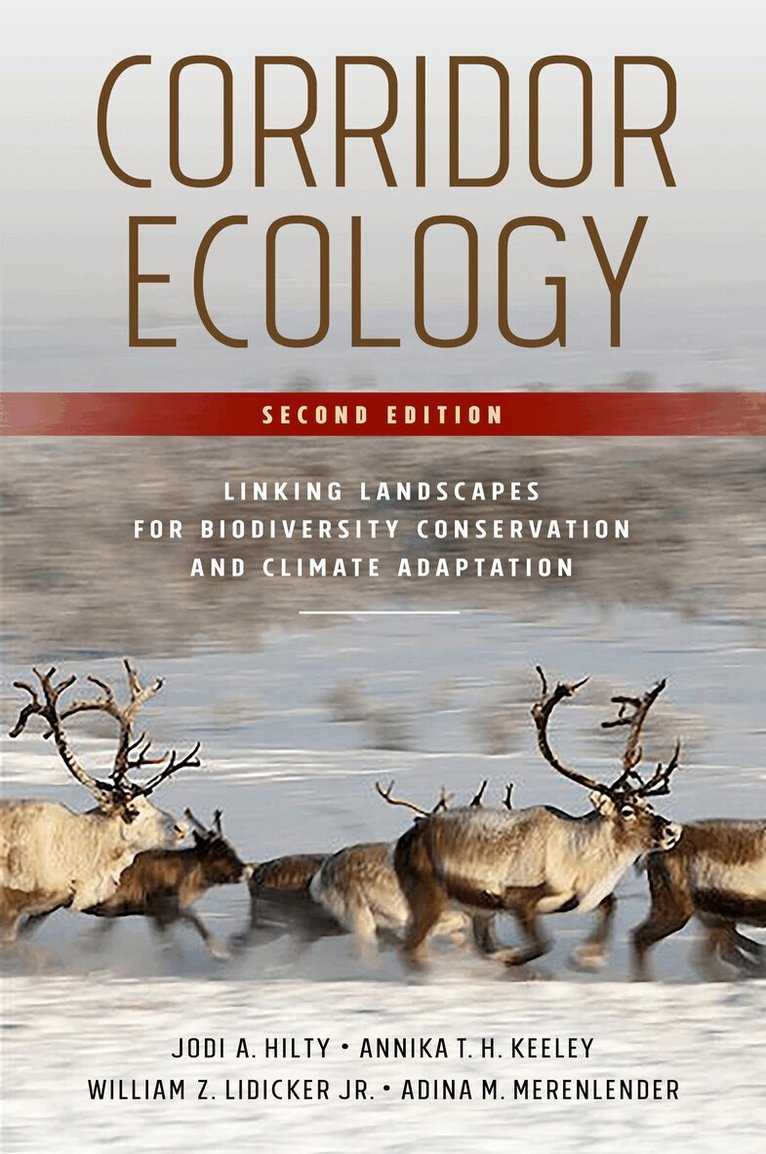
    Corridor Ecology, Second Edition

    Linking Landscapes for Biodiversity Conservation and Climate Adaptation

    AvJodi A. Hilty,Annika T. H. Keeley

    Häftad, Engelska, 2019

    398 kr

    Beställningsvara. Skickas inom 5-8 vardagar. Fri frakt över 249 kr.

    Beskrivning

    Migrating wildlife species across the globe face a dire predicament as their traditional migratory routes are cut off by human encroachment. Forced into smaller and smaller patches of habitat, they must compete more aggressively for dwindling food resources and territory. This is more than just an unfortunate side effect of human progress. As key species populations dwindle, ecosystems are losing resilience and face collapse, and along with them, the ecosystem services we depend on. Healthy ecosystems need healthy wildlife populations. One possible answer? Wildlife corridors that connect fragmented landscapes. This new and expanded second edition of Corridor Ecology: Linking Landscapes for Biodiversity Conservation and Climate Adaptation captures the many advances in the field over the past ten years. It builds on concepts presented in the first edition on the importance and practical details of maintaining and restoring land connectivity. New to this edition is a guest-edited chapter on ecological connectivity in oceans, including a detailed discussion on pelagic marine corridors and how coastal corridors can provide critical connectivity between marine protected areas. Another new chapter considers the effects of climate change on habitat and offers recommendations on designing effective corridors as landscapes change with shifting climate conditions. The book also includes a discussion of corridors in the air for migrating flying species, from birds to bats, butterflies, and even plant propagules--a concept so new that a term to describe it has yet to be coined. All chapters are thoroughly revised and updated. Practitioners as well as serious scholars of landscape ecology and the science of protecting biodiversity will find this new edition of corridor ecology science an indispensable resource.

    Produktinformation

    • Utgivningsdatum:2019-04-23
    • Mått:152 x 226 x 20 mm
    • Vikt:454 g
    • Format:Häftad
    • Språk:Engelska
    • Antal sidor:350
    • Upplaga:2
    • Förlag:Princeton University Press
    • ISBN:9781610919517

    Utforska kategorier

    • Miljövetenskap och miljöpolitik inom Naturvetenskap och teknik

    Mer om författaren

    Jodi A. Hilty is president and chief scientist of the Yellowstone to Yukon Conservation Initiative, in Canmore, Alberta. Annika T. H. Keeley is a postdoctoral scholar at the University of California, Berkeley. Dr. William Z. Lidicker is Professor of Integrative Biology and Curator of Mammals Emeritus at the University of California, Berkeley. Adina M. Merenlender is a cooperative extension specialist at the University of California, Berkeley, and president-elect of the Society for Conservation Biology.

    Innehållsförteckning

    • Table of ContentsForewordPrefaceIntroductionChapter 1. Background: Habit Loss, Fragmentation, and Climate Change-Human-induced Change and Habitat Loss-Climate Change Overview-Limitations to Protected Areas-Reconnecting Our Planet-Growth of Connectivity Science and PracticeChapter 2. The Ecological Framework-Island Biogeography-Metapopulation Theory: Conceptual History-Metapopulation Processes-Dispersal-The Demography of Extinction-Genetic Structuring-A Longer-Term Perspective-Metacommunity Theory-Beyond Metacommunities: Landscape and Ecoscape ConceptsChapter 3. Understanding Fragmentation-Natural versus Human-Induced Fragmentation-Speed and Pattern of Change-Consequences of Human-Induced Fragmentation-Changes in Species Composition of Patches-Genetic Considerations Affecting Species Extinction-Role of the Matrix-Edges and Edge EffectsChapter 4. Approaches to Achieving Habitat Connectivity-What Is a Corridor-Types of Corridors-Riparian Areas-Corridors for Individual Species Conservation-Corridor Complexities-Biological Benefits-Benefits to HumansChapter 5. Corridor Design Objectives-Focal Species Considerations-Habitat Requirements-Dispersal Considerations-Generalist versus Specialist-Behavioral Factors-Sensitivity to Human Activity-Physical Limitations-Topography and Microclimate for Climate-Wise Connectivity-Corridor Quality: Continuity, Composition, and Dimension-Continuous Corridors-Stepping-Stone Connectivity-Habitat Quality-Corridor Dimensions-Landscape Configuration-Riparian Corridors-Hydrologic Habitat Connectivity: Structural, Functional, and Ecological-Ecological NetworksChapter 6. Potential Pitfalls or Disadvantages of Linking Landscapes-Impacts of Edge Effects-Corridors as Biotic Filters-Facilitation of Invasions-Demographic Impacts-Social Behavior-Negative Genetic Effects-Conflicting Ecological Objectives-Economic ConsiderationsChapter 7. Identifying, Prioritizing, and Assessing Habitat Connectivity-Establish Collaborations-Addressing Scale-Identifying Terrestrial Corridors for Conservation and Restoration-Prioritization-Climate Resilience Benefits-Assessing Corridors-CaveatsChapter 8. Climate-Wise Connectivity-Principles of Climate Space-Designing Climate-Wise Connectivity-Including Refugia in Climate-Wise Connectivity Design-Estimating Range Shifts Using Species Distribution Modeling-RecommendationsChapter 9. Ecological Connectivity in the Ocean \ Mark H. Carr and Elliott L. Hazen-Introduction-What Constitutes Pelagic Connectivity and Corridors?-Where Are the Major Pelagic Marine Corridors?-Threats to Pelagic Corridors and Potential Conservation Approaches-What Constitutes Connectivity and Corridors in the Coastal Ocean?-Threats to Coastal Species, Ecosystems, and Their Connectivity-Implications of Coastal Corridors for Species and Biodiversity Conservation: Marine Protected Area NetworksChapter 10. Protecting and Restoring Corridors-Opportunities and Challenges-Law and Policy Mechanisms-Stewardship of Working Lands-Private Land Conservation-Types of Agreements-Restoring Land-Lessons from Corridor ProjectsConclusionReferencesAbout the AuthorsIndex