• Fri frakt över 249 kr
  • •
  • Snabba leveranser
  • •
  • Billiga böcker
Kundservice

Du är på sajten för privatpersoner.

Företag, bibliotek eller offentlig verksamhet?

Du handlar på classic.bokus.com, där alla dina funktioner finns intakta.
Till classic.bokus.com
Bokus logotyp. Gå till startsidan.
  • Erbjudanden
  • Nyheter
  • Student
  • Topplistor
  • Barn & ungdom
  • Bokus Play
  • E-böcker
  • Pocketböcker
  • Spel & pussel

Må bättre, för mindre! Upp till 50% rabatt på hälsoböcker

Sidfot

Mina sidor

    Hjälp

    • Kundservice
    • Vanliga frågor och svar
    • Frakt och leverans
    • Retur vid ångerrätt
    • Reklamera vara
    • Betalning
    • Köpvillkor
    • Allmänna villkor
    • Information om webbplatsens tillgänglighet

    Om Bokus

    • Om oss
    • Pressrum
    • För studenter
    • För företag
    • För bibliotek och offentlig verksamhet
    • För leverantörer
    • Hållbarhet

    Populärt

    • Aktuella erbjudanden
    • Presentkort
    • Studentlitteratur
    • Nya böcker
    • Topplistor
    • Signerade böcker
    • Engelska böcker

    Inspiration

    • Boktips
    • BookTok
    • Populära bokserier
    • Barnbokskaraktärer
    • Populära författare
    Logotyp för Bokus
    Följ oss på Facebook (extern länk)Följ oss på Instagram (extern länk)Följ oss på YouTube (extern länk)Följ oss på TikTok (extern länk)
    bokus @ CookiesAnpassa cookiesIntegritetspolicyKöpvillkor
    Till Citymail hemsida (extern länk)Till Budbee hemsida (extern länk)Till Postnord hemsida (extern länk)Till Schenker hemsida (extern länk)Till Early Bird hemsida (extern länk)Till Walleys hemsida (extern länk)
    1. Historia och arkeologi
    2. Arkeologi
    3. Arkeologiska perioder och områden

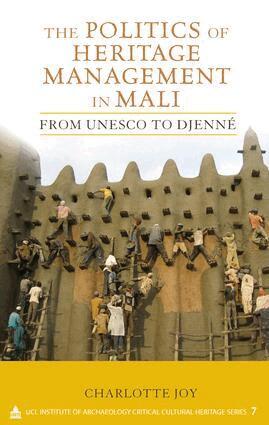
    Politics of Heritage Management in Mali

    From UNESCO to Djenné

    AvCharlotte L Joy

    Inbunden, Engelska, 2012

    Del i serien UCL Institute of Archaeology Critical Cultural Heritage Series

    2 493 kr

    Beställningsvara. Skickas inom 10-15 vardagar. Fri frakt över 249 kr.

    Fler format och utgåvor

    E-bok

    807 kr

    E-bok

    805 kr

    Häftad

    701 kr

    Beskrivning

    The UNESCO World Heritage Site of Djenné, in modern day Mali, is exalted as an enduring wonder of the ancient African world by archaeologists, anthropologists, state officials, architects and travel writers. In this revealing study, the author critically examines how the politics of heritage management, conservation, and authenticity play essential roles in the construction of Djenné’s past and its appropriation for contemporary purposes. Despite its great renown, the majority of local residents remain desperately poor. And while most are proud of their cultural heritage, they are often troubled by the limitations it places on their day to day living conditions. Joy argues for a more critical understanding of this paradox and urges us all to reconsider the moral and philosophical questions surrounding the ways in which we use the past in the present.

    Produktinformation

    • Utgivningsdatum:2012-01-15
    • Mått:152 x 229 x undefined mm
    • Vikt:600 g
    • Format:Inbunden
    • Språk:Engelska
    • Serie:UCL Institute of Archaeology Critical Cultural Heritage Series
    • Antal sidor:235
    • Förlag:Left Coast Press Inc
    • ISBN:9781611320947

    Utforska kategorier

    • Arkeologiska perioder och områden inom Historia och arkeologi

    Recensioner i media

    "How does an urban population of poor African Muslims best confront narratives imposed from the outside about their cityscape in order to improve their lives? This case study reveals the contradictions between Eurocentric notions of preservation and survival for people whose poverty has reduced many of them to one meal a day. Joy ties together history and life in a "heritage site," home to living populations, whose rights to self-determination have taken a back seat to the "universal value" of the buildings in which they live." --Current Anthropology

    Innehållsförteckning

    • Introduction; Part I Putting Djenné on the Map; Chapter 1 Architecture and the “Creation” of Djenné in the West; Chapter 2 Archaeology and Architecture; Chapter 3 UNESCO and Becoming a World Heritage Site; Part II Life in Djenné; Chapter 4 Islam; Chapter 5 Livelihood Strategies; Chapter 6 Artisans, Embodied Knowledge, and Authenticity; Chapter 7 Guides and the Regulation of History in Djenné; Chapter 8 Festival du Djennéry; Chapter 9 Conclusion;