• Fri frakt över 249 kr
  • •
  • Snabba leveranser
  • •
  • Billiga böcker
Kundservice

Du är på sajten för privatpersoner.

Företag, bibliotek eller offentlig verksamhet?

Du handlar på classic.bokus.com, där alla dina funktioner finns intakta.
Till classic.bokus.com
Bokus logotyp. Gå till startsidan.
  • Erbjudanden
  • Nyheter
  • Student
  • Topplistor
  • Barn & ungdom
  • Bokus Play
  • E-böcker
  • Pocketböcker
  • Spel & pussel

10% rabatt på allt med kod NYSTART10 →

Sidfot

Mina sidor

    Hjälp

    • Kundservice
    • Vanliga frågor och svar
    • Frakt och leverans
    • Retur vid ångerrätt
    • Reklamera vara
    • Betalning
    • Köpvillkor
    • Allmänna villkor
    • Information om webbplatsens tillgänglighet

    Om Bokus

    • Om oss
    • Pressrum
    • För studenter
    • För företag
    • För bibliotek och offentlig verksamhet
    • För leverantörer
    • Hållbarhet

    Populärt

    • Aktuella erbjudanden
    • Presentkort
    • Studentlitteratur
    • Nya böcker
    • Topplistor
    • Signerade böcker
    • Engelska böcker

    Inspiration

    • Boktips
    • BookTok
    • Populära bokserier
    • Barnbokskaraktärer
    • Populära författare
    Logotyp för Bokus
    Följ oss på Facebook (extern länk)Följ oss på Instagram (extern länk)Följ oss på YouTube (extern länk)Följ oss på TikTok (extern länk)
    bokus @ CookiesAnpassa cookiesIntegritetspolicyKöpvillkor
    Till Citymail hemsida (extern länk)Till Budbee hemsida (extern länk)Till Postnord hemsida (extern länk)Till Schenker hemsida (extern länk)Till Early Bird hemsida (extern länk)Till Walleys hemsida (extern länk)
    1. Skönlitteratur
    2. Litteraturvetenskap

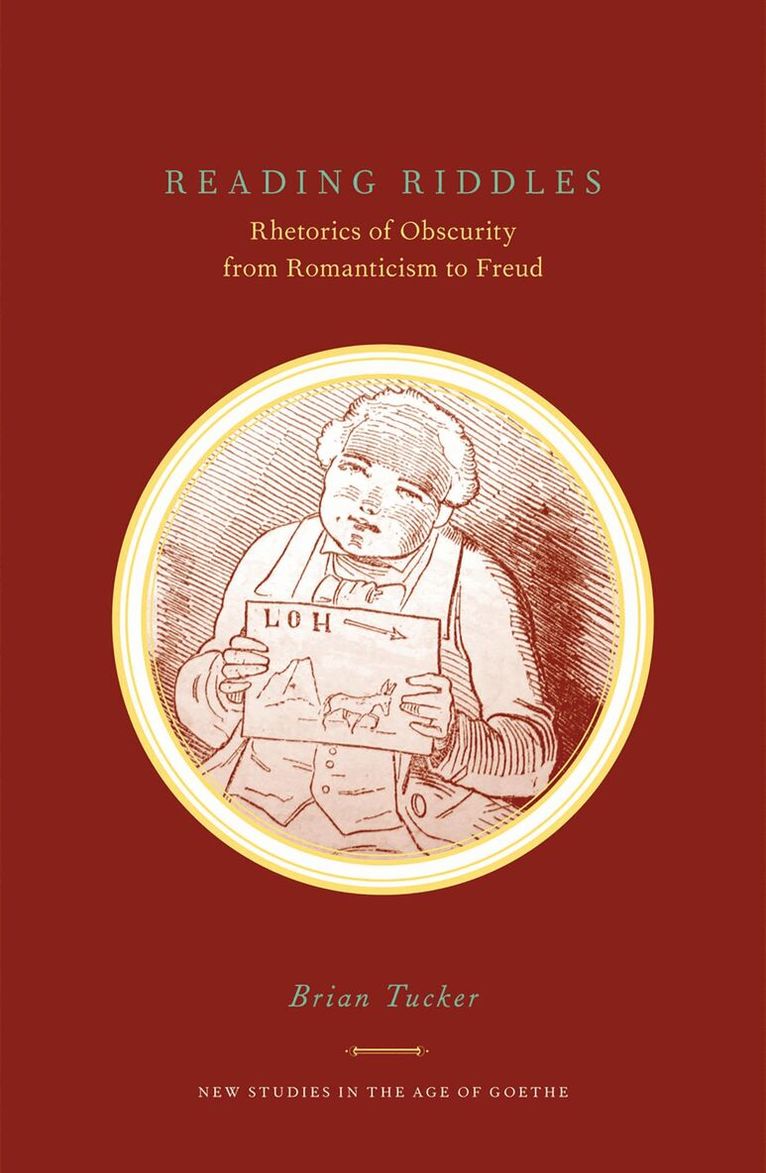
    Reading Riddles

    Rhetorics of Obscurity from Romanticism to Freud

    AvBrian Tucker

    Inbunden, Engelska, 2010

    Del i serien New Studies in the Age of Goethe

    1 365 kr

    Beställningsvara. Skickas inom 10-15 vardagar. Fri frakt över 249 kr.

    Fler format och utgåvor

    E-bok

    1 475 kr

    Beskrivning

    Reading Riddles: Rhetorics of Obscurity from Romanticism to Freud explores how the riddle becomes a figure for reading and writing in early German Romanticism and how this model then enables Sigmund Freud's approach to the psyche. It traces a migration of ideas from literature to psychoanalysis and argues that the relationship between them must be situated at the methodological level. Through readings of texts by August Wilhelm, Friedrich Schlegel, G.W.F. Hegel, and Ludwig Tieck Reading Riddles documents how the Romantics expand the field of poetic signification to include obscure, distorted signs and how they applied this rhetoric of obscurity to the self. The book argues that this model of self and signification plays a central role in the formulation of Freud's psychoanalytic theory. If the self is a riddle, as many in the nineteenth century claim, Freud takes the figure seriously and interprets the mind according to all the structures and techniques of that textual genre.

    Produktinformation

    • Utgivningsdatum:2010-12-16
    • Mått:162 x 241 x 19 mm
    • Vikt:429 g
    • Format:Inbunden
    • Språk:Engelska
    • Serie:New Studies in the Age of Goethe
    • Antal sidor:200
    • Förlag:Associated University Presses
    • ISBN:9781611480283

    Utforska kategorier

    • Litteraturvetenskap inom Skönlitteratur

    Mer om författaren

    Brian Tucker is assistant professor of German at Wabash College in Indiana.

    Recensioner i media

    In this cogent contribution to scholarship, Tucker argues for a connection between Romanticism and psychoanalysis 'at the level of formal and methodological principles, in a shared notion of how poetic language operates.' The author observes that in German Romanticism the riddle—understood as a 'figure for the processes of writing and reading'—emerges as a key figure for a modern poetics that 'privileges obscurity, difficulty, and interrupted communication.' He develops this idea in discussions of comprehensibility/incomprehensibility and the function of criticism between August Wilhelm and Friedrich Schlegel, Hegel's conception of the symbol, and the deployment of riddle structures in Ludwig Tieck's 'Blond Eckbert' and William Lowell. Tucker then takes up Freud's work on jokes and dream work to show that the riddle provides a model for Freud's interpretative practices; he offers a plausible path of intellectual transmission of this model from the Romantics. Freud, then, becomes his own Oedipal figure: a man who strives to solve the riddle of the human psyche. Tucker's focus on the riddle is a new and productive approach to the material; it merits attention. Recommended. Upper-division undergraduates, graduate students, researchers/faculty.

    Innehållsförteckning

    • Chapter 1 AcknowledgmentsChapter 2 Note on Translations and AbbreviationsChapter 3 IntroductionPart 4 I. Riddle and Obscurity in Early RomanticismChapter 5 Chapter 1: From Irritant to Ideal: The Transvaluation of RiddleChapter 6 Chapter 2: The Closed Circle of CriticismChapter 7 Chapter 3: Alethic Aesthetics: Hegel's Riddle of the SymbolChapter 8 Chapter 4: Wordplay and Identity in Tieck's Early ProsePart 9 II. Reading the Psyche: The Human RiddleChapter 10 Chapter 5: The Inaugural Gesture of PsychoanalysisChapter 11 Chapter 6: The Joke and Its Other: Toward a Freudian Concept of RiddleChapter 12 Chapter 7: The Riddle as Freud's Textual ModelChapter 13 Chapter 8: Trauma and the Other Oedipus ComplexChapter 14 NotesChapter 15 BibliographyChapter 16 Index