• Fri frakt över 249 kr
  • •
  • Snabba leveranser
  • •
  • Billiga böcker
Kundservice

Du är på sajten för privatpersoner.

Företag, bibliotek eller offentlig verksamhet?

Du handlar på classic.bokus.com, där alla dina funktioner finns intakta.
Till classic.bokus.com
Bokus logotyp. Gå till startsidan.
  • Erbjudanden
  • Nyheter
  • Student
  • Topplistor
  • Barn & ungdom
  • Bokus Play
  • E-böcker
  • Pocketböcker
  • Spel & pussel

Må bättre, för mindre! Upp till 50% rabatt på hälsoböcker

Sidfot

Mina sidor

    Hjälp

    • Kundservice
    • Vanliga frågor och svar
    • Frakt och leverans
    • Retur vid ångerrätt
    • Reklamera vara
    • Betalning
    • Köpvillkor
    • Allmänna villkor
    • Information om webbplatsens tillgänglighet

    Om Bokus

    • Om oss
    • Pressrum
    • För studenter
    • För företag
    • För bibliotek och offentlig verksamhet
    • För leverantörer
    • Hållbarhet

    Populärt

    • Aktuella erbjudanden
    • Presentkort
    • Studentlitteratur
    • Nya böcker
    • Topplistor
    • Signerade böcker
    • Engelska böcker

    Inspiration

    • Boktips
    • BookTok
    • Populära bokserier
    • Barnbokskaraktärer
    • Populära författare
    Logotyp för Bokus
    Följ oss på Facebook (extern länk)Följ oss på Instagram (extern länk)Följ oss på YouTube (extern länk)Följ oss på TikTok (extern länk)
    bokus @ CookiesAnpassa cookiesIntegritetspolicyKöpvillkor
    Till Citymail hemsida (extern länk)Till Budbee hemsida (extern länk)Till Postnord hemsida (extern länk)Till Schenker hemsida (extern länk)Till Early Bird hemsida (extern länk)Till Walleys hemsida (extern länk)
    1. Historia och arkeologi
    2. Historia
    3. Europas historia

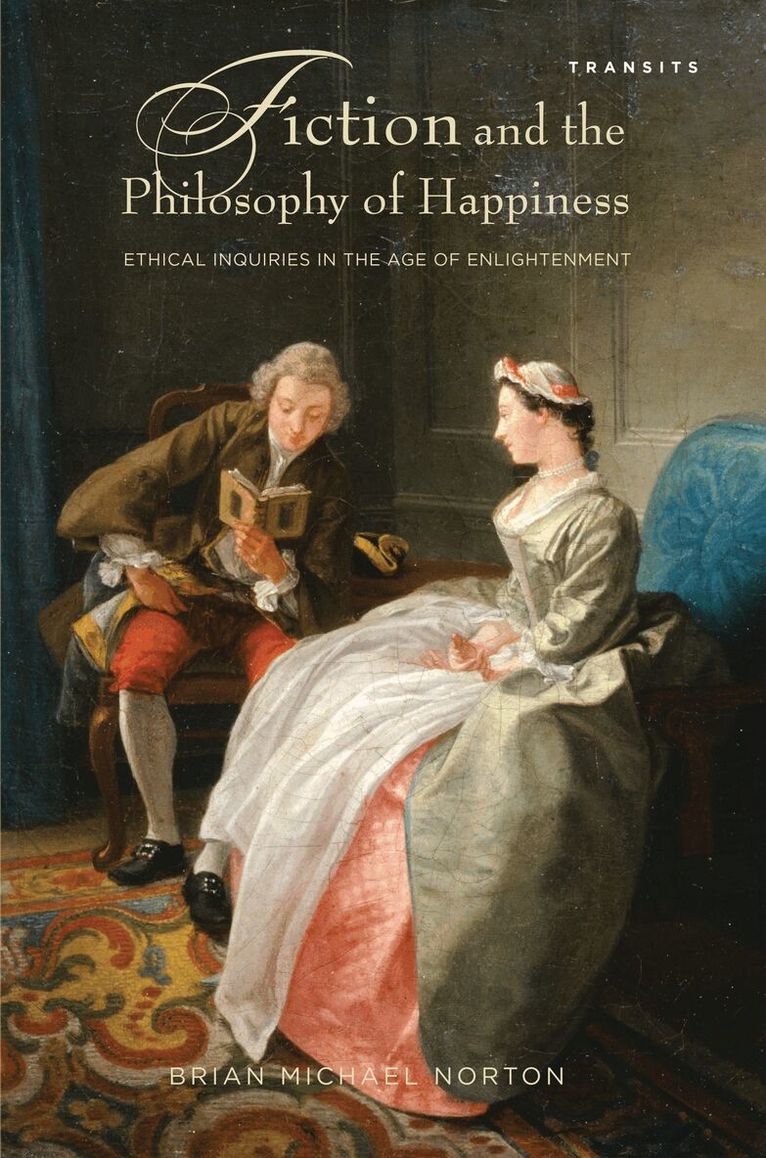
    Fiction and the Philosophy of Happiness

    Ethical Inquiries in the Age of Enlightenment

    AvBrian Michael Norton

    Häftad, Engelska, 2014

    Del i serien Transits: Literature, Thought & Culture, 1650–1850

    806 kr

    Beställningsvara. Skickas inom 10-15 vardagar. Fri frakt över 249 kr.

    Fler format och utgåvor

    Inbunden

    1 364 kr

    E-bok

    870 kr

    Beskrivning

    Fiction and the Philosophy of Happiness explores the novel’s participation in eighteenth-century “inquiries after happiness,” an ancient ethical project that acquired new urgency with the rise of subjective models of wellbeing in early modern and Enlightenment Europe. Combining archival research on treatises on happiness with illuminating readings of Samuel Johnson, Laurence Sterne, Denis Diderot, Jean-Jacques Rousseau, William Godwin and Mary Hays, Brian Michael Norton’s innovative study asks us to see the novel itself as a key instrument of Enlightenment ethics. His centralargument is that the novel form provided a uniquely valuable tool for thinking about the nature and challenges of modern happiness: whereas treatises sought to theorize the conditions that made happiness possible in general, eighteenth-century fiction excelled at interrogating the problem on the level of the particular, in the details of a single individual’s psychology and unique circumstances. Fiction and the Philosophy of Happiness demonstrates further that through their fine-tuned attention to subjectivity and social context these writers called into question some cherished and time-honored assumptions about the good life: happiness is in one’s power; virtue is the exclusive path to happiness; only vice can make us miserable. This elegant and richly interdisciplinary book offers a new understanding of the cultural work the eighteenth-century novel performed as well as an original interpretation of the Enlightenment’s ethical legacy.

    Produktinformation

    • Utgivningsdatum:2014-06-10
    • Mått:154 x 228 x 13 mm
    • Vikt:259 g
    • Format:Häftad
    • Språk:Engelska
    • Serie:Transits: Literature, Thought & Culture, 1650–1850
    • Antal sidor:168
    • Förlag:Associated University Presses
    • ISBN:9781611485899

    Utforska kategorier

    • Europas historia inom Historia och arkeologi
    • Filosofiska discipliner inom Filosofi och religion
    • Litteraturvetenskap inom Skönlitteratur

    Mer om författaren

    Brian Michael Norton is assistant professor of English and comparative literature at California State University, Fullerton.

    Recensioner i media

    Norton's book is an excellent read and an important study of new constructions of happiness in the 18th century. During the Enlightenment, Norton shows, happiness became desynonymized with virtue; in philosophy and literature, happiness and associated questions of 'the good life'–even the very conception of the summum bonum–diverged sharply from both Aristotelian ethics and the Christian anticipation of happiness hereafter. Norton explores the ways in which relativist and subjectivist delimiting of individual happiness as a state of personal contentment rather than as an ethical pursuit shape the rhetoric of fiction in Sterne's Tristram Shandy, Diderot's Rameau's Nephew, Rousseau's Julie, Godwin's Caleb Williams, and, particularly welcome, Mary Hays's Emma Courtney. The book is well informed by Enlightenment philosophy, in particular some unfamiliar 18th-century treatises on happiness . . . [T]he close readings Norton provides are incisive, accessible, and rewarding, and each chapter is brilliantly conceived and executed. An important contribution to the growing body of work on literature and ethics, this volume suggests approaches for other works not considered here. Summing Up: Highly recommended. Upper-division undergraduates and above.

    Innehållsförteckning

    • ContentsIntroduction: After the Summum Bonum: Eighteenth-CenturyEnquiries after Happiness1. The Moral in Phutatorius’s Breeches: Stoicism, Subjectivism and the Possibilities of Happiness in Tristram Shandy2. “Vous croyez que le même bonheur est fait pour tous”: Ethics and Singularity in Le Neveu de Rameau3. Tragic Eudaimonism: Social Contradictions and the Problem of Happiness in Rousseau’s Julie4. The Politics of Happiness: Caleb Williams, Political Justiceand the Nature of Human Goods5. Rethinking Autonomy: Emma Courtney, Feminist Ethics and the Question of IndependenceConclusion: The Art of Life in the Age of EnlightenmentBibliographyIndexAbout the Author