• Fri frakt över 249 kr
  • •
  • Snabba leveranser
  • •
  • Billiga böcker
Kundservice

Du är på sajten för privatpersoner.

Företag, bibliotek eller offentlig verksamhet?

Du handlar på classic.bokus.com, där alla dina funktioner finns intakta.
Till classic.bokus.com
Bokus logotyp. Gå till startsidan.
  • Erbjudanden
  • Nyheter
  • Student
  • Topplistor
  • Barn & ungdom
  • Bokus Play
  • E-böcker
  • Pocketböcker
  • Spel & pussel

10% rabatt på allt med kod: NYSTART10 →

Sidfot

Mina sidor

    Hjälp

    • Kundservice
    • Vanliga frågor och svar
    • Frakt och leverans
    • Retur vid ångerrätt
    • Reklamera vara
    • Betalning
    • Köpvillkor
    • Allmänna villkor
    • Information om webbplatsens tillgänglighet

    Om Bokus

    • Om oss
    • Pressrum
    • För studenter
    • För företag
    • För bibliotek och offentlig verksamhet
    • För leverantörer
    • Hållbarhet

    Populärt

    • Aktuella erbjudanden
    • Presentkort
    • Studentlitteratur
    • Nya böcker
    • Topplistor
    • Signerade böcker
    • Engelska böcker

    Inspiration

    • Boktips
    • BookTok
    • Populära bokserier
    • Barnbokskaraktärer
    • Populära författare
    Logotyp för Bokus
    Följ oss på Facebook (extern länk)Följ oss på Instagram (extern länk)Följ oss på YouTube (extern länk)Följ oss på TikTok (extern länk)
    bokus @ CookiesAnpassa cookiesIntegritetspolicyKöpvillkor
    Till Citymail hemsida (extern länk)Till Budbee hemsida (extern länk)Till Postnord hemsida (extern länk)Till Schenker hemsida (extern länk)Till Early Bird hemsida (extern länk)Till Walleys hemsida (extern länk)
    1. Språk och ordböcker
    2. Språkvetenskap och lingvistik

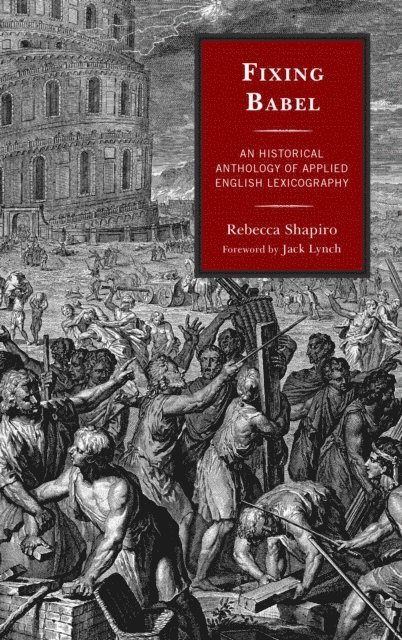
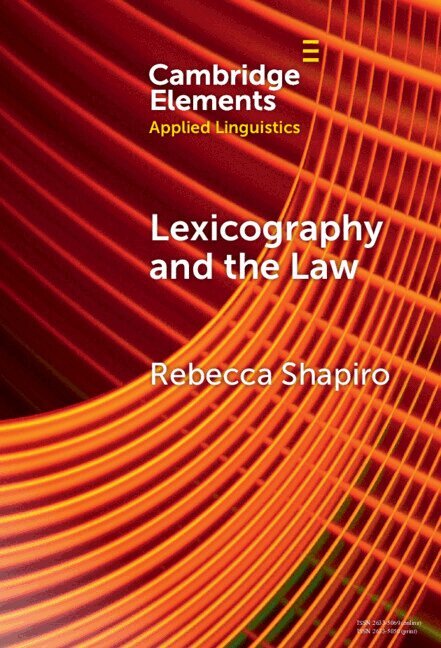
    Fixing Babel

    An Historical Anthology of Applied English Lexicography

    AvRebecca Shapiro

    Inbunden, Engelska, 2016

    2 153 kr

    Beställningsvara. Skickas inom 10-15 vardagar. Fri frakt över 249 kr.

    Fler format och utgåvor

    E-bok

    2 331 kr

    Beskrivning

    We all think we know what a dictionary is for and how to use one, so most of us skip the first pages—the front matter—and go right to the words we wish to look up. Yet dictionary users have not always known how English “works” and my book reproduces and examines for the first time important texts in which seventeenth- and eighteenth-century dictionary authors explain choices and promote ideas to readers, their “end users.” Unlike French, Spanish, and Italian dictionaries compiled during this time and published by national academies, the goal of English dictionaries was usually not to “purify” the language, though some writers did attempt to regularize it. Instead, English lexicographers aimed to teach practical ways for their users to learn English, improve their language skills, even transcend their social class. The anthology strives to be comprehensive in its coverage of the first phase of this tradition from the early seventeenth century—from Robert Cawdrey’s (1604) A Table Alphabeticall, to Samuel Johnson’s Dictionary of the English Language (1755), and finally, to Noah Webster’s An American Dictionary of the English Language (1828). The book puts English dictionaries in historical, national, linguistic, literary, cultural contexts, presenting lexicographical trends and the change in the English language over two centuries, and examines how writers attempted to control it by appealing to various pedagogical and legal authorities. Moreover, the development of dictionary and attempts to codify English language and grammar coincided with the arc of the British Empire; the promulgation of “proper” English has been a subject of debate and inquiry for centuries and, in part, dictionaries and the teaching of English historically have been used to present and support ideas about what is correct, regardless of how and where English is actually used. The authors who wrote these texts apply ideas about capitalism, nationalism, sex and social status to favor one language theory over another. I show how dictionaries are not neutral documents: they challenge or promote biases. The book presents and analyzes the history of lexicography, demonstrating how and why dictionaries evolved into the reference books we now often take for granted and we can see that there is no easy answer to the question of “who owns English.”

    Produktinformation

    • Utgivningsdatum:2016-12-02
    • Mått:159 x 238 x 38 mm
    • Vikt:1 034 g
    • Format:Inbunden
    • Språk:Engelska
    • Antal sidor:656
    • Förlag:Associated University Presses
    • Medarbetare:Jack Lynch
    • ISBN:9781611488098

    Utforska kategorier

    • Språkvetenskap och lingvistik inom Språk och ordböcker

    Mer om författaren

    Rebecca Shapiro is associate professor of English at the City University of New York.

    Recensioner i media

    Shapiro (CUNY) has compiled and edited nearly 500 pages of front matter from early dictionaries of the English language. She begins with A Dictionary in English and Latine for Children, and Yong Beginners (1602)—originally compiled by John Withals, but added to by William Clerk (regularized here as Clark)—and ends with Noah Webster’s 1828 An American Dictionary of the English Language; Samuel Johnson makes his appearance more than midway along (with pieces from 1747 and 1755). Altogether Shapiro collects 39 selections from more than 30 authors, including Benjamin Defoe, Edmund Coote, Thomas Sheridan, and Francis Grose. The entries document how scholarly thinking about language and dictionaries evolved and the ways in which early dictionaries influenced one another. Each entry is preceded by a biographical note (or in the case of the two anonymous works, a short commentary). Most entries are reproduced fully and explicated with notes, though a few are necessarily abridged. Shapiro's 20-page introduction serves as a fine bibliographic essay on dictionary scholarship. Including a comprehensive bibliography, Fixing Babel is the sort of historical anthology that dictionary aficionados and teachers of the history of the English language will all want, and it is a required resource for students. Summing Up: Essential. Lower-division undergraduates through faculty; general readers.

    Innehållsförteckning

    • PrefaceAcknowledgementsIntroductionEditorial MethodList of AbbreviationsWilliam ClarkA Dictionarie in English and Latine for Children, and Yong Beginners (1602)Robert CawdreyA Table Alphabeticall, 2nd ed. (1609)[I. B.] John BullokarAn English Expositor: Teaching the Interpretation of the Hardest Words Vsed in Our Language (1616)Henry CockeramThe English Dictionarie: Or, an Interpreter of Hard English Words (1623)Edmund CooteThe English Schoole-Master (1627)Thomas BlountGlossographia: Or a Dictionary (1656)Edward PhillipsThe New World of English Words: Or, a General Dictionary (1658)John RayA Collection of English Words, Not Generally Used (1674)Elisha ColesAn English Dictionary (1676)AnonymousGazophylacium Anglicanum (1689)Abel BoyerThe Royal Dictionary (1699)[J. K.] John KerseyA New English Dictionary (1702)John KerseyA New World of Words: Or, Universal English Dictionary, 6th ed., rev. by John Kersey (1706)AnonymousGlossographia Anglicana Nova: Or, a Dictionary (1707)John Kersey [Philobibl.]Dictionarium Anglo-Britannicum (1708)Nathan BaileyAn Universal Etymological Dictionary (1721)Thomas DycheThe Spelling Dictionary (1725)B. N. [Benjamin Norton] DefoeA Compleat Dictionary (1735)Nathan BaileyDictionarium Britannicum, 2nd ed. (1736)Thomas Dyche and William PardonA New General English Dictionary, 2nd ed. (1737)Samuel JohnsonThe Plan of a Dictionary of the English Language (1747)Benjamin MartinLingua Britannica Reformata: Or, A New English Dictionary (1749)Samuel JohnsonA Dictionary of the English Language (1755)Joseph Nicol ScottA New Universal Etymological English Dictionary (1755)Samuel JohnsonA Dictionary of the English Language . . . Abstracted (1756)James BuchananLinguæ Britannicæ Vera Pronunciato: Or, A New English Dictionary (1757)William JohnstonA Pronouncing and Spelling Dictionary (1764)John TruslerThe Difference between Words, Esteemed Synonymous, in the English Language (1766)William KenrickA New Dictionary of the English Language: Containing, Not Only the Explanation of Words . . . but Likewise, Their Orthoepia or Pronunciation (1773)James BarclayA Complete and Universal English Dictionary on a New Plan (1774)John AshThe New and Complete Dictionary of the English Language (1775)William PerryThe Royal Standard English Dictionary (1775)John WalkerA Dictionary of the English Language (1775)Thomas SheridanA General Dictionary of the English Language (1780)Francis GroseA Classical Dictionary of the Vulgar Tongue (1785)John WalkerA Critical Pronouncing Dictionary and Expositor of the English Language (1791)Hester Lynch PiozziBritish Synonymy (1794)Noah WebsterA Compendious Dictionary of the English Language (1806)Noah WebsterAn American Dictionary of the English Language (1828)Dictionaries with Their Complete TitlesBibliographyIndex