• Fri frakt över 249 kr
  • •
  • Snabba leveranser
  • •
  • Billiga böcker
Kundservice

Du är på sajten för privatpersoner.

Företag, bibliotek eller offentlig verksamhet?

Du handlar på classic.bokus.com, där alla dina funktioner finns intakta.
Till classic.bokus.com
Bokus logotyp. Gå till startsidan.
  • Erbjudanden
  • Nyheter
  • Student
  • Topplistor
  • Barn & ungdom
  • Bokus Play
  • E-böcker
  • Pocketböcker
  • Spel & pussel

Må bättre, för mindre! Upp till 50% rabatt på hälsoböcker

Sidfot

Mina sidor

    Hjälp

    • Kundservice
    • Vanliga frågor och svar
    • Frakt och leverans
    • Retur vid ångerrätt
    • Reklamera vara
    • Betalning
    • Köpvillkor
    • Allmänna villkor
    • Information om webbplatsens tillgänglighet

    Om Bokus

    • Om oss
    • Pressrum
    • För studenter
    • För företag
    • För bibliotek och offentlig verksamhet
    • För leverantörer
    • Hållbarhet

    Populärt

    • Aktuella erbjudanden
    • Presentkort
    • Studentlitteratur
    • Nya böcker
    • Topplistor
    • Signerade böcker
    • Engelska böcker

    Inspiration

    • Boktips
    • BookTok
    • Populära bokserier
    • Barnbokskaraktärer
    • Populära författare
    Logotyp för Bokus
    Följ oss på Facebook (extern länk)Följ oss på Instagram (extern länk)Följ oss på YouTube (extern länk)Följ oss på TikTok (extern länk)
    bokus @ CookiesAnpassa cookiesIntegritetspolicyKöpvillkor
    Till Citymail hemsida (extern länk)Till Budbee hemsida (extern länk)Till Postnord hemsida (extern länk)Till Schenker hemsida (extern länk)Till Early Bird hemsida (extern länk)Till Walleys hemsida (extern länk)
    1. Skönlitteratur
    2. Litteraturvetenskap
    3. Litteraturvetenskap

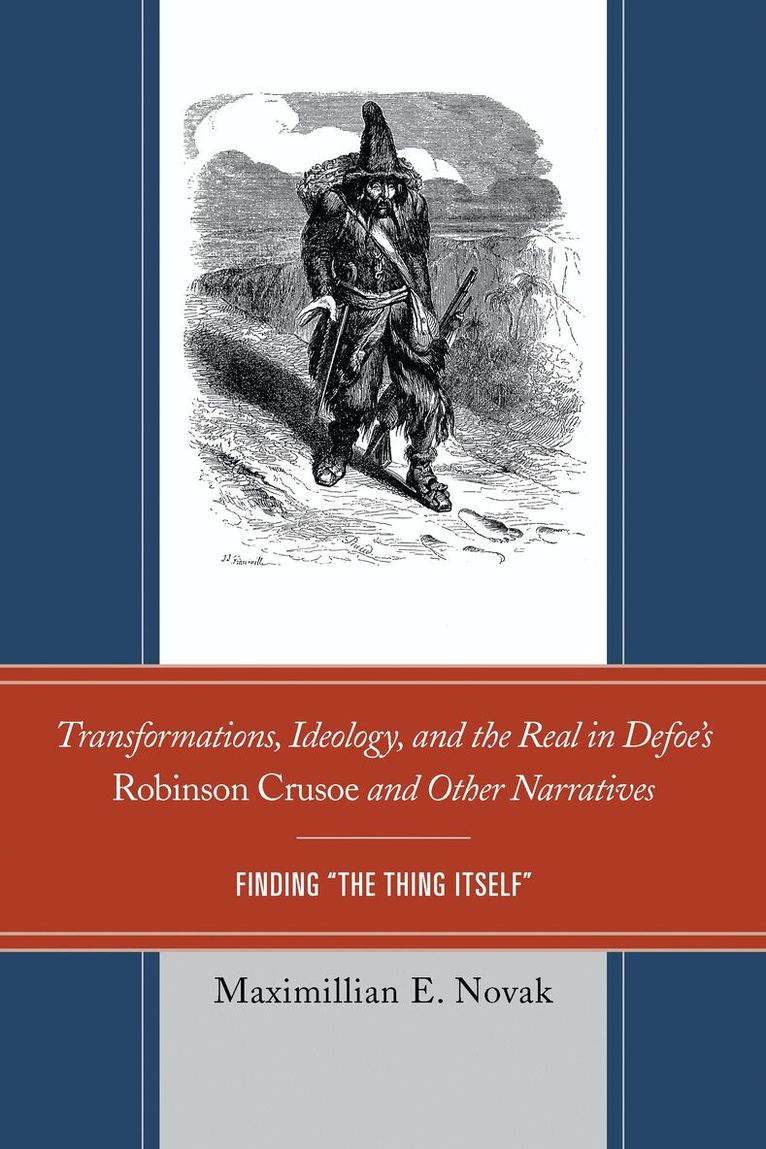
    Transformations, Ideology, and the Real in Defoe’s Robinson Crusoe and Other Narratives

    Finding The Thing Itself

    AvMaximillian E. Novak

    Inbunden, Engelska, 2014

    1 444 kr

    Beställningsvara. Skickas inom 10-15 vardagar. Fri frakt över 249 kr.

    Fler format och utgåvor

    E-bok

    689 kr

    Häftad

    694 kr

    Beskrivning

    This book explores significant problems in the fiction of Daniel Defoe. Maximillian E. Novak investigates a number of elements in Defoe’s work by probing his interest in rendering of reality (what Defoe called “the Thing itself”). Novak examines Defoe’s interest in the relationship between prose fiction and painting, as well as the various ways in which Defoe’s woks were read by contemporaries and by those novelists who attempted to imitate and comment upon his Life and Strange Surprizing Adventures of Robinson Crusoe decades after its publication. In this book, Novak attempts to consider the uniqueness and imaginativeness of various aspects of Defoe’s writings including his way of evoking the seeming inability of language to describe a vivid scene or moments of overwhelming emotion, his attraction to the fiction of islands and utopias, his gradual development of the concepts surrounding Crusoe’s cave, his fascination with the horrors of cannibalism, and some of the ways he attempted to defend his work and serious fiction in general. Most of all, Transformations, Ideology, and the Real in Defoe’s Robinson Crusoe and Other Narratives establishes the complexity and originality of Defoe as a writer of fiction.

    Produktinformation

    • Utgivningsdatum:2014-10-24
    • Mått:163 x 238 x 23 mm
    • Vikt:485 g
    • Format:Inbunden
    • Språk:Engelska
    • Antal sidor:250
    • Förlag:Bloomsbury Publishing Plc
    • ISBN:9781611494853

    Utforska kategorier

    • Litteraturvetenskap inom Skönlitteratur

    Mer om författaren

    Maximillian E. Novak is distinguished research professor of English, emeritus, at the University of California, Los Angeles.

    Recensioner i media

    Written over the span of 20 years, all but one of them previously published, these 11 essays consider the tripartite thematic suggested in the title. 'Transformations' refers to questions of genre and how Defoe advanced toward a new form of fiction, principally in Robinson Crusoe, but also in other work. 'Ideology' is represented in Defoe’s own work and in the work of writers he inspired--Hannah Hewit, Maria Edgeworth, Frances Burney. 'Real' shows up in such chapters as the second, which frames Defoe’s realism within a perspective drawn from Dutch paintings. . . .The book offers a winsome look at Novak’s early years of studying Defoe, and it concludes with ruminations on Defoe’s present and future importance. In the end, this is a significant contribution to Defoe studies because it includes fine essays (among them the brilliant 'Meatless Fridays: Cannibalism as Theme and Metaphor in Robinson Crusoe') bristling with scholarly expertise and alert familiarity with critical theory, written in a clear and winning style. This volume cumulates the wisdom of a distinguished scholar who has lived in intimacy with his subject for some six decades. Summing Up: Highly recommended. Graduate students, researchers, faculty.

    Innehållsförteckning

    • ContentsAcknowledgmentsList of IllustrationsIntroductionChapter 1: Defoe as an Innovator of Fictional FormChapter 2: Picturing the Thing Itself, or Not: Defoe, Painting, Prose Fiction, and the Arts of DescribingChapter 3: The Unmentionable and the Ineffable in Defoe's FictionChapter 4: Novel or Fictional Memoir: The Scandalous Publication of Robinson CrusoeChapter 5: Meatless Fridays: CAnnibalism as Theme and Metaphor in Robinson CrusoeChapter 6: Edenic Desires: Robinson Crusoe, The Robinsonade, and Utopian FormsChapter 7: Strangely Surpriz'd by Robinson Crusoe: A Response to David Fishelov's "Robinson Crusoe, 'The Other,' and the Poetics of Surprise"Chapter 8: "Looking with Wonder Upon the Sea" : Defoe's Maritime Fictions, Robinson Crusoe, and "The Curious Age We Live in"Chapter 9: The Cave and the Grotto: Imagined Interiors and Realist Form in Robinson CrusoeChapter 10: "The SUme of Humane Misery?": Ambiguities of Exile in Defoe's FictionChapter 11: Ideological Tendencies in Three Crusoe Narratives by British Novelists during the Period following the French Revolution: Charles Dibdin's Hannah Hewit, The Demale Crusoe, Maria Edgeworth's Forester, and Frances Burney's The WandererAfterwordBibliographyAbout the Author