• Fri frakt över 249 kr
  • •
  • Snabba leveranser
  • •
  • Billiga böcker
Kundservice

Du är på sajten för privatpersoner.

Företag, bibliotek eller offentlig verksamhet?

Du handlar på classic.bokus.com, där alla dina funktioner finns intakta.
Till classic.bokus.com
Bokus logotyp. Gå till startsidan.
  • Erbjudanden
  • Nyheter
  • Student
  • Topplistor
  • Barn & ungdom
  • Bokus Play
  • E-böcker
  • Pocketböcker
  • Spel & pussel

10% rabatt på allt med kod NYSTART10 →

Sidfot

Mina sidor

    Hjälp

    • Kundservice
    • Vanliga frågor och svar
    • Frakt och leverans
    • Retur vid ångerrätt
    • Reklamera vara
    • Betalning
    • Köpvillkor
    • Allmänna villkor
    • Information om webbplatsens tillgänglighet

    Om Bokus

    • Om oss
    • Pressrum
    • För studenter
    • För företag
    • För bibliotek och offentlig verksamhet
    • För leverantörer
    • Hållbarhet

    Populärt

    • Aktuella erbjudanden
    • Presentkort
    • Studentlitteratur
    • Nya böcker
    • Topplistor
    • Signerade böcker
    • Engelska böcker

    Inspiration

    • Boktips
    • BookTok
    • Populära bokserier
    • Barnbokskaraktärer
    • Populära författare
    Logotyp för Bokus
    Följ oss på Facebook (extern länk)Följ oss på Instagram (extern länk)Följ oss på YouTube (extern länk)Följ oss på TikTok (extern länk)
    bokus @ CookiesAnpassa cookiesIntegritetspolicyKöpvillkor
    Till Citymail hemsida (extern länk)Till Budbee hemsida (extern länk)Till Postnord hemsida (extern länk)Till Schenker hemsida (extern länk)Till Early Bird hemsida (extern länk)Till Walleys hemsida (extern länk)
    1. Historia och arkeologi
    2. Historia
    3. Asiens historia

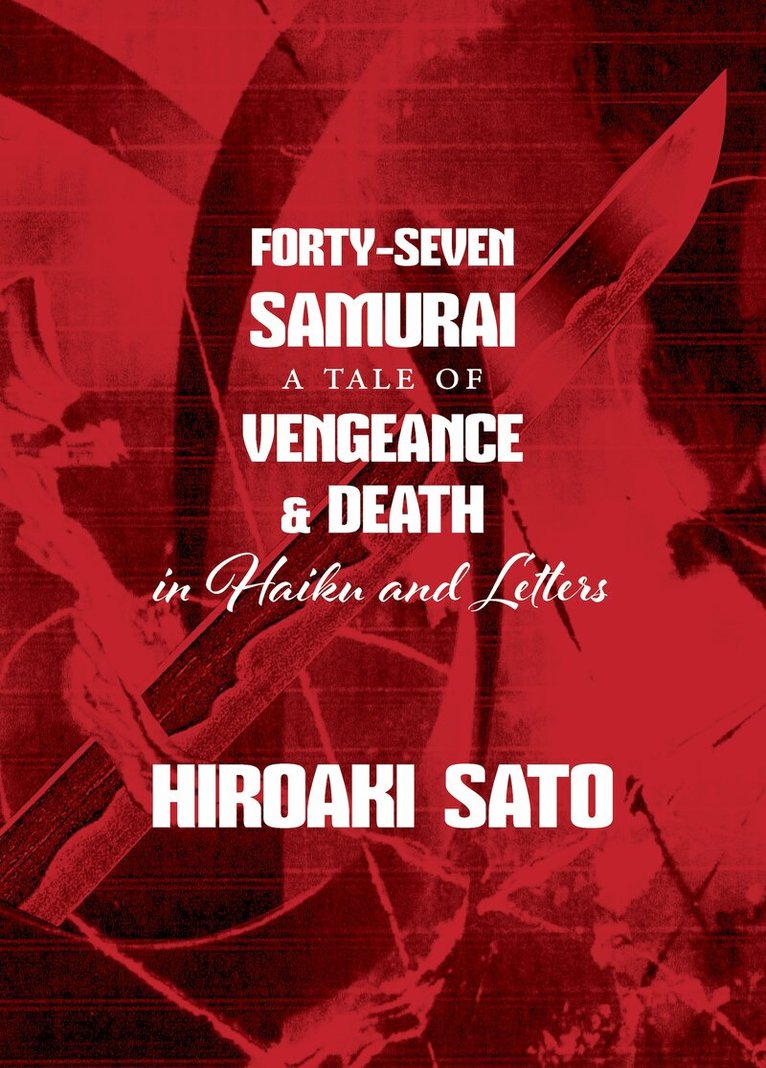
    Forty-Seven Samurai

    A Tale of Vengeance & Death in Haiku and Letters

    AvHiroaki Sato

    Häftad, Engelska, 2020

    189 kr

    Beställningsvara. Skickas inom 5-8 vardagar. Fri frakt över 249 kr.

    Fler format och utgåvor

    E-bok

    166 kr

    Beskrivning

    One of the most spectacular vendettas ever: the history and haiku behind the mass-suicide featured in the 2013 film 47 RoninA remarkable and true tale of loyalty, vengeance, and ritual suicide. . . . In the spring of 1701, the regional lord Asano Naganori wounded his supervising official, Kira Yoshinaka, during an important ceremony in the ruling shogunate's Edo Castle and was at once condemned to death. Within two years, in the dead of winter, a band of forty-seven of Asano's retainers avenged him by breaking into Yoshinaka’s mansion and killing him. Subsequently, all the men were sentenced to death but allowed to perform it honorably by seppuku.This incident—often called the Ako Incident—became a symbol of samurai honor andat once prompted stage dramatization in kabuki and puppet theater. It has since has been told and retold in short and long stories, movies, TV dramas. The story has also attracted the attention of foreign writers and translators. The most recent retelling was the 2013 Hollywood film 47 Ronin, with Keanu Reeves, though it was wildly and willfully distorted.What did actually happen and how has this famous vendetta resonated through history? Hiroaki Sato's examination is a close, comprehensive look at the Ako Incident through the context of its times, portraits of the main protagonists, and its literary legacy in the haiku ofthe avengers. Also included is Sato's new translation of Akutagawa Ryunosuke's short story about leader Oishi Kuranosuke as he awaited sentencing.

    Produktinformation

    • Utgivningsdatum:2020-01-09
    • Mått:152 x 215 x 18 mm
    • Vikt:344 g
    • Format:Häftad
    • Språk:Engelska
    • Antal sidor:280
    • Förlag:Stone Bridge Press
    • ISBN:9781611720549

    Utforska kategorier

    • Asiens historia inom Historia och arkeologi

    Mer om författaren

    Hiroaki Sato is a prolific, award-winning writer of books on Japanese history and literature, and a translator of classical and modern Japanese poetry into English. American poet Gary Snyder has called Sato "perhaps the finest translator of contemporary Japanese poetry into American English."He is the author of the classic works Legends of the Samurai. and The Sword and the MindHis reviews and articles have appeared in The Philadelphia Inquirer, The New York Times Book Review, AsiaWeek, Mainichi Daily News, St. Andrews Review, Journal of the Association of Teachers of Japanese, The Journal of American and Canadian Studies, Comparative Literature Studies, The Japan Times, The Harvard Journal of Asiatic Studies, The Journal of Japanese Studies, Modern Haiku, Japan Focus, and others.He recently received the 2017-2018 Japan-U.S. Friendship Commission Translation Prize for Silver Spoon (Stone Bridge Press).

    Recensioner i media

    "One of Japan’s most sprawling and endlessly intriguing of bloody epics... Hiroaki Sato weaves a rich portrait of a paradoxical society governed by value systems vastly different to our own."—Damian Flanagan, The Japan Times“The vengeance of the Forty-Seven Samurai ended in an early-morning flash of violence and bravado. This book is the scaffolding under that flash. Here are the warring claims to how the incident came to pass; here are contemporary accounts, but also the vivid poems, plays, stories and penal codes that have been revivifying that legend in the centuries since.”—Forrest Gander, Pulitzer Prize-winning author"Hiroaki Sato, a poet, author of Legends of the Samurai (where he first retells this story) and the PEN award-winning translator of many Japanese writers including Princess Shikishi, Yukio Mishima and Kenji Miyazawa, does something which others have not attempted, namely to provide more than just an accurate historical account of the event and its aftermath. Sato allows the participants to speak in their own words through their own haiku and letters, which immediately renders them three-dimensional and thoroughly human."—The Asian Review of Books"A striking mosaic of original source materials. By creating a Rashōmon Effect with his multi-faceted approach Sato deepens the mysteries of the 47 Rōnin Incident."—Doris G. Bargen, Author of Suicidal Honor"Sato enlightens his readers, in English, on Japanese customs and culture relative to the incidents of the 47 Ronin with history, correspondence, and poetry, which may be unknown even to the Japanese people."—Prof. Allan Sosei Palmer, Urasenke Chanoyu, Kyoto, Boston“The pre-eminent translator of Japanese poetry in our time...possessed of an unfiltered enthusiasm and spontaneity.”—August Kleinzahler, London Review of Books“Over the last four decades, English-speaking aficionados of modern Japanese literature have delighted in the numerous translations, both of prose and poetry, undertaken by the masterful hand of translator, essayist, and poet Hiroaki Sato.”—Meera Viswanathan

    Innehållsförteckning

    • ContentsIntroductionPart I: Grudge and Vendetta (12,500 words)The Country Is “Full of Light”Shogun Tsunayoshi and Genroku Era“Pitying the Sentient” EdictsA Haiku Scholar’s TakeTitles and Number of ParticipantsAsano Attacks KiraWhy Did Asano Want to Kill Kira?Neither a Daimyo Nor a SamuraiDramatic ElementsSeppukuThe Treatment of AvengersCamouflagePart II: Leader Ōishi Kuranosuke and His Men (19,400 words)EscheatmentThe First Ninja’s ReportWe Are All HicksAnother Ninja’s ReportThe DisagreementsOnodera Jūnai’s LettersFailure to Commit Seppuku MockedRestoring the Asano HouseThe “Radicals”Kuranosuke RespondsKuranosuke’s AppearanceSword Fights and KillingsUncertain Samurai LifeKuranosuke Indulges in Gay QuartersA House of SorrowDid Kuranosuke Really Drown in “Wine and Flesh”?The Way of the SamuraiKuranosuke’s Last LettersChapter III: Poetic ConnectionsGengo’s Travelogue: Going Down the Tōkaidō Road in a Daimyo ProcessionGengo’s Haikai Teacher Sentoku’s Opinion: Was the Lord President of Akō Stingy?Gengo Pays Respects to Bashō’s Grave1697: Another Ill Effect of “Pitying the Sentient”Gengo’s Haikai Anthology and Kayano Sanpei’s SuicideA Mysterious Tale about a Mysterious BirthHow Ōtaka Shiyō Made Use of Haikai Man TeisaGengo’s Encounter with Haikai Master Kikaku the Day before the VendettaKikaku’s Letter on the Night of the RaidA Real Kikaku Letter?The Great Fire, Asano Naganao, the Firefighters’ UniformThe Announcement, the Raid, and its AftermathExtracts from the First Full Account of the Forty-Seven SamuraiŌtaka Gengo’s Farewell-to-the-World VerseSentoku’s Other StudentsAnother Story about Teisa and Akō MenA Spearman Had to Drop OutIV: An Akutagawa StoryBibliographyIndex