E-bok, Engelska, 2013
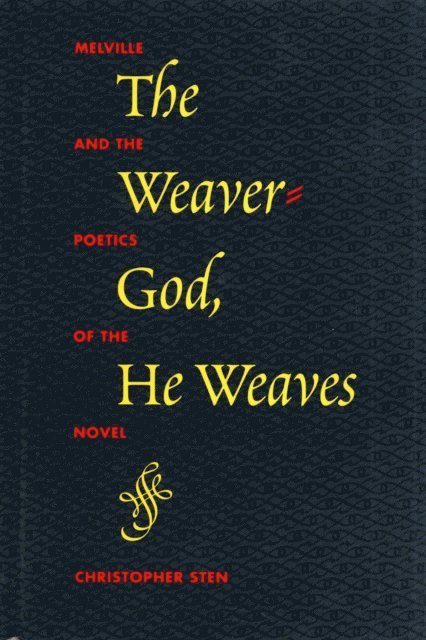
Weaver-God, He Weaves
492 kr
Skickas tisdag 13/10
Beskrivning
Melville has long been regarded as an author of raw genius who knew, or cared, little about the art of the novel, and even harbored hostility toward its conventions. In The Weaver-God, He Weaves, Christopher Sten sets out to correct this widespread view, showing not only what Melville knew about the novelist’s craft but how he appropriated and transformed a whole series of distinct genres: Typee is presented in the context of the popular romance, with its paired themes of sex and violence; Omoo is viewed in the framework of early Spanish and later French examples of the picaresque novel; and Mardi is seen as an instance of the once widely popular genre of the imaginary voyage. Sten also reveals how Melville radically transformed certain existing genres—the epic novel in Moby-Dick and the historical novel in Israel Potter—or forged profound new directions for genres still in their early stages—the psychological novel in Pierre and the experimental novel in the Confidence-Man. Sten speculates that it is because Melville was so idiosyncratic and inventive that so few critics have understood his close relationship tot eh various novelistic forms. While individual chapters provide discussions of the genre principles Melville employed, Sten’s introduction offers valuable theoretical isnight into the importance of genre study (encompassing recent work by Todorov, Hirsch, Hernadi, Jauss, Culler, Scholes, Fowler, Rosmarin, and others), both in the evaluation of literary texts and in the still more fundamental enterprise of determining their meaning. The Weaver-God, He Weaves thus exposes for the first time the extent of Melville’s contribution to the novel. This work will be of interest to readers of Melville, 19th-century American literature, literature of the sea, experimental fiction, and to those who work in the field of genre studies.
Produktinformation
- Utgivningsdatum: 2013-02-26
- Språk: Engelska
- Filformat: EPUB
- Kopieringsskydd: LCP
- ISBN: 9781612771168
- Förlag: The Kent State University Press
Utforska kategorier
Betyg & recensioner
0 recensioner
Inga recensioner tillgängliga.