• Fri frakt över 249 kr
  • •
  • Snabba leveranser
  • •
  • Billiga böcker
Kundservice

Du är på sajten för privatpersoner.

Företag, bibliotek eller offentlig verksamhet?

Du handlar på classic.bokus.com, där alla dina funktioner finns intakta.
Till classic.bokus.com
Bokus logotyp. Gå till startsidan.
  • Erbjudanden
  • Nyheter
  • Student
  • Topplistor
  • Barn & ungdom
  • Bokus Play
  • E-böcker
  • Pocketböcker
  • Spel & pussel

10% rabatt på allt med kod NYSTART10 →

Sidfot

Mina sidor

    Hjälp

    • Kundservice
    • Vanliga frågor och svar
    • Frakt och leverans
    • Retur vid ångerrätt
    • Reklamera vara
    • Betalning
    • Köpvillkor
    • Allmänna villkor
    • Information om webbplatsens tillgänglighet

    Om Bokus

    • Om oss
    • Pressrum
    • För studenter
    • För företag
    • För bibliotek och offentlig verksamhet
    • För leverantörer
    • Hållbarhet

    Populärt

    • Aktuella erbjudanden
    • Presentkort
    • Studentlitteratur
    • Nya böcker
    • Topplistor
    • Signerade böcker
    • Engelska böcker

    Inspiration

    • Boktips
    • BookTok
    • Populära bokserier
    • Barnbokskaraktärer
    • Populära författare
    Logotyp för Bokus
    Följ oss på Facebook (extern länk)Följ oss på Instagram (extern länk)Följ oss på YouTube (extern länk)Följ oss på TikTok (extern länk)
    bokus @ CookiesAnpassa cookiesIntegritetspolicyKöpvillkor
    Till Citymail hemsida (extern länk)Till Budbee hemsida (extern länk)Till Postnord hemsida (extern länk)Till Schenker hemsida (extern länk)Till Early Bird hemsida (extern länk)Till Walleys hemsida (extern länk)
    1. Ekonomi och Ledarskap
    2. Ledarskapsböcker

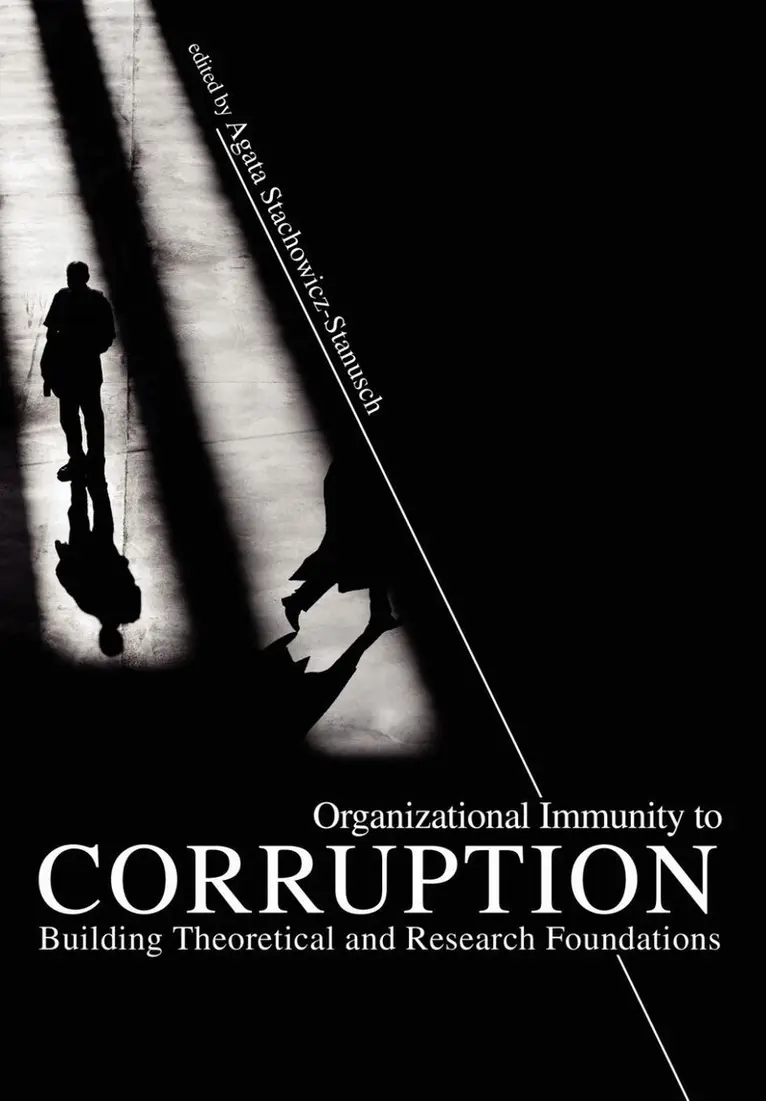
    Organizational Immunity to Corruption

    Building Theoretical and Research Foundations

    AvAgata Stachowicz-Stanusch

    Häftad, Engelska, 2010

    682 kr

    Beställningsvara. Skickas inom 5-8 vardagar. Fri frakt över 249 kr.

    Beskrivning

    The current discussion about corruption in organizational studies is one of the most growing, most fertile and perhaps most fascinating ones. Corruption is also a construct that is multilevel and can be understood as being created and supported by social and cultural interaction. As a result, an ongoing dialogue on corruption permeates the levels of analysis and numerous research domains in organizational studies. Thus I see a major opportunity and necessity to look on corruption from a multilevel and multicultural perspective.Second, in the global society of the world today where organizational boundaries are becoming increasingly transparent and during the Global Crisis, which has been rooted in unethical and corrupt behavior of large corporations, a deeper understanding of corruption, its forms, typologies, ways to increase organizational immunity and the best practices how to fight against corruption that are particularly significant and can also uncover it means that individuals, groups, organizations and whole societies can be used to sustain a sense of purpose, direction, meaning and the right way for creating a moral frame for the ethical behavior in the world of flux.Third, there is a growing pressure in the field of organizational studies and management to formulate theories that stimulate thinking of corruption, to change understanding of the phenomenon and, what is the most important, to carry out actions that produce valued outcomes.This exciting book provides an authoritative and comprehensive overview of organizational corruption. It is an essential reference tool to carry out further research on corruption in organization. This book uncovers new theoretical insights that, I hope, will inspire new questions about corruption in organization; it also changes our understanding of the phenomenon and encourages further exploration and research.

    Produktinformation

    • Utgivningsdatum:2010-05-18
    • Mått:170 x 244 x 25 mm
    • Vikt:762 g
    • Format:Häftad
    • Språk:Engelska
    • Antal sidor:482
    • Förlag:Emerald Publishing Inc
    • ISBN:9781617350504

    Utforska kategorier

    • Ledarskapsböcker inom Ekonomi och Ledarskap
    • Organisationsteori inom Ekonomi och Ledarskap
    • Sociala och etiska frågor inom Samhälle och politik

    Innehållsförteckning

    • AcknowledgementsEditor and ContributorsIntroductionChapter summariesPart I. Corruption UnderstandingChapter 1. Corruption Immunity Based on Positive Organizational Scholarship Towards Theoretical Framework; Agata Stachowicz-StanuschChapter 2. Orienting Business Students to Navigate The Shoals of Corruption in Practice; Charles WankelChapter 3. Corruption, Globalisation and Business Ethics: A Metatheoretical Approach; Mark EdwardsChapter 4. Defining Corruption; Derrick V. MckoyChapter 5. Anti-Corruption Law and Practice; Chizu Nakajima, Paul PalmerChapter 6. The concept of corruption: Moral and political perspectives; Jacob Dahl RendtorffChapter 7. Is Corruption Un-Ethical? The Politics and Economics of Corruption. Corrupt Universities; Liviu DrugusChapter 8. The Multiple Faces of Corruption: Typology, Forms and Levels; José G. Vargas-HernándezChapter 9. Money Laundering: Strategic Initiatives for Preventing a Growing Menace; Josetta Mclaughlin, Deborah Pavelka,Lisa AmorosoChapter 10. Organizational Vulnerability to Corruption: An Interaction with Individual Features, Inés Freitas; Nelson RamalhoPart II. Different Perspectives of Corruption PreventionChapter 11. Postmodern View of Organization Behavior and Ethical Dynamics; Hamid KazeroonyChapter 12. United Against Corruption: the United Nations Global Compact's Principles and Strategies Against Local and Global Corruption; Marco TavantiChapter 13. Karma Capitalism: A Normative Standard for Entrepreneurial Leadership; Martin J. LeckerChapter 14. Christianity and Organizational Corruptions; Loi Teck HuiChapter 15. CSR and Ethical Issues in Operations Management; Philippa CollinsChapter 16. Alleviating Corruption through CSR; Dima JamaliChapter 17. Preventing Corruption Through Spiritual Leadership in Organisations; Radha R. SharmaChapter 18. The role of corporate culture in developing and preventing corruption; Sonja A. Sackmann, Birte HorstmannChapter 19. Corporate Culture as a Way of Preventing and Combating Corruption in an Enterprise; Larysa LazorenkoChapter 20. Prevention and Identification of Organizational Corruption; Li-Hwa HungChapter 21. Modern Tendencies of Companies' Image Forming; Liliya PanChapter 22. Improving the Future from the Past; Ambika ZutshiChapter 23. Minimizing Corruption in Organizations: Harnessing the Value of Teams; Tony LinghamPart III. Cases & Best Practices of Corruption PreventionChapter 24. Building anti-corruption activities through reshaping corporate culture: the case of Samsung Electronics; Jae Eon YuChapter 25. Criminal organisations and corruption in Italy; Paolo Canonico, Stefano Consiglio, Ernesto De Nito, Gianluigi MangiaChapter 26. Revising a Concept of Corruption as a Result of the Global Economic Crisis – the Case of Iceland; Vlad Vaiman, Páll Ásgeir Davíðsson, Thröstur Ólaf SigurjónssonChapter 27. Holcim's fight against corruption; Mislav Ante OmazićChapter 28. Corruption Prevention and Corporate Social Responsibility – an Example of a Taiwanese Semiconductor Company; Chieh-Yu LinChapter 29. Employee Commitment and the Development of Corruption: A Case Study; Tom CockburnChapter 30. How the Government Combats Corruption: the Case of Indonesia; Jane Sekarsari TamtanaChapter 31. Corruption in China, Antti Ainamo; Yan ZhangChapter 32. Cultural Values and Organisational Ethics: Looking at Malaysia, Dahlia Zawawi, Keng Kok Tee; Jo Ann HoChapter 33. Deceit in the Testamentary Process, Dominic S. Depersis; Alfred LewisConclusionsAuthors index