• Fri frakt över 249 kr
  • •
  • Snabba leveranser
  • •
  • Billiga böcker
Kundservice

Du är på sajten för privatpersoner.

Företag, bibliotek eller offentlig verksamhet?

Du handlar på classic.bokus.com, där alla dina funktioner finns intakta.
Till classic.bokus.com
Bokus logotyp. Gå till startsidan.
  • Erbjudanden
  • Nyheter
  • Student
  • Topplistor
  • Barn & ungdom
  • Bokus Play
  • E-böcker
  • Pocketböcker
  • Spel & pussel

Må bättre, för mindre! Upp till 50% rabatt på hälsoböcker

Sidfot

Mina sidor

    Hjälp

    • Kundservice
    • Vanliga frågor och svar
    • Frakt och leverans
    • Retur vid ångerrätt
    • Reklamera vara
    • Betalning
    • Köpvillkor
    • Allmänna villkor
    • Information om webbplatsens tillgänglighet

    Om Bokus

    • Om oss
    • Pressrum
    • För studenter
    • För företag
    • För bibliotek och offentlig verksamhet
    • För leverantörer
    • Hållbarhet

    Populärt

    • Aktuella erbjudanden
    • Presentkort
    • Studentlitteratur
    • Nya böcker
    • Topplistor
    • Signerade böcker
    • Engelska böcker

    Inspiration

    • Boktips
    • BookTok
    • Populära bokserier
    • Barnbokskaraktärer
    • Populära författare
    Logotyp för Bokus
    Följ oss på Facebook (extern länk)Följ oss på Instagram (extern länk)Följ oss på YouTube (extern länk)Följ oss på TikTok (extern länk)
    bokus @ CookiesAnpassa cookiesIntegritetspolicyKöpvillkor
    Till Citymail hemsida (extern länk)Till Budbee hemsida (extern länk)Till Postnord hemsida (extern länk)Till Schenker hemsida (extern länk)Till Early Bird hemsida (extern länk)Till Walleys hemsida (extern länk)
    1. Filosofi och religion
    2. Religion och tro
    3. Judendom
    4. Judiska heliga texter

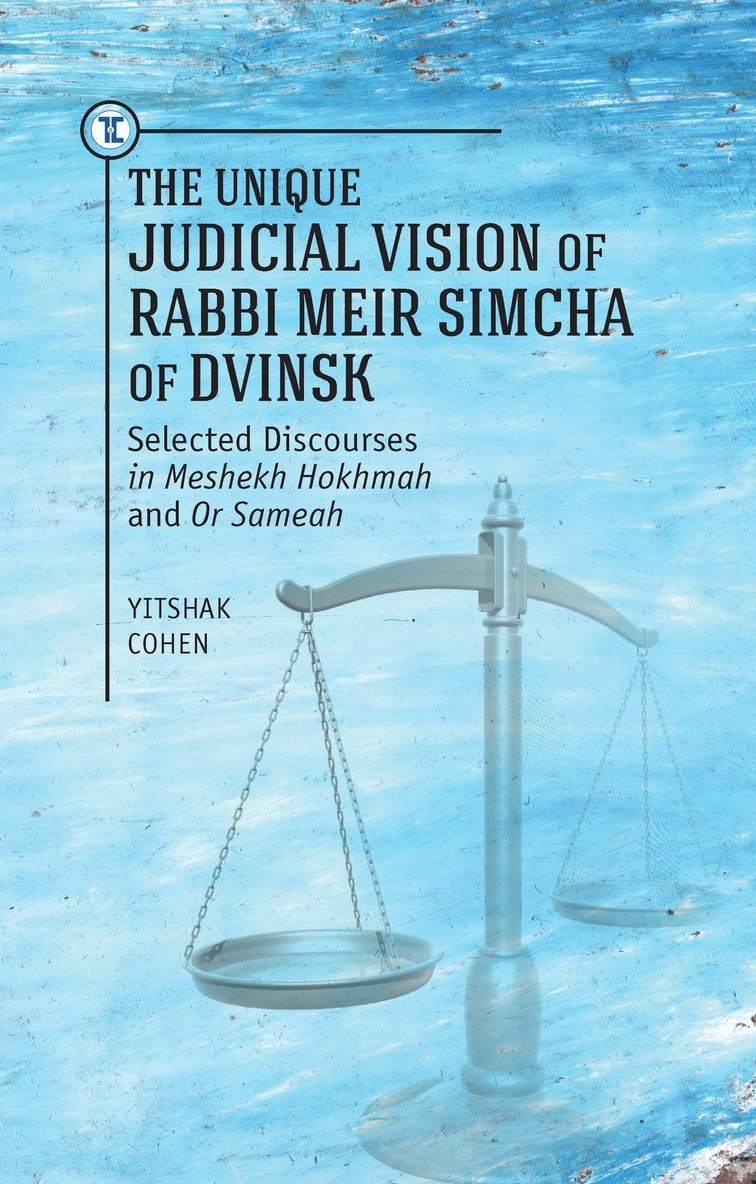
    Unique Judicial Vision of Rabbi Meir Simcha of Dvinsk

    Selected Discourses in Meshekh Hokhmah and Or Sameah

    AvYitshak Cohen,Herbert Basser

    Inbunden, Engelska, 2016

    Del i serien Touro University Press

    1 007 kr

    Skickas . Fri frakt över 249 kr.

    Fler format och utgåvor

    E-bok

    2 515 kr

    Beskrivning

    This book analyzes the exceptional normative impact of R. Meir Simcha Hacohen’s Biblical commentary, Meshekh Hokhmah, and his halakhic commentary, Or Sameah. It examines the reliance of the poskim on R. Meir Simcha’s innovations and hermeneutic methods as well as their view of his interpretations that broadened or narrowed the scope of Maimonides’ rulings. The book explores the broad-based judicial principles underlying R. Meir Simcha’s legal decisions and approach to Jewish law. It further examines how his legal creativity was impacted by metahalakhic principles that guided him in addressing changing historical and social realities. The book also considers R. Meir Simcha’s unique attitudes toward gentiles. His approach attests to his innovativeness and his halakhic moderation, as he tried to rule as leniently as possible on matters concerning non-Jews. In this book, R. Meir Simcha is shown to be a truly influential rabbi whose contributions will long be a source of study and discussion.

    Produktinformation

    • Utgivningsdatum:2016-09-01
    • Mått:155 x 234 x 15 mm
    • Vikt:444 g
    • Format:Inbunden
    • Språk:Engelska
    • Serie:Touro University Press
    • Antal sidor:188
    • Förlag:Academic Studies Press
    • ISBN:9781618114891
    • Översättare:Meshulam Gotlieb

    Utforska kategorier

    • Judiska heliga texter inom Filosofi och religion

    Mer om författaren

    Yitshak Cohen is an Associate Professor of Law and Senior Lecturer at the Ono Academic College Faculty of Law. He received rabbinic ordination from the Chief Rabbinate of Israel. In 2012 he was a Visiting Scholar at Columbia University Law School in New York, and in 2013 he served as a Visiting Professor at McGill University in Montreal. Cohen led various academic programs, including among them a law studies program for religious leaders at Ono Academic College and a Bar-Ilan University program for religious-secular relations. He has published numerous articles in his teaching and research fields of Jewish law, Family Law, and Civil Procedure. He is the Academic Director of the Ono Academic College Faculty of Law, Jerusalem Campus.

    Innehållsförteckning

    • AcknowledgmentsIntroductionChapter 1: Midrashic Technique and Legal Creativity in the Meshekh HokhmahIntroduction1. R. Meir Simcha and the Use of Midrashic Technique to Develop the Lawa. Traditional Reluctance to Use Midrashic Technique to Develop the Lawb. R. Meir Simcha’s Pioneering Adoption of Midrashic Technique to Develop the Law2. Rejection of R. Meir Simcha’s Rulings Based on Midrashic Techniquea. One Who Kills Someone in the Throes of Deathb. The Amalekite Proselytec. Exhuming and Moving a Corpsed. Self-endangerment to Save the Natione. Concluding Remarks3. Acceptance of R. Meir Simcha’s Exegesis-Based Rulingsa. The Prohibition against Rebuilding Jerichob. Inheriting Property from a Relative One Has Murderedc. Bathsheba and Uriah the Hittite—Conditional Divorced. The “If Two Do It” Exemption4. The Normative Intent of R. Meir Simcha’s Exegesis-Based Legal Creativitya. The Prohibition against Abortion: Biblical or Rabbinic?b. Acts Carried Out by One Who Is Inebriated5. Gilat’s Assessment of R. Meir Simcha’s Intenta. Marrying a “Beautiful Captive”b. Stealing from Outside the Owner’s Domain6. Supportive Midrashic Exegesisa. Children of a Convertb. Sanctity of the Temple MountConclusionChapter 2: The Rabbinic Decisors and the Halakhic Material in Or SameahIntroduction1. Expanding Maimonides’ Rulinga. A Pursuer Who Kills by Geramab. Disabling a Mechanical Heart2. Supplementing Maimonides’ Ruling by Adding One Detaila. The Pursuerb. One Who Murders a Person in his Death Throesc. Saving the Entire Nation of Israel3. Transforming Legal Grounda. One Who Takes his Ex-Wife Back: From Prohibition to Remorseb. Laws of Jealousy and Seclusion: Textual-Criticism Approachesc. Laws of Jealousy and Seclusion According to the Received Text4. The Rabbinic Decisors and R. Meir Simcha’s Refinement of Mishneh Toraha. Acquisition via One’s Movable Propertyb. Gerama and Garmei in Tort Lawc. Tosefet Ketubah When the Woman Petitions for DivorceConclusionChapter 3: Metahalakhic Principles in R. Meir Simcha Hakohen’s Oeuvre1. Taking Human Nature into Accounta. Preventing the Salvation of the Entire Nation of Israelb. Is an Individual Obligated to Risk Limb in order to Save Another’s Life?c. The Reason Women Are Exempted from the Precept to Procreated. Should a Minor Exempt Her Co-Wives from Levirate Marriage?e. Coercing Someone into Observing Religious Normsf. We Do Not Force an Individual to Circumcise Himselfg. May One Who is not a High Priest Allow Himself to Become Ritually Impure?2. Dealing Stringently with Changing or Deviating from Societal Normsa. A Woman Who Calls Off an Engagement to Marryb. Tortfeasor: Paying According to the Time of Damagec. One Who Steals from a Thief3. Are Intention or Action the Determining Factor?a. Adjudicating the Laws of Sabbathb. Adjudicating the Laws of the Four Species Based on the Action Takenc. One Who Digs Pits, Ditches, and Caves for the Purpose of Idolatryd. Conditions Pertaining to the Wedding Canopy and Betrothale. Providing a Post Facto Rationale When Action Was Already Takenf. Do a Minor’s Actions Testify to His State of Mind?g. HalitsahConclusion Chapter 4: R. Meir Simcha and His Attitude toward GentilesIntroduction1. Religion and Commandments versus Commerce and Negotiationa. Prohibition against Usury: No Agency for Gentilesb. Execution Based on the Testimony of a Single Witnessc. Lien on the Body of a Jew and Lien on Assets Possessed by a Gentile2. Rulings that May Bring Jews and Gentiles Closera. Giving Gifts to a Gentile and Teaching him Torahb. A Gift Given by a Gentilec. Increased Quantities by Gentilesd. Gentile Kingse. Applying the Law of Orlah to Trees Planted by Gentilesf. A Gentile Writing a Torah Scroll3. Distinction between the Laws of Gentiles and Jewsa. Robbing a Gentile and the Commandment to Restore to the Gentileb. May One Who Contracted a Loan Collect from the Gentile’s Purchaser?c. Which Commandments Are Bnei Noah Executed For?4. The Halakhic Attitude toward Gentiles in Meshekh Hokhmaha. Martyrdom (Dying to Sanctify God’s Name): Is a Ben Noah Allowed to Martyr Himself?b. Relations between the Proselyte and His Biological FamilyConclusion