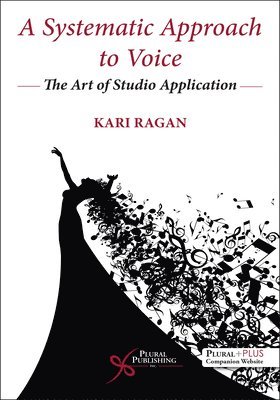
Systematic Approach to Voice
The Art of Studio Application
1 175 kr
Beställningsvara. Skickas inom 5-8 vardagar. Fri frakt över 249 kr.
Fler format och utgåvor
Beskrivning
Produktinformation
- Utgivningsdatum:2026-04-30
- Mått:152 x 229 x 26 mm
- Vikt:2 315 g
- Format:Häftad
- Språk:Engelska
- Serie:PLURAL PUBLISHING
- Antal sidor:490
- Upplaga:2
- Förlag:Plural Publishing Inc
- ISBN:9781635507782
Utforska kategorier
Mer om författaren
Kari Ragan, DMA, MM, BM, is an internationally recognized voice pedagogue and Singing Voice Rehabilitation Specialist (SVRS) with a career spanning more than four decades. She is known for her commitment to applying voice science in service of artistic expression—a guiding principle that has shaped her work with singers across genres and career stages. Dr. Ragan earned her Doctor of Musical Arts from the University of Washington (2005) and both a Master and Bachelor of Music in Vocal Performance from the Indiana University Jacobs School of Music. She received the Van L. Lawrence Fellowship in 2012, was named a Master Teacher for the NATS Intern Program in 2021, and was inducted into the American Academy of Teachers of Singing in 2025. From 2010 to 2021, she served on the voice faculty at the University of Washington and has maintained a vibrant independent voice studio since 1983. Working in affiliation with the University of Washington’s laryngology program, Dr. Ragan collaborates with a multidisciplinary voice team to support singers recovering from vocal injury or pathology and partners with voice clinics throughout the United States to help rehabilitate injured voices. An active presenter and educator, Dr. Ragan is frequently invited to give workshops and lectures for voice organizations and academic institutions nationally and internationally. She has presented for NATS, the Pan American Vocology Association (PAVA), The Voice Foundation, the International Congress of Voice Teachers (ICVT), and many others. Dr. Ragan is the co-founder and organizer of the multi-disciplinary Northwest Voice: The Art and Science of the Performing Voice Conference. Since 2011, she has also served as moderator of the popular NATS Chat series.
Innehållsförteckning
- ContentsPrefaceA Note About This BookHow This Book Is OrganizedHow to Navigate This BookA Note on RedundancyContributorsAcknowledgmentsAbout the AuthorChapter 1. A Systematic Approach to VoiceA Systematic ApproachThe Art of Studio ApplicationHeuristic Model for Vocal Learning Voice HabilitationIntroducing Habilitative Vocal Exercises (HVEs)Vocal Warm-Up Versus Habilitative Vocal Exercises (HVEs)Cross-Training the Voice AthleteKinesthetic Singing ToolsSummaryReferencesSelected ResourcesChapter 2. Evidence-Based Voice Pedagogy (EBVP): A Tripartite Framework IntroductionOrigins of Evidence-Based Medicine (EBM)Introducing the Voice Research Component Introducing the Voice Teacher Expertise and Experience Component Introducing the Student Goals and Perspectives Component Summary of EBVP Framework Section II. Voice Research Component (with Lynn Maxfield)Defining ResearchAssessing ResearchSciences and HumanitiesHierarchy of ImportanceSection III. Teacher Expertise and Experience Component (with Kenneth W. Bozeman)Sources of ExpertiseInteractions With Colleagues Continuing EducationSection IV. Student Goals and Perspective Component (with Lynn Helding)Humanistic EducationPreferences, Needs, and GoalsGoal SettingChapter Conclusion: EBVP FrameworkReferencesChapter 3. Respiration SystemFoundations and FunctionInhalationExhalationKey Takeaways The Interdependence of Respiration and Phonation The Impact of Vocal Style on Breath ManagementBreath Management Across the Lifespan Further Considerations on Breath ManagementApplication: Respiration—Habilitative Vocal Exercises (HVEs)Embodied Breath and MovementLarge Ball: Spinal Release and MobilityLarge Ball: Seated AlignmentSensory Breath WorkNostril Occlusion for Breath EngagementAlternate Nostril Breathing for BalanceVoiced and Unvoiced Breath WorkSustaining Unvoiced ConsonantsRhythmic Patterns on Unvoiced Consonant Alternating Unvoiced and Voiced Consonant PairsFlow-Ball Respiratory TrainingFlow-Ball Airflow AwarenessFlow-Ball Voiceless StaccatoFlow-Ball Voiceless Messa di VoceFlow-Ball Voiced “Flownation”Breath Depletion and RecoveryBreath Depletion Prior to InhalationBreath Depletion ConditioningRespiration and Resonance Coordination /ʃum/ Coordination PatternsRib Cage Mobility and MechanicsDynamic Rib Cage MobilityExercise Band for Rib Cage ExpansionRestricted Chest InhalationTargeted Respiratory Release Pelvic Floor Release Lower Sternum Area Release Core Engagement for Breath CoordinationCore Engagement Using Exercise BallsLarge Ball Flow IntegrationLarge Ball Wall SquatExercise Band Core EngagementKnee Lift Core ActivationSummaryReferencesChapter 4. Phonation SystemFoundations and FunctionVocal Fold StructureVocal Fold Oscillation and AerodynamicsLaryngeal FrameworkPitch and FrequencyFactors That Influence PitchThe Role of the Vocal Tract in PhonationKey Takeaways Application: Phonation—Habilitative Vocal Exercises (HVEs)Vocal Onsets Mastering StaccatoStaccato–Legato CoordinationLaryngeal AnchoringThyrohyoid Gap Stabilizing CueTactile Stretch for Laryngeal StabilityVocal FryVocal Fry Foundational CoordinationVocal Fry Bridge to Chest RegistrationVocal Fry Bridge to Head RegistrationSummary of PhonationSection II. Semi-Occluded Vocal Tract Exercises (SOVTEs)Foundations and Function (SOVTEs)Key Takeaways for SOVTEsApplication: SOVTEs—Habilitative Vocal Exercises (HVEs) Straw PhonationStraw DiameterStraw LengthStraw MaterialStraw Phonation: How-To BasicsStraw Phonation Pitch Glides: Undulating WavesStraw Phonation Pitch Glides: Range ExpansionStraw Phonation Pitch Glides: Progressive IntervalsStraw Phonation: Scalar CoordinationStraw Phonation: Bridging to VowelsLip TrillsLip Trill: ArpeggioLip Trill: Chromatic ScaleWater Bubbles (Tube Submerged in Water)Water Bubbles: Tube Diameter and Immersion DepthWater Bubbles: Tube Length and MaterialWater Bubbles: Kinesthetic Sensations of a Massage-like EffectWater Bubbles: Practice Duration and FrequencyWater Bubbles: Choosing the Right Container Water Bubble Pitch GlideWater Bubble RepertoireAcapella PEP DeviceAcapella PEP Device: Effects on Vocal FunctionAcapella PEP Device: Dry Bubbling ExercisePuffy CheeksPuffy Cheeks Pharyngeal Wall and Oral Space ReleaseNasal Resistance (NR) TechniqueNR Technique: Introductory ExerciseNR Technique to Encourage Lofted ResonanceNR Technique for Developing a Mixed Voice QualityAnesthesia MaskAnesthesia Mask for Connected Speech in SingingSummary of SOVTEsSection III. A Systematic Approach to SOVTE SelectionRespiration and SOVTEsRespiratory Challenges for SOVTE SelectionRespiration-Focused SOVTEs for TrainingRegistration and SOVTEsRegistration Challenges for SOVTE SelectionRegistration-Focused SOVTEs for TrainingArticulation and SOVTEsArticulation Challenges for SOVTE SelectionArticulation-Focused SOVTEs for TrainingResonance and SOVTEsResonance Challenges for SOVTE SelectionResonance-Focused SOVTEs for TrainingSummary of a Systematic Approach to SOVTE SelectionReferencesChapter 5. Registration SystemFoundations and FunctionLaryngeal Source RegistrationMode Versus MechanismAcoustic RegistrationPhysiological Variations in Registration Across StylesKey TakeawaysThe Importance of Cross-TrainingNavigating Registration Terminology in PedagogyApplication: Habilitative Vocal Exercises (HVEs)Head Register Isolation: Sopranos, Altos, and CountertenorsSoft /u/—Secondo Passaggio Sustained Head Register IsolationHead Register CrescendoAdvanced Head Register IsolationBel Canto-Inspired Cadence TrainingHead Register Isolation: Tenors, Baritones, and BassesSoft /u/ for Strengthening Head RegisterHead Register Isolation With Vowel and Volume VariationsBuilding a Bridge Across RegistersHead-to-Chest Transition for High NotesMessa di Voce Through the Secondo PassaggioChest Register IsolationFoundational Chest Register IsolationHead Register to Facilitate Efficient Chest RegisterBuilding a Bridge to Belting Mixed Voice Quality: Strategies for a Broad Spectrum of Sound“Meow” to Facilitate Mixed Registration “Me-o” Resonance FlexibilityDynamic Belt Spectrum“My”—Seamless Mixed RegistrationArticulatory Flexibility in Mixed RegistrationExploring Timbres: /Wæ/ Versus /Wo/Ode to Joan LaderRegister Alternation DrillGhostlike VocalizationYodel for Register BalanceMastering Messa di VoceSummaryReferencesChapter 6. Articulation SystemFoundations and FunctionJawTongueSoft PalatePharynxKey Takeaways Application: Articulation—Habilitative Vocal Exercises (HVEs)Jaw StretchesJaw Circular MotionChewing for Jaw MobilityJaw Stretch With Lip RetractionMasseter Muscle MassageTemporalis Muscle ReleaseJaw Voiced ExercisesWine Cork Between Front TeethWine Cork Between MolarsMasseter Muscle ReleaseTongue StretchesTongue Extension StretchTongue Curl StretchUnderside Extension StretchCircular Tongue StretchTongue–Jaw Release StretchTongue Voiced ExercisesDental ConsonantsPalatal Consonants Jaw and Tongue Independence Raspberry and Tongue TrillsTongue and Floor of Mouth Awareness Candy on the TongueGauze on the TongueTongue Exploration With Gauze Finger CotsOde to Barbara DoscherDental and Palatal Consonant CombinationsPigeonPuffy Cheeks With WordsSoft Palate StretchesMapping Soft Palate ActivationSoft Palate Voiced ExercisesVarying Soft Palate Elevation on /ha/Nasality for Soft Palate CoordinationThumb Feedback for Soft Palate AwarenessSummaryReferencesChapter 7. Resonance SystemFoundations and FunctionThe Acoustics of Vocal RingThe Singer’s Formant Cluster (SFC) in Classical SingingContemporary Singer’s TwangComparing Resonance in Western Classical and Contemporary SingingKey TakeawaysApplication: Habilitative Vocal Exercises (HVEs)Chant Speech Into HummingHands-On Sensory MappingPitch Glides Into HummingStabilizing Resonance Through HummingResonance Mapping With “Rum”Resonance Shaping With “Yummy”Ode to Ellen Faull Zing for Resonance StrategyResonance Mapping With /m/ and VowelsLeaning Into ResonanceReleasing Into Resonance: Lying Over a BallResonance Shaping With a Chopstick Chadley Ballantyne’s “Weird” /ɻ/ Y-Buzz: Adapting Lessac’s Approach for SingingTwang Strategies for Brassy ResonanceVowel Mapping for ResonanceSummaryReferencesChapter 8. Vocal Warm-Up RoutinesIntroductionClassical: Soprano, Alto, and Countertenor (Early)Classical: Soprano, Alto, and Countertenor (Intermediate)Classical: Soprano, Alto, and Countertenor (Advanced)Classical: Tenor, Baritone, and Bass (Early)Classical: Tenor, Baritone, and Bass (Intermediate)Classical: Tenor, Baritone, and Bass (Advanced)Contemporary: Soprano, Alto, and Countertenor (Early)Contemporary: Soprano, Alto, and Countertenor (Intermediate)Contemporary: Soprano, Alto, and Countertenor (Advanced) Contemporary: Tenor, Baritone, and Bass (Early) Contemporary: Tenor, Baritone, and Bass (Intermediate)Contemporary: Tenor, Baritone, and Bass (Advanced)Chapter 9. Vocal Cool-Downs: Principles and PracticeFoundations and FunctionRationale for a Vocal Cool-DownKey ConsiderationsVocal Cool-Down RegimenSummaryReferencesOther ResourcesChapter 10. Pop Singing: Musical FoundationsJordyn DayIntroductionAmplification, Genre Stylisms, and Learning Through ListeningMusical Foundations Pentatonic ScaleBlues ScalesScales in Harmonic ContextAgilityAgility and the Pentatonic ScaleAgility and Pentatonic ProgressionsRhythm Application: Pop Singers—Habilitative Vocal Exercises (HVEs)Respiration: Considerations for the Pop SingerPhonation: Considers for the Pop SingerVocal Fry: Sustained Tone OnsetBreathy OnsetBreathy Onset: Sustained ToneBreathy to Balanced: Messa di VoceRegistration: Considerations for Pop Singers YodelsPentatonic With Register TransitionsHead to Chest Vowel Shaping: Messa di VoceScoop Pulse RegistrationArticulation: Considerations for the Pop SingerDiphthongs for Style and ExpressionSingle-Note Diphthong SlidePercussive Consonants on TripletsResonance: Considerations for Pop SingersExploring Resonance With Closed Lips and Words/ng/ to /ŋ/ Added Nasalance in Quick-Moving PassagesSummaryReferencesChapter 11. The Transgender and Gender-Expansive SingerJae C. Bernado and Emerald LessleyIntroduction and HistoryCreating a Welcoming Environment for TGE SingersLanguageTrauma-Informed PracticeNeurodiversity-Affirming PracticeCollaborative Goal SettingChanging the Keys of SongsHormones and VoiceTestosteroneEstrogen and ProgesteroneKey Takeaways: Working With TGE SingersApplication: TGE Singers—Habilitative Vocal Exercises (HVEs) Respiration: Adaptations for TGE SingersAlternating Unvoiced and Voiced Consonant PairsPhonation: Adaptations for TGE Singers Straw Phonation Pitch Glides: Progressive IntervalsStraw Phonation: Bridging to VowelsRegistration: Adaptations for TGE SingersSoft /u/: Secondo PassaggioHead-to-Chest Transition for High NotesArticulation: Adaptations for TGE SingersDental and Palatal Consonant CombinationsResonance: Adaptations for TGE SingersChant Speech Into HummingY-Buzz: Adapting Lessac’s Approach for SingingVowel Mapping for ResonanceSummaryReferencesChapter 12. Motor Learning Theory Applied to Teaching SingingLynn MaxfieldThe Foundation of Motor Learning in Voice PedagogyPhases of Motor Skill DevelopmentAn Ecological Approach to Motor Learning in SingingUnderstanding and Applying Augmented FeedbackInherent Versus Augmented FeedbackKnow What or Know HowThe Multiple Roles of Augmented FeedbackFeedback Timing and FrequencyFeedback Frequency: How Often?Feedback Timing: When?Optimizing Feedback Content and PrecisionDescribing or PrescribingWhen Precision OverwhelmsLess Precise Does Not Mean UnfoundedStudent Motivation and Self-Efficacy in Vocal LearningFacilitating Self-EfficacyPositive Peer ComparisonPromoting Autonomy and AgencyAutonomy Fuels Effective LearningMore on Structuring PracticeDistributed Versus Massed PracticeTransfer of Learning and Performance in Real ContextsBest Practices for Systematic Voice Teaching With Motor Learning in MindSummaryReferences
Mer från samma serie
Communication Development and Disorders for Partners in Service
Cheryl D. Gunter, Mareile A. Koenig
Häftad, 2010
1 539 kr
Treatment Protocols for Articulation and Phonological Disorders
M. N. Hegde, Adriana Pena-Brooks
2 449 kr
Du kanske också är intresserad av
- Signerad!
- -23%
- -23%
Yesteryear (svensk utgåva)
Caro Claire Burke
Inbunden, 2026
199 kr259 kr
- 4 för 3
- -19%
- Nyhet
- -15%
Historiens återkomst : Europa och världsordningens sammanbrott
Martin Kragh
Inbunden, 2025
219 kr259 kr
- 4 för 3
- 4 för 3