• Fri frakt över 249 kr
  • •
  • Snabba leveranser
  • •
  • Billiga böcker
Kundservice

Du är på sajten för privatpersoner.

Företag, bibliotek eller offentlig verksamhet?

Du handlar på classic.bokus.com, där alla dina funktioner finns intakta.
Till classic.bokus.com
Bokus logotyp. Gå till startsidan.
  • Erbjudanden
  • Nyheter
  • Student
  • Topplistor
  • Barn & ungdom
  • Bokus Play
  • E-böcker
  • Pocketböcker
  • Spel & pussel

10% studentrabatt med kod TERM26

Sidfot

Mina sidor

    Hjälp

    • Kundservice
    • Vanliga frågor och svar
    • Frakt och leverans
    • Retur vid ångerrätt
    • Reklamera vara
    • Betalning
    • Köpvillkor
    • Allmänna villkor
    • Information om webbplatsens tillgänglighet

    Om Bokus

    • Om oss
    • Pressrum
    • För studenter
    • För företag
    • För bibliotek och offentlig verksamhet
    • För leverantörer
    • Hållbarhet

    Populärt

    • Aktuella erbjudanden
    • Presentkort
    • Studentlitteratur
    • Nya böcker
    • Topplistor
    • Signerade böcker
    • Engelska böcker

    Inspiration

    • Boktips
    • BookTok
    • Populära bokserier
    • Barnbokskaraktärer
    • Populära författare
    Logotyp för Bokus
    Följ oss på Facebook (extern länk)Följ oss på Instagram (extern länk)Följ oss på YouTube (extern länk)Följ oss på TikTok (extern länk)
    bokus @ CookiesAnpassa cookiesIntegritetspolicyKöpvillkor
    Till Citymail hemsida (extern länk)Till Budbee hemsida (extern länk)Till Postnord hemsida (extern länk)Till Schenker hemsida (extern länk)Till Early Bird hemsida (extern länk)Till Walleys hemsida (extern länk)
    1. Ekonomi och Ledarskap
    2. Nationalekonomi

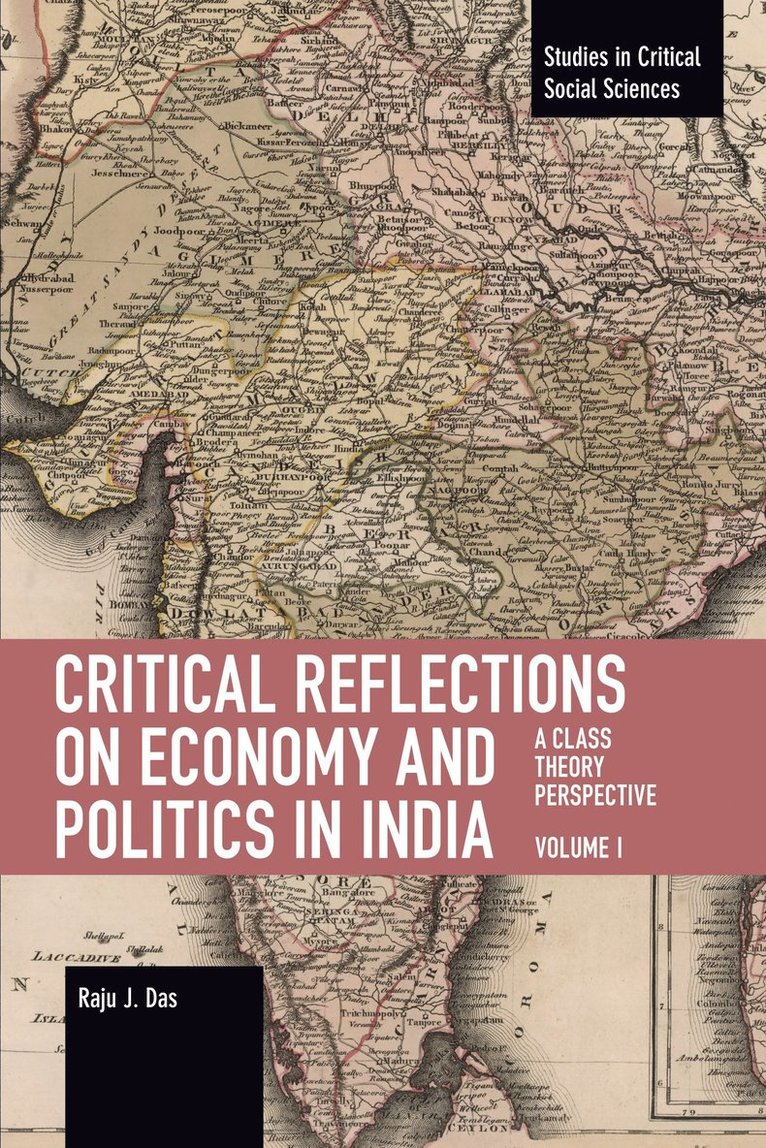
    Critical Reflections on Economy and Politics in India. Volume 2

    A Class Theory Perspective

    AvRaju J. Das

    Häftad, Engelska, 2021

    Del i serien Studies in Critical Social Science

    352 kr

    Beställningsvara. Skickas inom 5-8 vardagar. Fri frakt över 249 kr.

    Beskrivning

    In the first volume of this sweeping analysis of contemporary India, Raju Das offers a much needed class-based perspective on the economic situation in what has become one of the fastest growing economies in the world. Offering invaluable insights along the way, Das examines the specificities of Indian capitalism and neoliberalism, the country’s geographically uneven development, the impact of technological change, and the consequences of its export-oriented, nature-dependent production.Critical Reflections on Economy and Politics in India applies abstract theoretical ideas to the concrete situation in India, which, in turn, inspires a rethinking of theory. Das unabashedly shows the relevance of a class theory that takes seriously matters of oppression/domination of religious minorities and lower castes. A must read for anyone looking to not only interpret the world, but to change it.

    Produktinformation

    • Utgivningsdatum:2021-08-31
    • Mått:152 x 228 x 20 mm
    • Vikt:508 g
    • Format:Häftad
    • Språk:Engelska
    • Serie:Studies in Critical Social Science
    • Antal sidor:350
    • Förlag:Haymarket Books
    • ISBN:9781642594294

    Utforska kategorier

    • Nationalekonomi inom Ekonomi och Ledarskap
    • Referensverk och tvärvetenskap inom Samhälle och politik
    • Politik och statsskick inom Samhälle och politik

    Mer om författaren

    Raju J. Das holds a Ph.D. from The Ohio State University, Columbus, and is currently a Professor at York University, Toronto. He is the author of Marxist Class Theory for a Sceptical World.

    Recensioner i media

    "This book is a magisterial examination by Raju J Das of the current political and economic dynamics in India, and confirms his place as one of the leading social scientists contributing to our understanding of what is really happening on the subcontinent. After the hiatus of the cultural turn, this volume returns the focus once more to where it should be: a materialist approach based on political economy and class analysis. As such, it is situated firmly within the intellectual tradition of the best scholarship about India, as exemplified in the earlier mode of production debate. It will surely define how the Indian development path is studied and argued over for the foreseeable future."—Tom Brass, formerly of SPS, Cambridge University, and Editor of The Journal of Peasant Studies.

    Innehållsförteckning

    • AcknowledgementsList of IllustrationsPreface to Paperback Editions1 Introduction1 Why Class?2 Why Not Class – Why Not a Class-Based Analytical Framework?3 Components of a Class-Based Framework for Understanding Contemporary India4 The Chapter Outline2 Class in India1 Existing Criticisms against Class Analysis of India2 Existing Approaches to Class in India3 A Critique of Existing Approaches to Class in India4 Constructing a Class-Based Framework5 Conclusion3 The Capitalist Character of Class Society in Post-colonial India: Moving Beyond the Mode of Production Debate1 The Development of Capitalist Relations, and the Barriers to This: A Brief Discussion on the Indian Mode of Production Debate2 A Critique of Some Influential Ideas in the Indian Mode of Production Debate3 Examining India’s Capitalist Character on the Basis of Marx’s Distinction between Formal and Real Subsumptions of Labor4 Class Struggle and the (Slow and Uneven) Transition to Real Subsumption of Labor5 Class Struggle and the ‘Blocked’ Transition to Real Subsumption of Labor6 Possibilities of, and Limits to, Real Subsumption of Labor7 Jairus Banaji’s (and Others’) Mistaken Subsumption of Labor Perspective8 Conclusion4 Neoliberal Capitalism with Indian Characteristics1 Neoliberalism: Its General Traits2 Neoliberalism in India: The Context3 Neoliberalism with Indian Characteristics: Eight Theses4 Concluding Comments: What Is to Be Done?5 Capitalism and Technological Change: Reflections on the Technology-Poverty Relation1 The Literature on the Green Revolution and Poverty: The Thesis and the Anti-thesis2 The Literature on the Green Revolution and Poverty: A Critique of Neo-Malthusianism3 Technology, Population and Poverty: A Contingent Relation4 The Green Revolution and Poverty in India: An Empirical Analysis5 Conclusion6 Low-Wage Neoliberal Capitalism, Social-Cultural Difference, and Nature-Dependent Production1 Shrimp Aquaculture and the Missing Laborer2 A Labor-Based Approach to Nature-Dependent Commodity Production3 The Local, National and the Global Contexts4 Working for Less and in Poor Conditions: ‘Capital’ Negated5 Making Sense of Low-Wage Capitalism: From the General to the Locally Specific6 Conclusion7 Class Relations, Class Struggle, and the State in India1 Existing Views on the Indian State: A Critical Review2 The Indian State and Its Class Base3 A Coalition/Alliance of Proprietary Classes4 The Indian State, Lower Classes, and Lower-Class Struggle5 State Form, State Policy, and Class Struggle6 The Indian State and the Class Contradictions of Economic Development7 ConclusionBibliographyIndex