• Fri frakt över 249 kr
  • •
  • Snabba leveranser
  • •
  • Billiga böcker
Kundservice

Du är på sajten för privatpersoner.

Företag, bibliotek eller offentlig verksamhet?

Du handlar på classic.bokus.com, där alla dina funktioner finns intakta.
Till classic.bokus.com
Bokus logotyp. Gå till startsidan.
  • Erbjudanden
  • Student
  • Topplistor
  • Barn & ungdom
  • Bokus Play
  • E-böcker
  • Ljudböcker
  • Pocketböcker
  • Spel & pussel

10% rabatt på allt med kod NYSTART10 →

Sidfot

Mina sidor

    Hjälp

    • Kundservice
    • Vanliga frågor och svar
    • Frakt och leverans
    • Retur vid ångerrätt
    • Reklamera vara
    • Betalning
    • Köpvillkor
    • Allmänna villkor
    • Information om webbplatsens tillgänglighet

    Om Bokus

    • Om oss
    • Pressrum
    • För studenter
    • För företag
    • För bibliotek och offentlig verksamhet
    • För leverantörer
    • Hållbarhet

    Populärt

    • Aktuella erbjudanden
    • Presentkort
    • Studentlitteratur
    • Nya böcker
    • Topplistor
    • Signerade böcker
    • Engelska böcker

    Inspiration

    • Boktips
    • BookTok
    • Populära bokserier
    • Barnbokskaraktärer
    • Populära författare
    Logotyp för Bokus
    Följ oss på Facebook (extern länk)Följ oss på Instagram (extern länk)Följ oss på YouTube (extern länk)Följ oss på TikTok (extern länk)
    bokus @ CookiesAnpassa cookiesIntegritetspolicyKöpvillkor
    Till Citymail hemsida (extern länk)Till Budbee hemsida (extern länk)Till Postnord hemsida (extern länk)Till Schenker hemsida (extern länk)Till Early Bird hemsida (extern länk)Till Walleys hemsida (extern länk)
    1. Naturvetenskap och teknik
    2. Geovetenskap
    3. Miljövetenskap och miljöpolitik

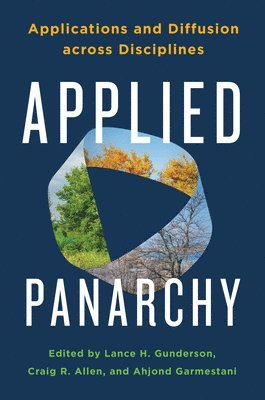
    Applied Panarchy

    Applications and Diffusion Across Disciplines

    AvLance H. Gunderson,Craig Reece Allen

    Häftad, Engelska, 2022

    429 kr

    Beställningsvara. Skickas inom 5-8 vardagar. Fri frakt över 249 kr.

    Beskrivning

    After a decades long economic slump, the city of Flint, Michigan, struggled to address chronic issues of toxic water supply, malnutrition, and food security gaps among its residents. A community engaged research project proposed a resilience assessment that would use panarchy theory to move the city toward a more sustainable food system. Flint is one of many examples that demonstrate how panarchy theory is being applied to understand and influence change in complex human natural systems. Applied Panarchy, the much anticipated successor to Lance Gunderson and C.S. Holling's seminal 2002 volume Panarchy, documents the extraordinary advances in interdisciplinary panarchy scholarship and applications over the past two decades. Panarchy theory has been applied to a broad range of fields from economics to law to urban planning, changing the practice of environmental stewardship for the better in measurable, tangible ways.Panarchy describes the way systems-whether forests, electrical grids, agriculture, coastal surges, public health, or human economies and governance-are part of even larger systems that interact in unpredictable ways. Although humans desire resiliency and stability in our lives to help us understand the world and survive, nothing in nature is permanently stable. How can society anticipate and adjust to the changes we see around us? Where Panarchy proposed a framework to understand how these transformational cycles work and how we might influence them, Applied Panarchy takes the scholarship to the next level, demonstrating how these concepts have been modified and refined. The book shows how panarchy theory intersects with other disciplines, and how it directly influences natural resources management and environmental stewardship.Intended as a text for graduate courses in environmental sciences and related fields, Applied Panarchy picks up where Panarchy left off, inspiring new generations of scholars, researchers, and professionals to put its ideas to work in practical ways.

    Produktinformation

    • Utgivningsdatum:2022-04-21
    • Mått:150 x 226 x 20 mm
    • Vikt:440 g
    • Format:Häftad
    • Språk:Engelska
    • Antal sidor:352
    • Förlag:Princeton University Press
    • ISBN:9781642830897

    Utforska kategorier

    • Miljövetenskap och miljöpolitik inom Naturvetenskap och teknik
    • Miljöteknik inom Naturvetenskap och teknik

    Mer om författaren

    Lance Gunderson is professor and chair in the Department of Environmental Sciences at Emory University in Atlanta, Georgia. His research focuses on the human and institutional dimensions of resource ecology. He is coeditor-in-chief of the journal Ecology and Society. Craig Allen is a professor at the University of Nebraska in Lincoln, and serves on the board of directors for the Resilience Alliance. His research focuses on the links between land use and land cover change, biological invasions, extinctions, and resilience. Ahjond Garmestani is a research scientist with the U.S. Environmental Protection Agency, Office of Research and Development, Gulf Breeze, Florida, and the Utrecht Centre for Water, Oceans and Sustainability Law-Utrecht University School of Law, Utrecht, The Netherlands. His research is transdisciplinary and focuses on governance of social-ecological systems.

    Recensioner i media

    "The nexus of thought and application that breaks down the disciplinary boundaries is clear to see in the examples provided in this book. I have no doubt that the broad academic movements investigating resilience in the Anthropocene will gain much from Applied Panarchy."

    Innehållsförteckning

    • Table of ContentsPrefacePart I. Panarchy ConceptsChapter 1. Panarchy: Nature's RulesLance H. Gunderson, Ahjond Garmestani, Craig R. AllenPart II. Applications of Panarchy TheoryChapter 2. Panarchy, Cross Scale Resilience, and Discontinuous Structures and ProcessesShana M. Sundstrom, Craig R. Allen, David G. AngelerChapter 3. The Adaptive Cycle: More Than a MetaphorShana Sundstrom and Craig R. AllenChapter 4. Scales of Coercion: Resilience, Regimes, and PanarchyDavid G. Angeler and Craig R. AllenChapter 5. Applications of Spatial Regimes.Craig R. Allen, David G. Angeler, Ahjond Garmestani, Caleb Roberts, Shana Sundstrom, Dirac Twidwell, Dan R. UdenChapter 6. An Engineering Perspective on Managing for Resilience and PanarchyIan Pumo, Margaret Kurth, Stephanie Galaitsi, Igor LinkovChapter 7. Mapping Panarchy to Improve Visualization of Complex Environmental ChangeDirac Twidwell, Daniel R. Uden, Caleb P. Roberts, Brady W. Allred, Matthew O. Jones, David E. Naugle and Craig R. AllenPart III. Diffusion of Panarchy ConceptsChapter 8. Capacities for Navigating Large Scale Sustainability Transformations: Exploring the Revolt and Remembrance Mechanisms for Shaping Collapse and Renewal in Social Ecological SystemsPer Olsson, Carl Folke, and Michele Lee MooreChapter 9. Panarchy and Law in the AnthropoceneRobin Kundis Craig, Barbara Cosens, Ahjond Garmestani, and J.B. RuhlChapter 10. Panarchy and the EconomyJosh Farley and Megan EglerChapter 11. Assessing Panarchy in Food Systems: Cross Scale Interactions in Flint Michigan, USAJennifer Hodbod and Chelsea WentworthChapter 12. Panarchy and the Governance of Social Ecological SystemsBrian ChaffinChapter 13. Cross Scale Social Ecological Stewardship for Navigating toward More Sustainable and Just FuturesF. Stuart Chapin, III, Reinette Biggs, Nadia Sitas, Carl Folke, and Gary P. KofinasPart IV. Summary, Synthesis, and Future AdvancesChapter 14. Applications and Diffusion of Panarchy TheoryLance H. Gunderson, Craig R. Allen, and Ahjond GarmestaniAbout the EditorsContributorsIndex