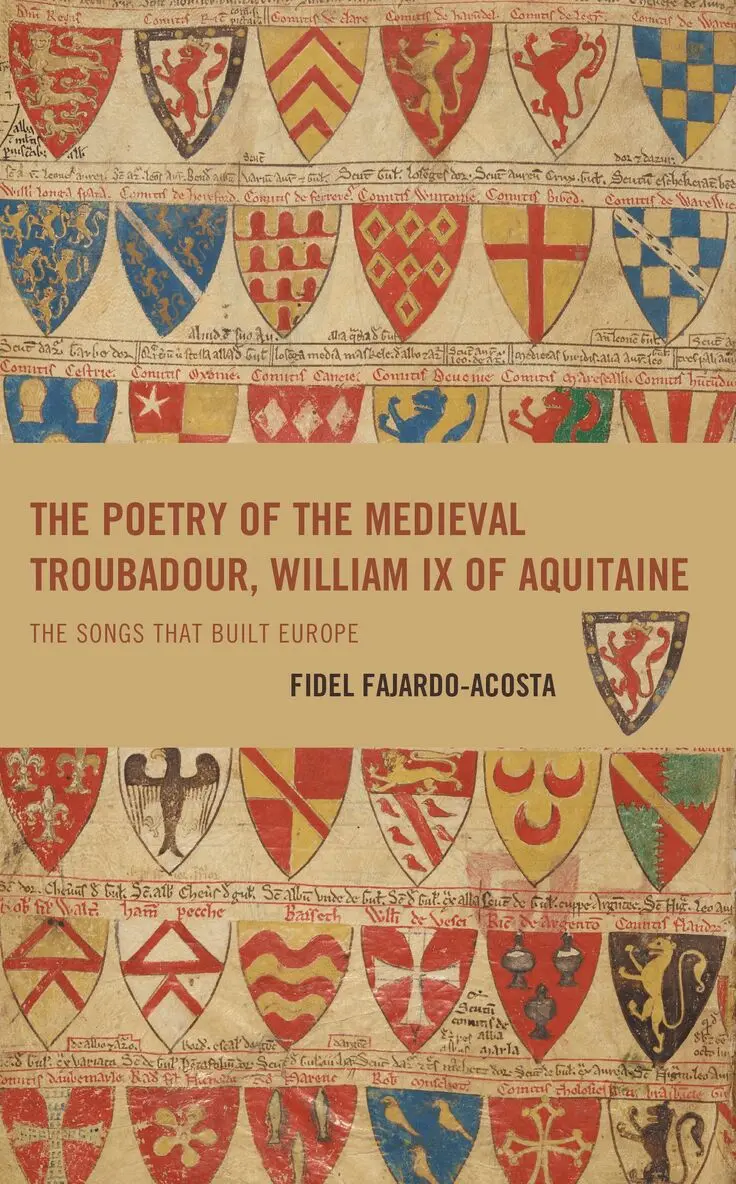
Inbunden, Engelska, 2023
Poetry of the Medieval Troubadour, William IX of Aquitaine
The Songs that Built Europe
Del i serien Studies in Medieval Literature
1546 kr
Beställningsvara. Skickas inom 10-15 vardagar. Fri frakt över 249 kr.
Beskrivning
Produktinformation
- Utgivningsdatum: 2023-08-15
- Mått: 158 x 237 x 23 mm
- Vikt: 617 g
- Format: Inbunden
- Språk: Engelska
- Serie: Studies in Medieval Literature
- Antal sidor: 314
- Förlag: Bloomsbury Publishing Plc
- ISBN: 9781666926934
Utforska kategorier
Mer om författaren
Fidel Fajardo-Acosta is professor of English at Creighton University.
Recensioner i media
Half ingenious scholarly commentary, half disquisition on the rot of modernity (which, of course, extends through to the Middle Ages and beyond), this book takes aim at contemporary political discourse which ridicules the medieval period as irrelevant, celebrates it as racist and homophobic, or makes it a strategically child-like evocation of the American dream. Taking Guilhem IX as a figure through whom to examine the universal appeal and message of Occitan poetic production as well as the tragic ironies of modern subjecthood, Fajardo-Acosta finds early vestiges of capitalism and the current debased view of the past, of truth, and of literature in the cynical and theatrical 12th-century comtal court of Guilhem IX in Poitiers. Fajardo-Acosta offers us in this study a refreshingly polemical intervention into cultural studies and an altogether exhilarating read.
Betyg & recensioner
0 recensioner
Inga recensioner tillgängliga.