• Fri frakt över 249 kr
  • •
  • Snabba leveranser
  • •
  • Billiga böcker
Kundservice

Du är på sajten för privatpersoner.

Företag, bibliotek eller offentlig verksamhet?

Du handlar på classic.bokus.com, där alla dina funktioner finns intakta.
Till classic.bokus.com
Bokus logotyp. Gå till startsidan.
  • Erbjudanden
  • Nyheter
  • Student
  • Topplistor
  • Barn & ungdom
  • Bokus Play
  • E-böcker
  • Pocketböcker
  • Spel & pussel

10% rabatt på allt med kod NYSTART10 →

Sidfot

Mina sidor

    Hjälp

    • Kundservice
    • Vanliga frågor och svar
    • Frakt och leverans
    • Retur vid ångerrätt
    • Reklamera vara
    • Betalning
    • Köpvillkor
    • Allmänna villkor
    • Information om webbplatsens tillgänglighet

    Om Bokus

    • Om oss
    • Pressrum
    • För studenter
    • För företag
    • För bibliotek och offentlig verksamhet
    • För leverantörer
    • Hållbarhet

    Populärt

    • Aktuella erbjudanden
    • Presentkort
    • Studentlitteratur
    • Nya böcker
    • Topplistor
    • Signerade böcker
    • Engelska böcker

    Inspiration

    • Boktips
    • BookTok
    • Populära bokserier
    • Barnbokskaraktärer
    • Populära författare
    Logotyp för Bokus
    Följ oss på Facebook (extern länk)Följ oss på Instagram (extern länk)Följ oss på YouTube (extern länk)Följ oss på TikTok (extern länk)
    bokus @ CookiesAnpassa cookiesIntegritetspolicyKöpvillkor
    Till Citymail hemsida (extern länk)Till Budbee hemsida (extern länk)Till Postnord hemsida (extern länk)Till Schenker hemsida (extern länk)Till Early Bird hemsida (extern länk)Till Walleys hemsida (extern länk)
    1. Psykologi och pedagogik
    2. Psykologi

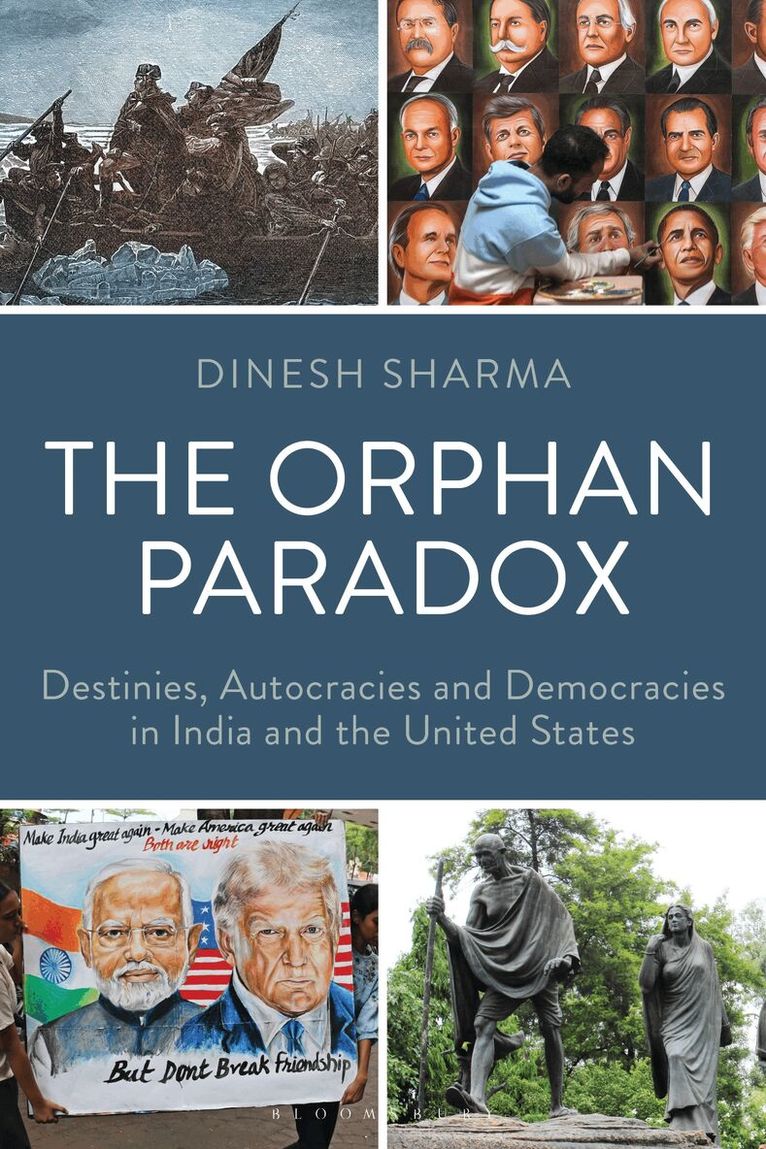
    Orphan Paradox

    Destinies, Autocracies and Democracies in India and the United States

    AvDinesh Sharma

    Inbunden, Engelska, 2026

    1 204 kr

    Slutsåld

    Beskrivning

    Why do democracies continue to elect ‘orphaned’ outsiders versus ‘patrician’ elites? In The Orphan Paradox, Sharma offers an original meditation on the hidden wounds that shape political leadership. Building on his earlier works, including Barack Obama in Hawai‘i and Indonesia (2012), Sharma fuses psychology, history, and political science to illuminate how leaders transform vulnerability into vision. Through vivid portraits that traverse continents and centuries, he traces how the United States and India — twin experiments in democracy born of colonial rupture — produced leaders who embodied both loss and renewal: Washington, Jefferson, and Madison in America; Gandhi, Nehru, and Ambedkar in India. From these founders emerged patrician families –the Adamses, Kennedys, Bushes, and the Nehru-Gandhi dynasty — whose inheritance of power eventually met the populist insurgencies of figures like Trump and Modi. For psychologists, historians and political scientists alike, The Orphan Paradox provides a new framework on the foundations of democracy, showing how personal loss shapes institutional design and how nations, like individuals, oscillate between trauma and transcendence. The result is a work of scholarship with a moral urgency — a study of how the orphaned souls continue to haunt, and perhaps redeem the democratic experiment.

    Produktinformation

    • Utgivningsdatum:2026-10-29
    • Mått:152 x 229 x 14 mm
    • Vikt:349 g
    • Format:Inbunden
    • Språk:Engelska
    • Antal sidor:312
    • Förlag:Bloomsbury Publishing Plc
    • ISBN:9781666976793

    Utforska kategorier

    • Psykologi inom Psykologi och pedagogik
    • Politiskt ledarskap inom Samhälle och politik

    Mer om författaren

    Dinesh Sharma is Director and Chief Research Officer at Steam Works Studio in Princeton, New Jersey; an affiliated faculty member at Fordham University, NYU, and Walden, who regularly writes for Psychology Today. He has a Master's degree in Clinical Psychology, and Doctorate in Human Development & Psychological Anthropology from Harvard University.

    Recensioner i media

    Combining psychology, history, and political science, The Orphan Paradox introduces a ground-breaking approach to understanding the development of national leadership. It compares the United States and India — two of the most populist democracies in the world — to present a new and insightful way of looking at political culture. Sharma's exposition of "traumagenic leadership" shaped by psychic wounds and traumas that affect "both nations and the figures who lead them" is particularly compelling.

    Innehållsförteckning

    • List of Figures and TablesNote on AuthorForewordPrefaceCh. 1: Introduction Ch. 2: The Orphan ParadoxCh. 3: The Founders of Democracies Ch. 4: The Inheritors of Autocratic Dynasties Ch. 5: The Populism of Nationalist AutocratsCh. 6: Political Cycles & Trauma PoliticsCh. 7: A Traumagenic Theory of Leadership Ch. 8: The Orphan, the Strongman and the OligarchCh. 9: ConclusionReferences Appendix