• Fri frakt över 249 kr
  • •
  • Snabba leveranser
  • •
  • Billiga böcker
Kundservice

Du är på sajten för privatpersoner.

Företag, bibliotek eller offentlig verksamhet?

Du handlar på classic.bokus.com, där alla dina funktioner finns intakta.
Till classic.bokus.com
Bokus logotyp. Gå till startsidan.
  • Erbjudanden
  • Nyheter
  • Student
  • Topplistor
  • Barn & ungdom
  • Bokus Play
  • E-böcker
  • Pocketböcker
  • Spel & pussel

10% studentrabatt med kod TERM26

Sidfot

Mina sidor

    Hjälp

    • Kundservice
    • Vanliga frågor och svar
    • Frakt och leverans
    • Retur vid ångerrätt
    • Reklamera vara
    • Betalning
    • Köpvillkor
    • Allmänna villkor
    • Information om webbplatsens tillgänglighet

    Om Bokus

    • Om oss
    • Pressrum
    • För studenter
    • För företag
    • För bibliotek och offentlig verksamhet
    • För leverantörer
    • Hållbarhet

    Populärt

    • Aktuella erbjudanden
    • Presentkort
    • Studentlitteratur
    • Nya böcker
    • Topplistor
    • Signerade böcker
    • Engelska böcker

    Inspiration

    • Boktips
    • BookTok
    • Populära bokserier
    • Barnbokskaraktärer
    • Populära författare
    Logotyp för Bokus
    Följ oss på Facebook (extern länk)Följ oss på Instagram (extern länk)Följ oss på YouTube (extern länk)Följ oss på TikTok (extern länk)
    bokus @ CookiesAnpassa cookiesIntegritetspolicyKöpvillkor
    Till Citymail hemsida (extern länk)Till Budbee hemsida (extern länk)Till Postnord hemsida (extern länk)Till Schenker hemsida (extern länk)Till Early Bird hemsida (extern länk)Till Walleys hemsida (extern länk)
    1. Psykologi och pedagogik
    2. Psykologi
    3. Barnpsykologi och utvecklingspsykologi

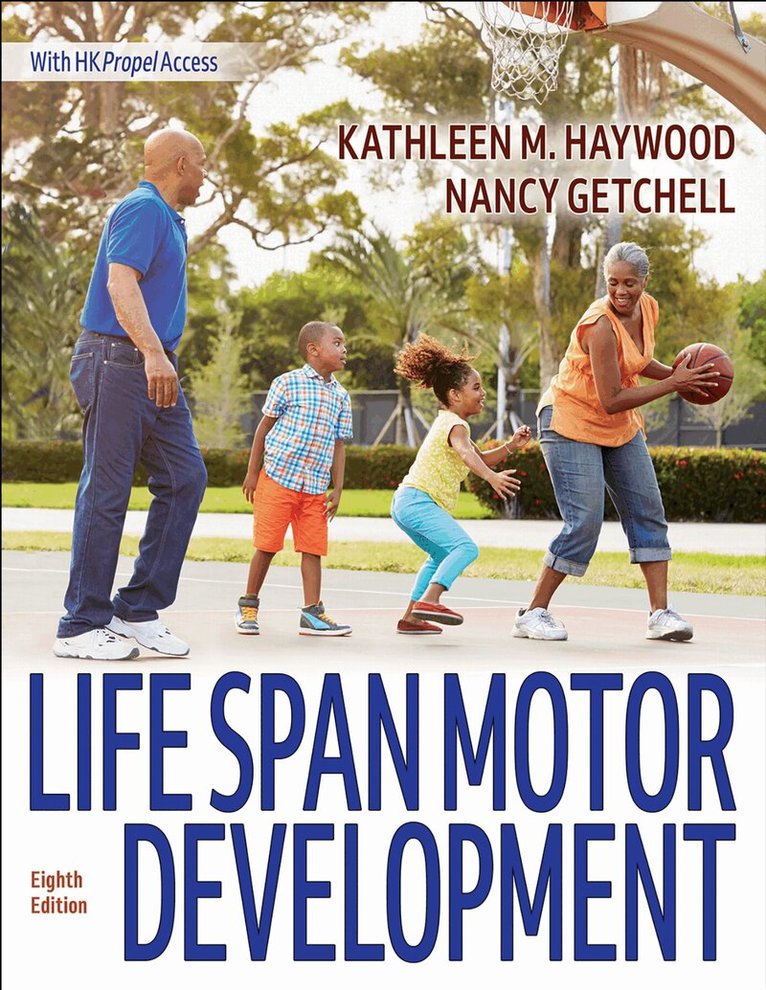
    Life Span Motor Development

    AvKathleen M. Haywood,Nancy Getchell

    Häftad, Engelska, 2024

    1 364 kr

    Beställningsvara. Skickas inom 5-8 vardagar. Fri frakt över 249 kr.

    Fler format och utgåvor

    Övrigt

    898 kr

    Beskrivning

    Life Span Motor Development, Eighth Edition With HKPropel Access, is a leading text for helping students understand a person’s movement abilities as the interaction of the individual’s development and maturation, the environment, and the task being performed. This model of constraints approach, combined with an unprecedented collection of video clips marking motor development advancements, facilitates an unmatched learning experience for the study of motor development across the life span.Life Span Motor Development helps students understand how maturational age and chronological age are distinct and how functional constraints affect motor skill development and learning. It shows how the four components of physical fitness-cardiorespiratory endurance, strength, flexibility, and body composition-interact to affect a person’s movements over the life span, and it describes how relevant social, cultural, psychosocial, and cognitive influences can affect a person’s movements. It also now includes more content on atypical development; new Spotlight on Disability sidebars help readers use the constraints perspective to better understand how various disabilities influence motor development.The eighth edition continues the tradition of making the student’s experience with motor development an interactive one. Related online learning tools delivered through HKPropel include an updated video library with more than 200 video clips, showing motor development milestones, to sharpen observation techniques; flash cards; key term quizzes; and 48 lab activities (including one new to this edition) to facilitate critical thinking and hands-on application. Some lab activities may be assigned and tracked by instructors through HKPropel, and sample answers for the lab activities are found in the instructor guide. Chapter quizzes are automatically graded to test comprehension of critical concepts.This edition features updated, modernized artwork and includes 142 illustrations, 60 photos, and 24 tables-all in full color-to help explain concepts and to make the text more engaging for students. It also retains helpful learning aids, including chapter objectives, a running glossary, key points, sidebars, and application questions throughout the text. Each chapter begins with a section titled Motor Development in the Real World, which presents realistic experiences that help readers connect with the material. Each chapter ends with a section titled Reinforcing What You Have Learned About Constraints, which prompts readers to answer questions about the material and complete learning exercises. Answers to these questions are included in the instructor guide.Life Span Motor Development, Eighth Edition, embraces an interactive and practical approach to illustrate the most recent research in motor development. Students will come away with a firm understanding of the concepts and how they apply to real-world situations.Note: A code for accessing HKPropel is included with all new print books.

    Produktinformation

    • Utgivningsdatum:2024-10-15
    • Mått:216 x 279 x undefined mm
    • Vikt:1 315 g
    • Format:Häftad
    • Språk:Engelska
    • Antal sidor:472
    • Upplaga:8
    • Förlag:Human Kinetics Publishers
    • ISBN:9781718216723

    Utforska kategorier

    • Barnpsykologi och utvecklingspsykologi inom Psykologi och pedagogik

    Mer om författaren

    Kathleen M. Haywood, PhD, is a professor emerita at the University of Missouri at St. Louis, where she has researched life span motor development and taught courses in motor behavior and development, sport psychology, and biomechanics. She earned her PhD in motor behavior from the University of Illinois at Urbana-Champaign in 1976.Haywood is a fellow of the National Academy of Kinesiology and the Research Consortium of SHAPE America (Society of Health and Physical Educators). She is also a recipient of SHAPE America’s Mabel Lee Award. Haywood has served as president of the North American Society for the Psychology of Sport and Physical Activity and as chairperson of the Motor Development Academy of SHAPE America.Haywood is also the coauthor of Archery: Steps to Success, published by Human Kinetics. She resides in Saint Charles, Missouri, and in her free time enjoys fitness training, pickleball, and dog training.Nancy Getchell, PhD, is a professor at the University of Delaware in Newark, where she serves as the director of the developmental motor control research laboratory. For over 30 years, Getchell has investigated developmental motor control and coordination in children with and without disabilities. Her current research focus is on brain–behavior relationships in children with developmental coordination disorder and other conditions. She teaches courses in motor development, motor control and learning, research methods, and women in sport.Getchell has served on the executive committee of the International Motor Development Research Consortium and is a professional member of SHAPE America and the North American Society for the Psychology of Sport and Physical Activity. She is a fellow of the National Academy of Kinesiology, the Research Council of SHAPE America, and the International Motor Development Research Consortium. In 2024, she was the inaugural Lolas Halverson Lecturer for the SHAPE America convention in Cleveland, Ohio.Getchell resides in Wilmington, Delaware, where she enjoys hiking, geocaching, and bicycling.

    Innehållsförteckning

    • Part I. Introduction to Motor DevelopmentChapter 1. Fundamental ConceptsDefining Motor DevelopmentConstraints: A Model for Studying Motor DevelopmentHow Do We Know It Is Change?A Developmental Paradox: Universality Versus VariabilitySummary and SynthesisChapter 2. Theoretical Perspectives in Motor DevelopmentMaturational PerspectiveInformation Processing PerspectiveEcological PerspectiveCurrent InterestsSummary and SynthesisChapter 3. Principles of Motion and StabilityUnderstanding the Principles of Motion and StabilityUsing the Principles of Motion and Stability to Detect and Correct ErrorsSummary and SynthesisPart II. Development of Motor Skills Across the Life SpanChapter 4. Early Motor DevelopmentHow Do Infants Move?Why Do Infants Move? The Purpose of ReflexesMotor Milestones: The Pathway to Voluntary MovementsDevelopment of Postural Control and Balance in InfancySummary and SynthesisChapter 5. Development of Human LocomotionThe First Voluntary Locomotor Efforts: Creeping and CrawlingWalking Across the Life SpanRunning Across the Life SpanOther Locomotor SkillsSummary and SynthesisChapter 6. Development of Ballistic SkillsOverarm ThrowingKickingPuntingSidearm StrikingOverarm StrikingInterventionsSummary and SynthesisChapter 7. Development of Manipulative SkillsGrasping and ReachingCatchingAnticipationSummary and SynthesisPart III. Physical Growth and AgingChapter 8. Physical Growth, Maturation, and AgingPrenatal DevelopmentPostnatal DevelopmentSummary and SynthesisChapter 9. Development and Aging of Body SystemsSystems Development During the Prenatal PeriodSystems Development During Childhood and AdolescenceSystems Development During Adulthood and Older AdulthoodSummary and SynthesisPart IV. Development of Physical FitnessChapter 10. Development of Cardiorespiratory EndurancePhysiological Responses to Short-Term ExercisePhysiological Responses to Prolonged ExerciseSummary and SynthesisChapter 11. Development of Strength and FlexibilityMuscle Mass and StrengthDevelopment of StrengthDevelopment of FlexibilitySummary and SynthesisChapter 12. Weight Status, Fitness, and Motor CompetenceA Model of InterrelationshipsBody CompositionObesityMotor Competence, Activity, Fitness, and Body CompositionSummary and SynthesisPart V. Perceptual-Motor DevelopmentChapter 13. Sensory-Perceptual DevelopmentVisual DevelopmentKinesthetic DevelopmentAuditory DevelopmentIntermodal PerceptionSummary and SynthesisChapter 14. Perception and Action in DevelopmentThe Role of Action in PerceptionPostural Control and BalanceSummary and SynthesisPart VI. Functional Constraints in Motor DevelopmentChapter 15. Social and Cultural Constraints in Motor DevelopmentSocial and Cultural Influences as Environmental ConstraintsOther Sociocultural Constraints: Race, Ethnicity, and Socioeconomic StatusSummary and SynthesisChapter 16. Psychosocial Constraints in Motor DevelopmentSelf-EsteemThe Link Between Perceived and Actual Motor CompetenceMotivationSummary and SynthesisChapter 17. Developmental Motor LearningUnpacking the Definition of Motor LearningStages of Learning and the Development of ExpertisePractice and Motor LearningAugmented Feedback and Motor LearningOther Factors That Influence Motor LearningSummary and SynthesisChapter 18. Conclusion: Interactions Among ConstraintsUsing Constraints to Enhance Learning in Physical Activity SettingsInteracting Constraints: Case StudiesSummary and SynthesisAppendix. Skinfold, Body Mass Index, and Head Circumference Charts