• Fri frakt över 249 kr
  • •
  • Snabba leveranser
  • •
  • Billiga böcker
Kundservice

Du är på sajten för privatpersoner.

Företag, bibliotek eller offentlig verksamhet?

Du handlar på classic.bokus.com, där alla dina funktioner finns intakta.
Till classic.bokus.com
Bokus logotyp. Gå till startsidan.
  • Erbjudanden
  • Nyheter
  • Student
  • Topplistor
  • Barn & ungdom
  • Bokus Play
  • E-böcker
  • Pocketböcker
  • Spel & pussel

10% rabatt på allt med kod: NYSTART10 →

Sidfot

Mina sidor

    Hjälp

    • Kundservice
    • Vanliga frågor och svar
    • Frakt och leverans
    • Retur vid ångerrätt
    • Reklamera vara
    • Betalning
    • Köpvillkor
    • Allmänna villkor
    • Information om webbplatsens tillgänglighet

    Om Bokus

    • Om oss
    • Pressrum
    • För studenter
    • För företag
    • För bibliotek och offentlig verksamhet
    • För leverantörer
    • Hållbarhet

    Populärt

    • Aktuella erbjudanden
    • Presentkort
    • Studentlitteratur
    • Nya böcker
    • Topplistor
    • Signerade böcker
    • Engelska böcker

    Inspiration

    • Boktips
    • BookTok
    • Populära bokserier
    • Barnbokskaraktärer
    • Populära författare
    Logotyp för Bokus
    Följ oss på Facebook (extern länk)Följ oss på Instagram (extern länk)Följ oss på YouTube (extern länk)Följ oss på TikTok (extern länk)
    bokus @ CookiesAnpassa cookiesIntegritetspolicyKöpvillkor
    Till Citymail hemsida (extern länk)Till Budbee hemsida (extern länk)Till Postnord hemsida (extern länk)Till Schenker hemsida (extern länk)Till Early Bird hemsida (extern länk)Till Walleys hemsida (extern länk)
    1. Medicin
    2. Medicin: icke kliniska discipliner
    3. Fysiologi
    • 10% rabatt på allt

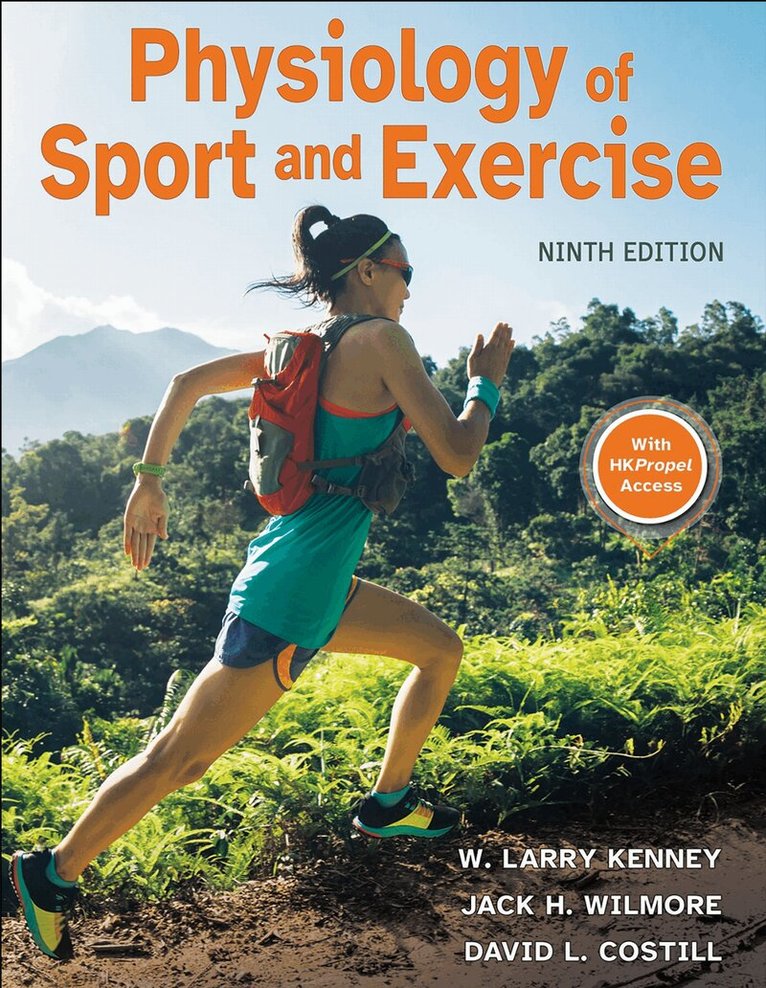
    Physiology of Sport and Exercise

    AvW. Larry Kenney,Jack H. Wilmore

    Häftad, Engelska, 2024

    1 719 kr

    . Fri frakt över 249 kr.

    Fler format och utgåvor

    Inbunden

    1 864 kr

    Beskrivning

    Combining research with extensive visual aids, Physiology of Sport and Exercise, Ninth Edition With HKPropel Access, offers a simple way for students to explore the body’s response to various types and intensities of exercise and sports. The ninth edition of the text continues its legacy as a top physiology resource and favorite of instructors and students alike.Written by a team of distinguished researchers, all past presidents of the American College of Sports Medicine, this ninth edition has been updated based on the most recent standards and guidelines in the field of exercise physiology. It continues its rich tradition of offering superior illustrations, photos, and medical artwork with a modern look to encourage a deep understanding of complex topics.Related multimedia components delivered through HKPropel further enrich the learning experience: 26 animations and 66 audio clips offer explanations of elaborate physiological processes. More than 30 video clips feature leaders in the field discussing central topics, including several new clips to help students connect theoretical and practical concepts. The digital elements have been refreshed and modernized for this edition, and QR codes throughout the text help you reach the content quickly.Various types of online learning activities, key term flash card reviews, and key term quizzes offer interactive opportunities to engage with the content, including the ability for instructors to assign and track progress directly through HKPropel. Chapter quizzes may also be assigned; these are automatically graded in order to test comprehension of critical concepts.In addition to a refreshed chapter-opening format that draws readers in, Physiology of Sport and Exercise, Ninth Edition, incorporates the latest research in the field: New content on energy sources used in exercise Expanded content on fatigue and exercise performance Expanded coverage of the interactive effects of insulin and exercise More detail on lactate threshold and lactate shuttle Content on the role of vascular changes in skeletal muscle health and function Updated Research Perspective sidebars, including over 60 new sidebars, that emphasize emerging findings in the field As in previous editions, readability and ease of understanding make Physiology of Sport and Exercise different from other physiology resources. Unique learning aids, including chapter-opening outlines and review boxes, will help students focus on the major concepts addressed. Study questions and a list of key terms at the end of each chapter provide opportunities for recall and self-assessment. A comprehensive glossary and updated lists of common abbreviations and conversions provide easy reference for students.Physiology of Sport and Exercise has been a pivotal textbook in the field of exercise physiology. The ninth edition offers dynamic and interactive learning activities, easy-to-follow layouts, and research-oriented content enriched with visual supplements.Note: A code for accessing HKPropel is included with all new print books.

    Produktinformation

    • Utgivningsdatum:2024-10-14
    • Mått:280 x 217 x 32 mm
    • Vikt:1 889 g
    • Format:Häftad
    • Språk:Engelska
    • Antal sidor:680
    • Upplaga:9
    • Förlag:Human Kinetics Publishers
    • ISBN:9781718228429

    Ingår i kampanjer

    10% rabatt på allt

    Utforska kategorier

    • Fysiologi inom Medicin
    • Referensverk och tvärvetenskap inom Samhälle och politik
    • Idrottsträning och coachning inom Sport, fritid och hobby

    Mer om författaren

    W. Larry Kenney, PhD, is the Marie Underhill Noll Chair in Human Performance and a professor of physiology and kinesiology at Pennsylvania State University at University Park. He received his PhD in physiology from Penn State in 1983. Working at Noll Laboratory, Kenney is researching the effects of aging and disease states such as hypertension on the control of blood flow to human skin and has been continuously funded by NIH since 1983. He also studies the effects of heat, cold, and dehydration on various aspects of health, exercise, and athletic performance as well as the biophysics of heat exchange between humans and the environment. He is the author of almost 300 papers, books, book chapters, and other publications.Kenney was president of the American College of Sports Medicine (ACSM) from 2003 to 2004. He is a fellow of the ACSM and of the American Physiological Society (APS).For his service to the university and his field, Kenney was awarded Penn State University's Faculty Scholar Medal, the Evan G. and Helen G. Pattishall Outstanding Research Achievement Award, and the Pauline Schmitt Russell Distinguished Research Career Award. He was awarded ACSM's Citation Award in 2008 and Honor Award in 2023, as well as the APS' EEP Honor Award in 2024.Kenney has been a member of the editorial and advisory boards for multiple journals. He is also an active grant reviewer for the National Institutes of Health and many other organizations. He and his wife, Patti, have three adult children, all of whom were Division I college athletes.Jack H. Wilmore, PhD, retired in 2003 from Texas A&M University as a distinguished professor in the department of health and kinesiology. From 1985 to 1997, Wilmore was chair of the department of kinesiology and health education and the Margie Gurley Seay Centennial Professor at the University of Texas at Austin. Before that, he served on the faculties at the University of Arizona, the University of California, and Ithaca College. Wilmore earned his PhD in physical education from the University of Oregon in 1966.Wilmore published 53 chapters, more than 320 peer-reviewed research papers, and 15 books on exercise physiology. He was one of five principal investigators for the HERITAGE Family Study, a large multicenter clinical trial investigating the possible genetic basis for the variability in the responses of physiological measures and risk factors for cardiovascular disease and type 2 diabetes to endurance exercise training. Wilmore's research interests included determining the role of exercise in the prevention and control of both obesity and coronary heart disease, determining the mechanisms accounting for alterations in physiological function with training and detraining, and factors limiting the performance of elite athletes.A former president of the American College of Sports Medicine (ACSM), Wilmore received ACSM's Honor Award in 2006. In addition to serving as chair for many ACSM organizational committees, Wilmore was on the United States Olympic Committee's Sports Medicine Council and chaired their Research Committee. He was a member of the American Physiological Society and a fellow and former president of the American Academy of Kinesiology and Physical Education. Wilmore consulted for several professional sport teams, the California Highway Patrol, the President's Council on Physical Fitness and Sports, NASA, and the U.S. Air Force. He also served on editorial boards of several journals.Wilmore passed away during the preparation of the sixth edition of this text.David L. Costill, PhD, is the Emeritus John and Janice Fisher Chair in Exercise Science at Ball State University in Muncie, Indiana. He established the Ball State University Human Performance Laboratory in 1966 and served as its director for more than 32 years.Costill has written and coauthored more than 430 publications over the course of his career, including six books and articles in both peer-reviewed and lay publications. He was the original editor in chief of the International Journal of Sports Medicine for 12 years. Between 1971 and 1998, he averaged 25 U.S. and international lecture trips each year. He was president of the American College of Sports Medicine (ACSM) from 1976 to 1977, a member of its board of trustees for 12 years, and a recipient of ACSM's Citation Award and Honor Award. He has received numerous other honors, including an honorary doctoral degree from the Stockholm School of Physical Education, the Professional Achievement Award from Ohio State University, the President's Medal of Distinction at Ball State University, and the Distinguished Alumni Award from Cuyahoga Falls Public Schools. Many of his former students are now leaders in the fields of exercise physiology, medicine, and science.Costill received his PhD in physical education and physiology from Ohio State University in 1965. He and his wife of 58 years, Judy, have two daughters. Now retired, Dr. Costill is a private pilot, auto and experimental airplane builder, competitive masters swimmer, and former marathon runner.

    Innehållsförteckning

    • IntroductionAn Introduction to Exercise and Sport PhysiologyFocus of Exercise and Sport PhysiologyAcute and Chronic Responses to ExerciseThe Evolution of Exercise PhysiologyExercise Physiology in the 21st CenturyResearch: Turning Curiosity Into SciencePart I. Exercising MuscleChapter 1. Structure and Function of Exercising MuscleAnatomy of Skeletal MuscleMuscle Fiber ContractionMuscle Fiber TypesSkeletal Muscle and ExerciseChapter 2. Fuel for Exercise: Bioenergetics and Muscle MetabolismEnergy SubstratesControlling the Rate of Energy ProductionStoring Energy: High-Energy PhosphatesThe Basic Energy SystemsInteraction of the Energy SystemsThe Crossover ConceptThe Oxidative Capacity of MuscleChapter 3. Neural Control of Exercising MuscleStructure and Function of the Nervous SystemCentral Nervous SystemPeripheral Nervous SystemSensory-Motor IntegrationChapter 4. Hormonal Control During ExerciseThe Endocrine SystemEndocrine Glands and Their Hormones: An OverviewHormonal Regulation of Metabolism During ExerciseHormonal Regulation of Fluid and Electrolytes During ExerciseHormonal Regulation of Caloric IntakeGrowth Hormone and TestosteronePart II. Energy Expenditure and FatigueChapter 5. Energy ExpenditureMeasuring Energy ExpenditureEstimating Energy ExpenditurePredicting Energy ExpenditureEnergy Expenditure at Rest and During ExerciseChapter 6. Fatigue, Muscle Soreness, and Muscle CrampsFatigue and Its CausesCritical Power: The Link Between Energy Expenditure and Fatigue    Muscle SorenessExercise-Induced Muscle CrampsPart III. Cardiovascular and Respiratory FunctionChapter 7. The Cardiovascular System and Its ControlThe HeartThe Vascular SystemBloodChapter 8. The Respiratory System and Its RegulationPulmonary VentilationPulmonary VolumesPulmonary DiffusionTransport of Oxygen and Carbon Dioxide in the BloodGas Exchange at the MusclesRegulation of Pulmonary VentilationAfferent Feedback From Exercising LimbsExercise Training and Respiratory FunctionChapter 9. Cardiorespiratory Responses to Acute ExerciseCardiovascular Responses to Acute ExerciseRespiratory Responses to Acute ExerciseRecovery From Acute ExercisePart IV. Exercise TrainingChapter 10. Principles of Exercise TrainingTerminologyGeneral Principles of TrainingResistance Training ProgramsAnaerobic and Aerobic Power Training ProgramsChapter 11. Adaptations to Resistance TrainingResistance Training and Gains in Muscular FitnessMechanisms of Gains in Muscle StrengthInteraction Between Resistance Training and DietResistance Training for Special PopulationsChapter 12. Adaptations to Aerobic and Anaerobic TrainingAdaptations to Aerobic TrainingAdaptations to Anaerobic TrainingAdaptations to High-Intensity Interval TrainingSpecificity of Training and Cross-TrainingChapter 13. Prescription of Exercise for Health and FitnessHealth Benefits of Regular Physical Activity and ExerciseExercise and Cognitive FunctionPhysical Activity RecommendationsHealth ScreeningExercise PrescriptionSedentary BehaviorMonitoring Exercise Intensity    Exercise ProgrammingExercise and Rehabilitation of People with DiseasesPart V. Environmental Influences on PerformanceChapter 14. Exercise in Hot and Cold EnvironmentsBody Temperature RegulationPhysiological Responses to Exercise in the HeatHealth Risks During Exercise in the HeatAcclimation to Exercise in the HeatExercise in the ColdPhysiological Responses to Exercise in the ColdHealth Risks During Exercise in the ColdChapter 15. Altitude, Hyperbaric Environments, and MicrogravityEnvironmental Conditions at AltitudePhysiological Responses to Acute Altitude ExposureExercise and Sport Performance at AltitudeAcclimation: Chronic Exposure to AltitudeAltitude: Optimizing Training and PerformanceHealth Risks of Acute Exposure to AltitudeHyperbaric EnvironmentsMicrogravityPart VI. Optimizing Performance in SportChapter 16. Training for SportOptimizing TrainingPeriodization of TrainingOvertrainingTapering for Peak PerformanceDetrainingChapter 17. Nutrition, Body Composition, and ObesityClassification of NutrientsWater and Electrolyte BalanceNutrition and Athletic PerformanceAssessing Body CompositionBody Composition, Weight, and Sport PerformanceObesityWeight Loss Management GuidelinesRole of Physical Activity in Weight Management and Risk ReductionChapter 18. Ergogenic Aids in SportResearching Ergogenic AidsErgogenic Aids with Established Evidence of EfficacyErgogenic Aids with Emerging Evidence of EfficacyProhibited Substances and TechniquesPart VII. Special Considerations in Sport, Exercise, and Physical ActivityChapter 19. Children and Adolescents in Sport and ExerciseGrowth, Development, and MaturationPhysiological Responses to Acute ExercisePhysiological Adaptations to Exercise TrainingPhysical Activity Patterns Among YouthPhysical Activity Recommendations for Children and AdolescentsSport Performance and SpecializationSpecial IssuesChapter 20. Aging in Sport and ExerciseHeight, Weight, and Body CompositionPhysiological Responses to Acute ExercisePhysiological Adaptations to Exercise TrainingRecommended Physical ActivitySport PerformanceSpecial IssuesChapter 21. Sex Differences in Sport and ExerciseSex Versus Gender in Exercise PhysiologyBody Size and CompositionPhysiological Responses to Acute ExercisePhysiological Adaptations to Exercise TrainingSport PerformanceSpecial IssuesChapter 22. Cardiovascular Disease and Physical ActivityPrevalence of Cardiovascular DiseaseForms of Cardiovascular DiseaseUnderstanding the Disease ProcessCardiovascular Disease RiskReducing Risk Through Physical ActivityRisk of Heart Attack and Death During ExerciseExercise Training and Rehabilitation of Patients with Heart Disease