• Fri frakt över 249 kr
  • •
  • Snabba leveranser
  • •
  • Billiga böcker
Kundservice

Du är på sajten för privatpersoner.

Företag, bibliotek eller offentlig verksamhet?

Du handlar på classic.bokus.com, där alla dina funktioner finns intakta.
Till classic.bokus.com
Bokus logotyp. Gå till startsidan.
  • Erbjudanden
  • Nyheter
  • Student
  • Topplistor
  • Barn & ungdom
  • Bokus Play
  • E-böcker
  • Pocketböcker
  • Spel & pussel

10% rabatt på allt med kod NYSTART10 →

Sidfot

Mina sidor

    Hjälp

    • Kundservice
    • Vanliga frågor och svar
    • Frakt och leverans
    • Retur vid ångerrätt
    • Reklamera vara
    • Betalning
    • Köpvillkor
    • Allmänna villkor
    • Information om webbplatsens tillgänglighet

    Om Bokus

    • Om oss
    • Pressrum
    • För studenter
    • För företag
    • För bibliotek och offentlig verksamhet
    • För leverantörer
    • Hållbarhet

    Populärt

    • Aktuella erbjudanden
    • Presentkort
    • Studentlitteratur
    • Nya böcker
    • Topplistor
    • Signerade böcker
    • Engelska böcker

    Inspiration

    • Boktips
    • BookTok
    • Populära bokserier
    • Barnbokskaraktärer
    • Populära författare
    Logotyp för Bokus
    Följ oss på Facebook (extern länk)Följ oss på Instagram (extern länk)Följ oss på YouTube (extern länk)Följ oss på TikTok (extern länk)
    bokus @ CookiesAnpassa cookiesIntegritetspolicyKöpvillkor
    Till Citymail hemsida (extern länk)Till Budbee hemsida (extern länk)Till Postnord hemsida (extern länk)Till Schenker hemsida (extern länk)Till Early Bird hemsida (extern länk)Till Walleys hemsida (extern länk)
    1. Medicin
    2. Omvårdnad och medicinska stödfunktioner
    3. Rehabilitering

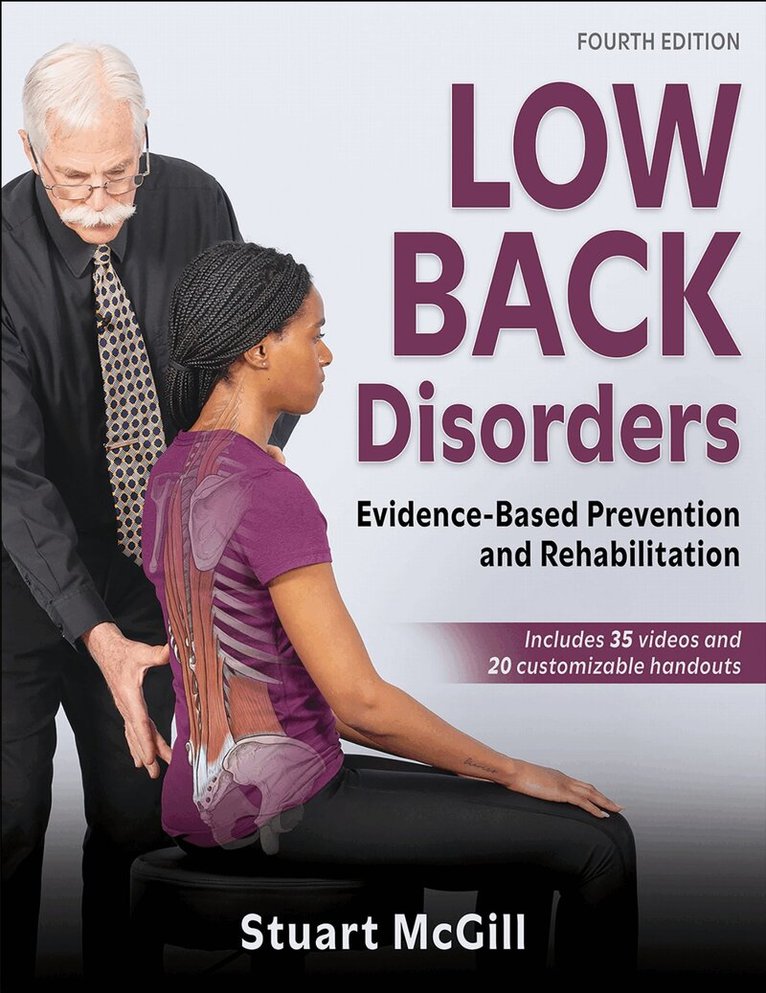
    Low Back Disorders

    Evidence-Based Prevention and Rehabilitation

    AvStuart McGill

    Häftad, Engelska, 2025

    1 079 kr

    Beställningsvara. Skickas inom 5-8 vardagar. Fri frakt över 249 kr.

    Fler format och utgåvor

    Inbunden

    994 kr

    Beskrivning

    In Low Back Disorders, Fourth Edition With HKPropel Access, internationally recognized low back specialist Stuart McGill, PhD, presents the research and applications of back anatomy, injury mechanisms, and biomechanics to build effective prevention and rehabilitation programs for patients or clients. Common misconceptions about pain and discomfort are addressed and corrected. Detailed insights into injury assessment are provided through a series of cutting-edge tests, with accompanying instructions, along with guidance and recommendations for individualized rehabilitation strategies and exercises.The fourth edition of Low Back Disorders now presents photos, illustrations, and graphs in full color to encourage a deep understanding of complex topics. The text includes access to 35 related video clips (17 of which are new to this edition) that illustrate key concepts from the text and guide readers in how to properly cue exercises and movements. With 80 exercises and tests, patient assessment has been extensively enhanced with more information about provocative testing. The fourth edition has been updated with the latest evidence-based information and includes new sections on the following topics:The important role of fascia for efficient movement with minimal stress concentrations on vulnerable anatomical partsThe benefits of choosing less stressful ways to move and reducing loading in the early stage of rehabilitationA bolstered assessment section with more tests to converge on a precise and specific understanding of the pain pathwayThe correct way to graduate from recovery to performance exerciseThroughout the text, the author offers examples from everyday movements and activities to connect the mechanisms for low back pain to the clients and patients who present with these challenges. Learning aids such as checklists, sidebars, and a glossary help readers absorb and retain information. In addition to the video clips, 21 patient handouts that can be customized and printed out are available online via HKPropel Access.Low Back Disorders, Fourth Edition, begins by introducing the functional anatomy and biomechanics of the lumbar spine. It presents epidemiological studies on low back disorders and dispels common myths of lumbar spine stability. Part II reviews risk factors for low back disorders and common prevention methods, with specific attention paid to reducing workplace risk factors. Part III explains evaluating and diagnosing clients and developing exercise and rehabilitation programs. Specific exercises that are proven to enhance performance and reduce pain are also explained.Evidence-based research and cutting-edge application strategies from a leading spine specialist make Low Back Disorders, Fourth Edition, the authoritative text for the examination and rehabilitation of the low back. Its approach to back care will lead readers in developing intervention, rehabilitation, and prevention programs to address the unique needs of each patient or client.Earn continuing education credits/units! A continuing education exam that uses this book is also available. It may be purchased separately or as part of a package that includes both the book and exam.Note: A code for accessing HKPropel is included with all new print books.

    Produktinformation

    • Utgivningsdatum:2025-10-27
    • Mått:260 x 20 x 210 mm
    • Vikt:1 310 g
    • Format:Häftad
    • Språk:Engelska
    • Antal sidor:464
    • Upplaga:4
    • Förlag:Human Kinetics Publishers
    • ISBN:9781718236257

    Utforska kategorier

    • Rehabilitering inom Medicin
    • Muskuloskeletala sjukdomar inom Medicin
    • Ortopedi och frakturer inom Medicin

    Mer om författaren

    Stuart McGill, PhD, is a distinguished professor emeritus at the University of Waterloo in Ontario, Canada, and chief scientific officer at Backfitpro Inc. He is a world-renowned lecturer and expert in spine function, injury prevention, and rehabilitation. He has received several awards for his work, including the Volvo Bioengineering Award for Low Back Pain Research from Sweden and the Order of Canada for contributions to back pain assessment and treatment.McGill previously served as the president of the Canadian Society for Biomechanics and as an elected member of the executive for the International Society of Biomechanics. He sat on the editorial boards of the journals Spine, Clinical Biomechanics, and Journal of Applied Biomechanics. McGill has produced over 245 scientific publications on lumbar function, mechanisms of low back injury, investigation of rehabilitation programs matched to specific categories of back pain patients, and the formulation of strategies to avoid work-related injuries. He has provided expertise to government agencies, corporations, professional athletes and teams, and legal firms. He is one of the few scientists who, in addition to performing research, is regularly requested by those in the medical profession and by sports teams to consult on challenging patients from around the world.

    Innehållsförteckning

    • Part I. Scientific FoundationChapter 1. Introduction to the Issues and Scientific Approach Unique to This BookLegislative Landscape: The Unfortunate Adverse Impact on Painful BacksNonspecific Low Back Pain: The Diagnosis That Impedes Understanding the Pain PathwayDeficiencies in Current Diagnostic PracticesAlternatives to Addressing Mechanical Pain: Pain Science?Misinterpretation of Biomechanics Studies Due to Differences in Internal Versus External MechanicsDoes Posture Matter, or Is There No Such Thing as Bad Posture?Inadequacies in Current Care and PreventionMechanostimulation: The Determinant of Either Optimal Health or Injury Excellent Clinicians and Excellent PracticeUnique Scientific Foundation of This BookIn Vitro LabIn Vivo LabA Final NoteChapter 2. Epidemiological Studies and What They Really MeanConsuming ScienceInfluence of Randomized Controlled Trials and Other Epidemiological ApproachesMisunderstandings of EpidemiologyMultidimensional Links Between Biomechanical, Psychosocial, and Personal VariablesHow Do Biomechanical Factors Affect LBDs?Links Between Personal Factors and LBDsStudies of Exercise InterventionPractical Application: What the Evidence SupportsWhat Works ClinicallyA Final NoteChapter 3. Functional Anatomy of the Lumbar SpineAnatomy TrainsFascia: How Our Understanding Has Changed and Its Large Influence on Biomechanics, Resilience, and Performance Basic Neural StructureVascular AnatomyVertebraeSacroiliac JointsIntervertebral DiscsMusclesLigamentsLumbodorsal FasciaQuick Review of the Pelvis, Hips, and Related MusculatureClinically Relevant Aspects of Pain and Anatomic StructureA Final NoteChapter 4. Normal and Injury Mechanics of the Lumbar SpineKinematic Properties of the Thoracolumbar SpineKinetics and Normal Lumbar Spine MechanicsDubious Lifting MechanismsOther Important Mechanisms of Normal Spine MechanicsInjury MechanismsBiomechanical and Physiological Changes Following InjuryA Final NoteChapter 5. Myths and Realities of Lumbar Spine StabilityStiffness and StabilityWhy Spine Stability Is Important for EveryoneStability: A Qualitative AnalogyQuantitative Foundation of StabilityStability Myths, Facts, and Clinical ImplicationsA Final NotePart II. Injury PreventionChapter 6. Low Back Disorder Risk AssessmentBrief Review of the Risk Factors for LBDsNIOSH Approach to Risk AssessmentSnook Psychophysical ApproachLumbar Motion Monitor Ergowatch ApproachBiological Signal–Driven Model ApproachesA Final NoteChapter 7. Reducing the Risk of Low Back InjuryLessons From the LiteratureLBD Prevention for WorkersThe Question of Back BeltsLBD Prevention for EmployersInjury Prevention PrimerA Note for ConsultantsReducing the Risk in AthletesSome Thoughts for Daily LivingA Final NotePart III. Low Back RehabilitationChapter 8. Building Better Rehabilitation Programs for Low Back InjuriesPain-Reducing Mechanisms of ExerciseFive-Stage Back Training ProgramFinding the Best ApproachStages of Patient ProgressionGuidelines for Developing the Best Exercise RegimenA Final NoteChapter 9. Evaluating the PatientMastery in Assessment and Converging on a Specific DiagnosisThe Most Crucial Element in EvaluationFirst Clinician–Patient MeetingAssessing Posture and Movement QualityProvocation TestsFunctional ScreensTesting Muscle EnduranceDesigning the Assessment: Choosing Assessment Tests and Their OrderA Final NoteChapter 10. Developing the Exercise ProgramPhilosophy of Low Back Exercise DesignClinical WisdomThoughts on MobilityIdentifying Safe and Effective ExercisesBeginner Program for Pain Control and StabilizationExercises That May Be Used in a Stabilization ProgramSpecial ConditionsThoughts for Seniors: The Biblical Training WeekA Final NoteChapter 11. Advanced Exercises: Preparing for a More Robust LifeSafely Increasing ChallengesOccupational and Athletic Work HardeningA Final NoteEpilogueAppendixGlossaryReferences and Additional ReadingsIndex