• Fri frakt över 249 kr
  • •
  • Snabba leveranser
  • •
  • Billiga böcker
Kundservice

Du är på sajten för privatpersoner.

Företag, bibliotek eller offentlig verksamhet?

Du handlar på classic.bokus.com, där alla dina funktioner finns intakta.
Till classic.bokus.com
Bokus logotyp. Gå till startsidan.
  • Erbjudanden
  • Nyheter
  • Student
  • Topplistor
  • Barn & ungdom
  • Bokus Play
  • E-böcker
  • Pocketböcker
  • Spel & pussel

10% rabatt på allt med kod NYSTART10 →

Sidfot

Mina sidor

    Hjälp

    • Kundservice
    • Vanliga frågor och svar
    • Frakt och leverans
    • Retur vid ångerrätt
    • Reklamera vara
    • Betalning
    • Köpvillkor
    • Allmänna villkor
    • Information om webbplatsens tillgänglighet

    Om Bokus

    • Om oss
    • Pressrum
    • För studenter
    • För företag
    • För bibliotek och offentlig verksamhet
    • För leverantörer
    • Hållbarhet

    Populärt

    • Aktuella erbjudanden
    • Presentkort
    • Studentlitteratur
    • Nya böcker
    • Topplistor
    • Signerade böcker
    • Engelska böcker

    Inspiration

    • Boktips
    • BookTok
    • Populära bokserier
    • Barnbokskaraktärer
    • Populära författare
    Logotyp för Bokus
    Följ oss på Facebook (extern länk)Följ oss på Instagram (extern länk)Följ oss på YouTube (extern länk)Följ oss på TikTok (extern länk)
    bokus @ CookiesAnpassa cookiesIntegritetspolicyKöpvillkor
    Till Citymail hemsida (extern länk)Till Budbee hemsida (extern länk)Till Postnord hemsida (extern länk)Till Schenker hemsida (extern länk)Till Early Bird hemsida (extern länk)Till Walleys hemsida (extern länk)
    1. Medicin
    2. Andra medicinska specialiteter
    3. Idrottsmedicin och idrottsskador

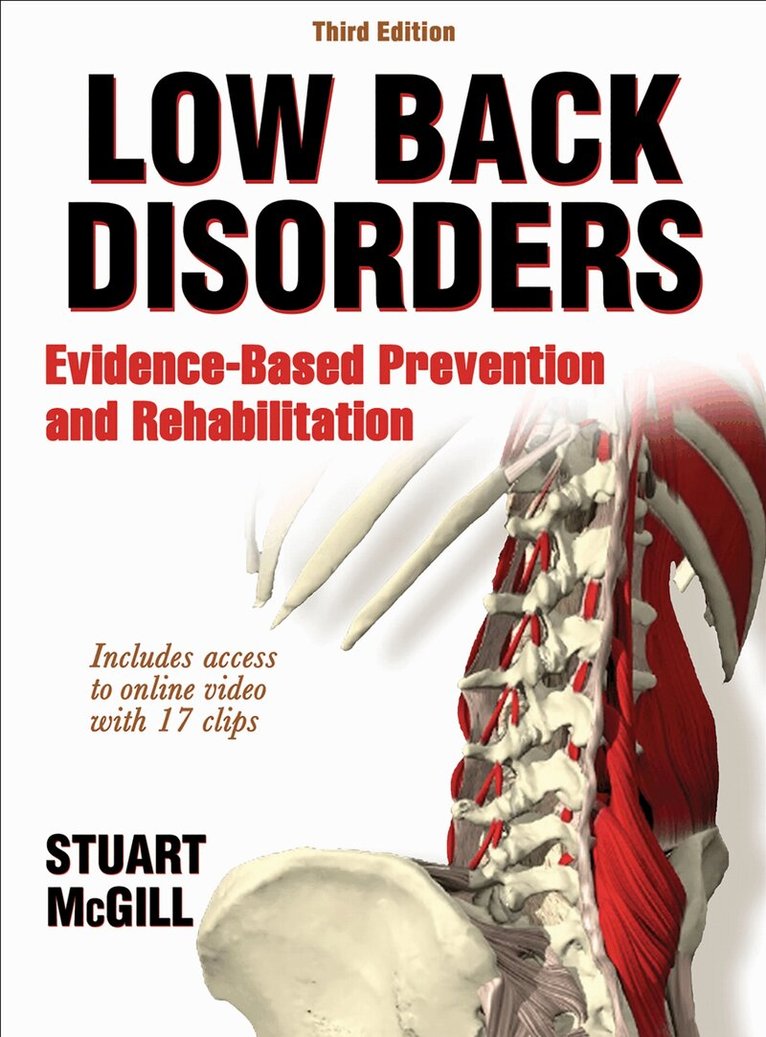
    Low Back Disorders

    Evidence-Based Prevention and Rehabilitation

    AvStuart McGill

    Inbunden, Engelska, 2015

    994 kr

    Beställningsvara. Skickas inom 5-8 vardagar. Fri frakt över 249 kr.

    Fler format och utgåvor

    Häftad

    1 079 kr

    Beskrivning

    Low Back Disorders, Third Edition With Web Resource, guides readers through the assessment and treatment of low back pain, providing evidence-based research on the best methods of rehabilitation and prevention of future injury. In this book, internationally recognized low back specialist Stuart McGill presents the research and applications of back anatomy and biomechanics to build effective prevention and rehabilitation programs for patients or clients.This third edition of Low Back Disorders contains all of the essential tools for those with low back maladies. Strong foundational information on anatomy and injury mechanisms guide readers through the essential functions of the structures of the low back and related tissues, and common misconceptions about pain and discomfort are addressed and corrected. The text provides detailed insights into injury assessment by an extensively expanded set of tests with accompanying instructions. These provide guidance and recommendations for individualized rehabilitation strategies and exercises. Also new to this edition is a web resource featuring 20 fillable Handouts for Patients or Clients that can be edited and printed to suit practitioner and patients’ needs. The web resource also contains an online video suite that showcases various exercises and assessments. In addition to offering strategies for relieving and potentially eliminating pain, the text provides insight into the conditions and environments that may initially cause back pain and makes recommendations on reducing these influences so that clients can be pain free.This book contains more than 500 photos, graphs, and charts on anatomy, biomechanics, and assessments; 50 tests and exercises with step-by-step instructions are available to aid readers in developing successful programs for patients and clients. In addition to the evidence-based foundation of this edition, the following enhancements have been made:• Completely updated information and streamlined chapter organization ensure that practitioners use best clinical practices.• Practical checklists throughout the text provide easy access to testing and assessment clinical techniques and information.• Practical Applications provide clinical information to aid readers in understanding concepts and theory.• To aid instructors, the text includes a newly added image bank to visually support class lectures.Low Back Disorders, Third Edition With Web Resource, contains essential research and corresponding clinical applications in a clear and organized format. Part I introduces the functional anatomy and biomechanics of the lumbar spine. It also presents epidemiological studies on low back disorders and dispels common myths of lumbar spine stability. Part II reviews risk factors for low back disorders and common prevention methods, with specific attention paid to reducing workplace risk factors. Part III explains evaluating and diagnosing clients and developing exercise and rehabilitation programs. Specific exercises that are proven to enhance performance and reduce pain are also explained.Evidence-based research and cutting-edge application strategies from a leading spine specialist in North America make Low Back Disorders, Third Edition With Web Resource, the authoritative text for the examination and rehabilitation of the low back. Its approach to back care will lead readers in developing intervention, rehabilitation, and prevention programs to address the unique needs of each patient or client.Earn continuing education credits/units! A continuing education course and exam that uses this book is also available. It may be purchased separately or as part of a package that includes all the course materials and exam.

    Produktinformation

    • Utgivningsdatum:2015-11-17
    • Mått:150 x 210 x 22 mm
    • Vikt:1 427 g
    • Format:Inbunden
    • Språk:Engelska
    • Antal sidor:424
    • Upplaga:3
    • Förlag:Human Kinetics Publishers
    • ISBN:9781450472913

    Utforska kategorier

    • Idrottsmedicin och idrottsskador inom Medicin
    • Ortopedi och frakturer inom Medicin
    • Smärta och smärtbehandling inom Medicin

    Mer om författaren

    Stuart McGill, PhD, is a professor at the University of Waterloo, Ontario, Canada, and a world-renowned lecturer and expert in spine function, injury prevention, and rehabilitation. He has written more than 300 scientific publications on lumbar function, mechanisms of low back injury, investigation of rehabilitation programs matched to specific categories of back pain patients, and the formulation of work-related injury avoidance strategies. He has received several awards for his work, including the Volvo Bioengineering Award for Low Back Pain Research from Sweden. McGill has been an invited lecturer at many universities and delivered more than 300 addresses to societies around the world. As a consultant, he has provided expertise on assessment and reduction of the risk of low back injury to government agencies, corporations, professional athletes and teams, and legal firms. He is one of the few scientists who, in addition to performing research, is regularly requested by the medical profession to consult with challenging patients from around the world.

    Innehållsförteckning

    • Part I Scientific FoundationChapter 1. Introduction to the Issues and Scientific Approach Unique to This BookLegislative Landscape: The Unfortunate Adverse Impact on Painful Backs Deficiencies in Current Diagnostic Practices Inadequacies in Current Care and Prevention Mechanical Loading and the Process of Injury: A Low Back Tissue Injury Primer Excellent Clinicians and Excellent Practice Unique Scientific Foundation of This Book In Vitro Lab In Vivo Lab A Final Note Chapter 2. Epidemiological Studies and What They Really Mean Influence of Randomized Controlled Trials and Other Epidemiological Approaches Misunderstandings of Epidemiology Multidimensional Links Among Biomechanical, Psychosocial, and Personal Variables Are Biomechanical Variables and Psychosocial Variables Distinct? How Do Biomechanical Factors Affect LBD? Links Between Personal Factors and LBD Studies of Exercise Intervention Practical Application: What the Evidence Supports What Works Clinically A Final Note Chapter 3. Functional Anatomy of the Lumbar SpineAnatomy Trains Basic Neural Structure Vascular Anatomy Vertebrae Sacroiliac Joints Intervertebral Disc Muscles Ligaments Lumbodorsal Fascia (LDF) Quick Review of the Pelvis, Hips, and Related Musculature Clinically Relevant Aspects of Pain and Anatomic Structure A Final Note Chapter 4. Normal and Injury Mechanics of the Lumbar SpineKinematic Properties of the Thoracolumbar Spine Kinetics and Normal Lumbar Spine Mechanics Dubious Lifting Mechanisms Other Important Mechanisms of Normal Spine Mechanics Injury Mechanisms Biomechanical and Physiological Changes Following Injury A Final Note Chapter 5. Myths and Realities of Lumbar Spine StabilityWhy Spine Stability Is Important for Everyone Stability: A Qualitative Analogy Quantitative Foundation of Stability Stability Myths, Facts, and Clinical Implications A Final Note Part II Injury PreventionChapter 6. LBD Risk AssessmentBrief Review of the Risk Factors for LBD NIOSH Approach to Risk Assessment Snook Psychophysical Approach Lumbar Motion Monitor (LMM) Ergowatch Biological Signal–Driven Model Approaches A Final Note Chapter 7. Reducing the Risk of Low Back InjuryLessons From the Literature LBD Prevention for Workers The Question of Back Belts LBD Prevention for Employers Injury Prevention Primer A Note for Consultants Reducing the Risk in Athletes A Final Note Part III Low Back RehabilitationChapter 8. Building Better Rehabilitation Programs for Low Back Injuries Pain-Reducing Mechanisms of Exercise Five-Stage Back Training Program Finding the Best Approach Stages of Patient Progression Guidelines for Developing the Best Exercise Regimen A Final Note Chapter 9. Evaluating the PatientMost Crucial Element in Evaluation First Clinician–Patient Meeting Assessing Posture and Movement Quality Some Provocation Tests Some Functional Screens Testing Muscle Endurance A Final Note Chapter 10. Developing the Exercise ProgramPhilosophy of Low Back Exercise Design Clinical Wisdom Thoughts on Mobility Identifying Safe and Effective Exercises Beginner's Program for Pain Control and Stabilization Exercises That May Be Used in a Stabilization Program Special Conditions A Final Note Chapter 11. Advanced ExercisesSafely Increasing Challenges Occupational and Athletic Work Hardening A Final Note

    Betyg & recensioner

    2/5