• Fri frakt över 249 kr
  • •
  • Snabba leveranser
  • •
  • Billiga böcker
Kundservice

Du är på sajten för privatpersoner.

Företag, bibliotek eller offentlig verksamhet?

Du handlar på classic.bokus.com, där alla dina funktioner finns intakta.
Till classic.bokus.com
Bokus logotyp. Gå till startsidan.
  • Erbjudanden
  • Nyheter
  • Student
  • Topplistor
  • Barn & ungdom
  • Bokus Play
  • E-böcker
  • Pocketböcker
  • Spel & pussel

10% rabatt på allt med kod: NYSTART10 →

Sidfot

Mina sidor

    Hjälp

    • Kundservice
    • Vanliga frågor och svar
    • Frakt och leverans
    • Retur vid ångerrätt
    • Reklamera vara
    • Betalning
    • Köpvillkor
    • Allmänna villkor
    • Information om webbplatsens tillgänglighet

    Om Bokus

    • Om oss
    • Pressrum
    • För studenter
    • För företag
    • För bibliotek och offentlig verksamhet
    • För leverantörer
    • Hållbarhet

    Populärt

    • Aktuella erbjudanden
    • Presentkort
    • Studentlitteratur
    • Nya böcker
    • Topplistor
    • Signerade böcker
    • Engelska böcker

    Inspiration

    • Boktips
    • BookTok
    • Populära bokserier
    • Barnbokskaraktärer
    • Populära författare
    Logotyp för Bokus
    Följ oss på Facebook (extern länk)Följ oss på Instagram (extern länk)Följ oss på YouTube (extern länk)Följ oss på TikTok (extern länk)
    bokus @ CookiesAnpassa cookiesIntegritetspolicyKöpvillkor
    Till Citymail hemsida (extern länk)Till Budbee hemsida (extern länk)Till Postnord hemsida (extern länk)Till Schenker hemsida (extern länk)Till Early Bird hemsida (extern länk)Till Walleys hemsida (extern länk)
    1. Medicin
    2. Medicin: icke kliniska discipliner
    3. Anatomi

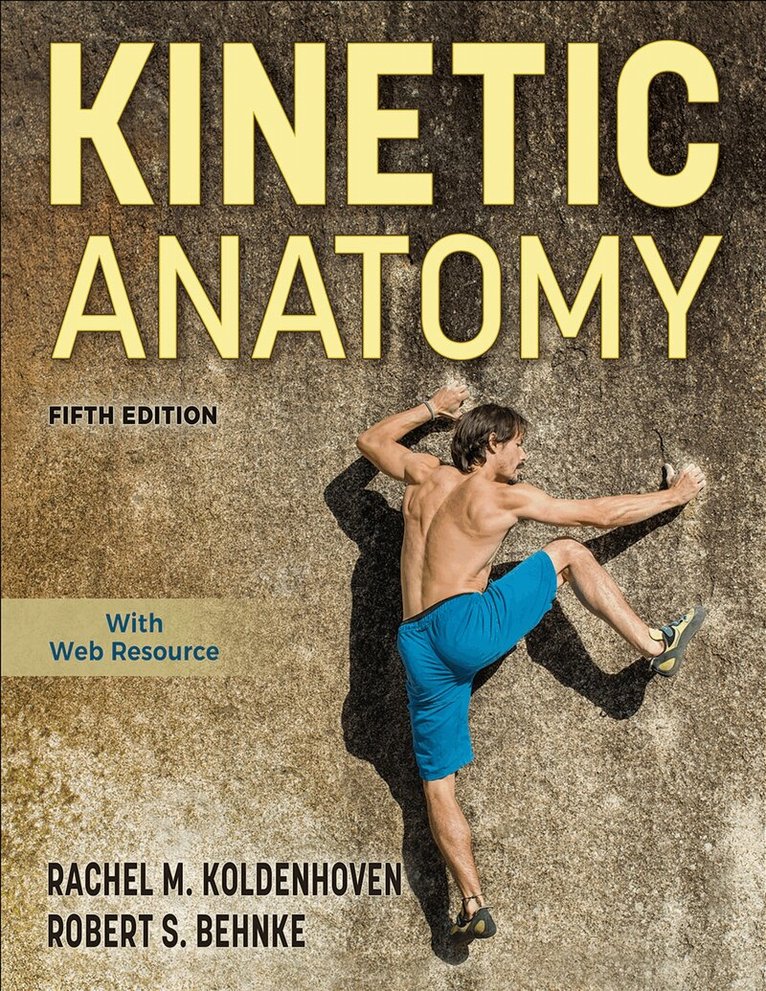
    Kinetic Anatomy

    AvRachel M. Koldenhoven,Robert S. Behnke

    Häftad, Engelska, 2026

    1 346 kr

    Beställningsvara. Skickas inom 5-8 vardagar. Fri frakt över 249 kr.

    Beskrivning

    Understand human musculoskeletal anatomy with over 300 visual elements.The human body is a complex machine with many parts working together to facilitate movement. Kinetic Anatomy, Fifth Edition, introduces students to musculoskeletal anatomy by systematically assembling each component of the human body. Layer by layer, readers will study bones, ligaments, joints, and muscles as well as the nerves and blood vessels that supply these muscles that are essential for movement.Over 300 full-color illustrations, photos, and infographics help students visualize and apply structural anatomy concepts to their own lives. Online learning tools such as anatomy labeling and coloring sheets, review questions, and flash cards can be used to boost student comprehension. Written with the goal of making human anatomy accessible to students, Kinetic Anatomy, Fifth Edition, has a variety of tools to aid in understanding and application, including the following:Hands On exercises instruct readers to physically identify anatomical structures on themselves or on a partnerFocus On sidebars illustrate circumstances in everyday activity that relate to the specific anatomical structures in the textPop Quiz sidebars provide readers an opportunity to strengthen their clinical reasoning skills by asking them to identify the muscles shown in the accompanying photoA new glossary helps readers learn the terms used throughout the textPart I presents the basic concepts of anatomy. The remainder of the text divides the body as follows:Part II: The upper extremityPart III: The head (brain), spinal column, thorax (heart and lungs), and pelvis Part IV: The lower extremityPart III includes unique coverage not found in other anatomy texts, explaining how the brain, heart, and lungs—as the power centers of the nervous, cardiovascular, and respiratory systems—affect movement. The text includes summary tables that provide a convenient resource for students when seeking the components of a particular joint, including its type, bones, ligaments, and movements, as well as the components of a particular muscle, including its origin, insertion, action, nerve, and blood supply.Readers of Kinetic Anatomy, Fifth Edition, will learn what structures are involved in movement and how those structures should function, allowing them to identify problems and correct them to enhance physical activity. Anyone interested in how their body functions during physical activity and how overuse or misuse can affect certain anatomical structures will benefit from this book.Earn continuing education credits/units! A continuing education exam that uses this book is also available. It may be purchased separately or as part of a package that includes both the book and exam.

    Produktinformation

    • Utgivningsdatum:2026-05-21
    • Mått:216 x 279 x 15 mm
    • Vikt:862 g
    • Format:Häftad
    • Språk:Engelska
    • Antal sidor:312
    • Upplaga:5
    • Förlag:Human Kinetics Publishers
    • ISBN:9781718241237

    Utforska kategorier

    • Anatomi inom Medicin
    • Fysiologi inom Medicin
    • Människans biologi inom Naturvetenskap och teknik

    Mer om författaren

    Rachel M. Koldenhoven, PhD, ATC, is an associate professor of athletic training and prerehabilitation sciences in the department of health and human performance at Texas State University. She has taught a variety of anatomy courses since 2015. Her research focuses on biomechanics, rehabilitation, and wearable technology, with an emphasis on understanding movement in individuals with chronic ankle instability and developing strategies to improve gait biomechanics. In 2025, she received the Presidential Distinction Award for Excellence in Service from Texas State University. She was also the recipient of the College Achievement Award for Excellence in Scholarly Activity and the NATA Research and Education Foundation Free Communications Award for Early Career.Robert S. Behnke, HSD, was retired after 39 years of teaching anatomy, kinesiology, physical education, and athletic training courses at the high school and university levels. Behnke was honored on several occasions for excellence in teaching, including receiving the Caleb Mills Outstanding Teaching Award at Indiana State University and the Educator of the Year Award from the National Athletic Trainers' Association (NATA). He served 11 years as chair of the NATA Professional Education Committee. In 1990, Behnke was inducted into the NATA Hall of Fame. He was also in the Indiana State University Athletic Hall of Fame, the Illinois Athletic Trainers Association Hall of Fame, and the Indiana Athletic Trainers' Association Hall of Fame.Behnke spent most of his career at Indiana State University (1975-1998), where he was a full professor of physical education and athletic training and director of undergraduate and graduate athletic training programs; in retirement, he held the rank of professor emeritus. He served as head athletic trainer and an instructor at Illinois State University from 1966 to 1969. He was head athletic trainer and an assistant professor at the University of Illinois from 1969 to 1975. He was an athletic trainer for boxing, men's field hockey, team handball, ice skating, roller hockey, gymnastics, judo, and cycling at the U.S. Olympic Training Center in Colorado Springs in 1984 and 1991.Robert Behnke passed away in 2026.

    Innehållsförteckning

    • Part I. General Concepts of AnatomyChapter 1. StructuresChapter 2. MovementPart II. Upper ExtremityChapter 3. The ShoulderChapter 4. The Elbow and ForearmChapter 5. The Wrist and HandChapter 6. Nerves and Blood Vessels of the Upper ExtremityPart II. Summary TablesArticulations of the Upper ExtremityMuscles, Nerves, and Blood Supply of the Upper ExtremityPart III. The Head, Spinal Column, Thorax, and PelvisChapter 7. The HeadChapter 8. The Spinal Column and PelvisChapter 9. The ThoraxChapter 10. Nerves and Blood Vessels of the Head, Spinal Column, Thorax, Heart, and LungsPart III. Summary TablesArticulations of the Head, Spinal Column, Thorax, and PelvisMuscles, Nerves, and Blood Supply of the Head, Thorax, and Spinal ColumnPart IV. Lower ExtremityChapter 11. The Hip and ThighChapter 12. The KneeChapter 13. The Lower Leg, Ankle, and FootChapter 14. Nerves and Blood Vessels of the Lower ExtremityPart IV. Summary TablesArticulations of the Lower ExtremityMuscles, Nerves, and Blood Supply of the Lower ExtremityAnswers to Pop Quiz QuestionsSuggested ReadingsIndex