• Fri frakt över 249 kr
  • •
  • Snabba leveranser
  • •
  • Billiga böcker
Kundservice

Du är på sajten för privatpersoner.

Företag, bibliotek eller offentlig verksamhet?

Du handlar på classic.bokus.com, där alla dina funktioner finns intakta.
Till classic.bokus.com
Bokus logotyp. Gå till startsidan.
  • Erbjudanden
  • Nyheter
  • Student
  • Topplistor
  • Barn & ungdom
  • Bokus Play
  • E-böcker
  • Pocketböcker
  • Spel & pussel

10% rabatt på allt med kod: NYSTART10 →

Sidfot

Mina sidor

    Hjälp

    • Kundservice
    • Vanliga frågor och svar
    • Frakt och leverans
    • Retur vid ångerrätt
    • Reklamera vara
    • Betalning
    • Köpvillkor
    • Allmänna villkor
    • Information om webbplatsens tillgänglighet

    Om Bokus

    • Om oss
    • Pressrum
    • För studenter
    • För företag
    • För bibliotek och offentlig verksamhet
    • För leverantörer
    • Hållbarhet

    Populärt

    • Aktuella erbjudanden
    • Presentkort
    • Studentlitteratur
    • Nya böcker
    • Topplistor
    • Signerade böcker
    • Engelska böcker

    Inspiration

    • Boktips
    • BookTok
    • Populära bokserier
    • Barnbokskaraktärer
    • Populära författare
    Logotyp för Bokus
    Följ oss på Facebook (extern länk)Följ oss på Instagram (extern länk)Följ oss på YouTube (extern länk)Följ oss på TikTok (extern länk)
    bokus @ CookiesAnpassa cookiesIntegritetspolicyKöpvillkor
    Till Citymail hemsida (extern länk)Till Budbee hemsida (extern länk)Till Postnord hemsida (extern länk)Till Schenker hemsida (extern länk)Till Early Bird hemsida (extern länk)Till Walleys hemsida (extern länk)
    1. Samhälle och politik
    2. Samhälle och kultur
    3. Sociala och etiska frågor
    4. Våld och övergrepp

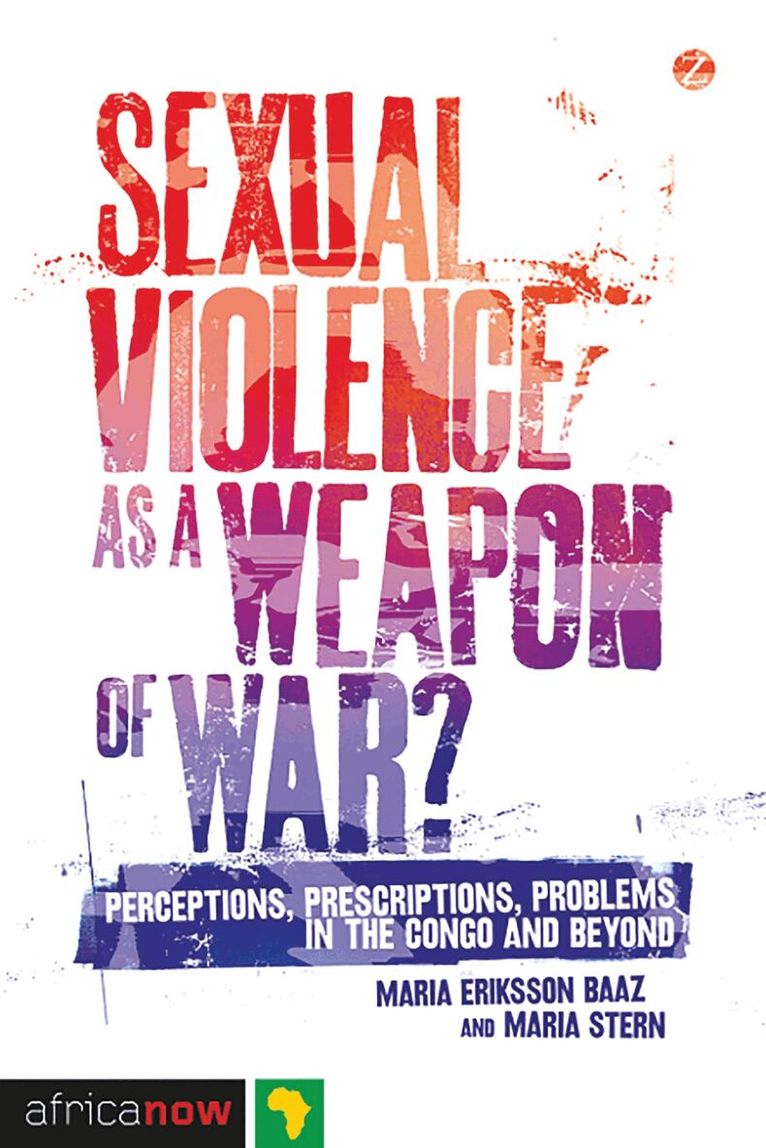
    Sexual Violence as a Weapon of War?

    Perceptions, Prescriptions, Problems in the Congo and Beyond

    AvMaria Eriksson Baaz,Professor Maria Stern

    Häftad, Engelska, 2013

    Del i serien Africa Now

    395 kr

    Beställningsvara. Skickas inom 10-15 vardagar. Fri frakt över 249 kr.

    Fler format och utgåvor

    Inbunden

    1 256 kr

    E-bok

    423 kr

    E-bok

    423 kr

    Beskrivning

    All too often in conflict situations, rape is referred to as a 'weapon of war', a term presented as self-explanatory through its implied storyline of gender and warring. In this provocative but much-needed book, Eriksson Baaz and Stern challenge the dominant understandings of sexual violence in conflict and post-conflict settings.Reading with and against feminist analyses of the interconnections between gender, warring, violence and militarization, the authors address many of the thorny issues inherent in the arrival of sexual violence on the global security agenda. Based on original fieldwork in the Democratic Republic of the Congo, as well as research material from other conflict zones, Sexual Violence as a Weapon of War? challenges the recent prominence given to sexual violence, bravely highlighting various problems with isolating sexual violence from other violence in war.A much-anticipated book by two acknowledged experts in the field, on an issue that has become an increasingly important security, legal and gender topic.

    Produktinformation

    • Utgivningsdatum:2013-05-09
    • Mått:156 x 233 x 13 mm
    • Vikt:283 g
    • Format:Häftad
    • Språk:Engelska
    • Serie:Africa Now
    • Antal sidor:168
    • Förlag:Bloomsbury Publishing PLC
    • ISBN:9781780321639

    Utforska kategorier

    • Våld och övergrepp inom Samhälle och politik
    • Vapen och utrustning inom Samhälle och politik

    Mer om författaren

    Maria Eriksson Baaz is associate professor at the School of Global Studies, University of Gothenburg, and a senior researcher at the Nordic Africa Institute, Uppsala, Sweden. Her research interests are in African politics, security and development, post-colonial theory and gender. Recently she has focused on masculinity, militarization and defence reform interventions, with a particular focus on the Democratic Republic of the Congo. She is the author of The Paternalism of Partnership: A Postcolonial Reading of Identity in Development Aid (2005). She has also contributed to several edited volumes, such the International Handbook on African Security (2012), and has written numerous policy reports. Additionally, her articles have appeared in leading journals, including International Studies Quarterly, African Affairs, Journal of International Relations and Development, Journal of Modern African Studies, and African Security.Maria Stern is professor in peace and development studies at the School of Global Studies, University of Gothenburg. Her research interests are security studies, the security-development nexus, politics of identity, and feminist theory. Recently she has focused on masculinity, militarization and defence reform interventions, with a particular focus on the Democratic Republic of the Congo. Maria co-edited a special issue on the 'Security-development nexus revisited' in Security Dialogue (2010). She is also co-editor of Feminist Methodologies for International Relations (2006) and the author of Naming Security - Constructing Identity (2005). She has contributed to several edited volumes, such as the International Handbook on African Security (2012), and has written numerous policy reports. Additionally, her articles have appeared in leading journals, including African Affairs, Alternatives, International Journal of Peace Studies, International Political Sociology, International Studies Quarterly, Journal of International Relations and Development, Journal of Modern African Studies, Review of International Studies, and Security Dialogue.

    Recensioner i media

    In the last decade have we all crafted and wielded a too-cohesive, thus oddly too-comforting, story about wartime strategic rape? Weighing their rare interviews with Congolese male soldiers, Maria Eriksson Baaz and Maria Stern push us all not to sympathize with perpetrators, but to think seriously about the messiness of both war waging and storytelling.

    Innehållsförteckning

    • Introduction1. Sex/gender violence2. 'Rape as a weapon of war'?3. The messiness and uncertainty of warring4. Post-coloniality, victimcy and humanitarian engagement: being a good global feminist?5. Concluding thoughts and unanswered questions