• Fri frakt över 249 kr
  • •
  • Snabba leveranser
  • •
  • Billiga böcker
Kundservice

Du är på sajten för privatpersoner.

Företag, bibliotek eller offentlig verksamhet?

Du handlar på classic.bokus.com, där alla dina funktioner finns intakta.
Till classic.bokus.com
Bokus logotyp. Gå till startsidan.
  • Erbjudanden
  • Nyheter
  • Student
  • Topplistor
  • Barn & ungdom
  • Bokus Play
  • E-böcker
  • Pocketböcker
  • Spel & pussel

10% rabatt på allt med kod: NYSTART10 →

Sidfot

Mina sidor

    Hjälp

    • Kundservice
    • Vanliga frågor och svar
    • Frakt och leverans
    • Retur vid ångerrätt
    • Reklamera vara
    • Betalning
    • Köpvillkor
    • Allmänna villkor
    • Information om webbplatsens tillgänglighet

    Om Bokus

    • Om oss
    • Pressrum
    • För studenter
    • För företag
    • För bibliotek och offentlig verksamhet
    • För leverantörer
    • Hållbarhet

    Populärt

    • Aktuella erbjudanden
    • Presentkort
    • Studentlitteratur
    • Nya böcker
    • Topplistor
    • Signerade böcker
    • Engelska böcker

    Inspiration

    • Boktips
    • BookTok
    • Populära bokserier
    • Barnbokskaraktärer
    • Populära författare
    Logotyp för Bokus
    Följ oss på Facebook (extern länk)Följ oss på Instagram (extern länk)Följ oss på YouTube (extern länk)Följ oss på TikTok (extern länk)
    bokus @ CookiesAnpassa cookiesIntegritetspolicyKöpvillkor
    Till Citymail hemsida (extern länk)Till Budbee hemsida (extern länk)Till Postnord hemsida (extern länk)Till Schenker hemsida (extern länk)Till Early Bird hemsida (extern länk)Till Walleys hemsida (extern länk)
    1. Läromedel
    2. Läromedel: språk
    3. Läromedel: klassiska språk

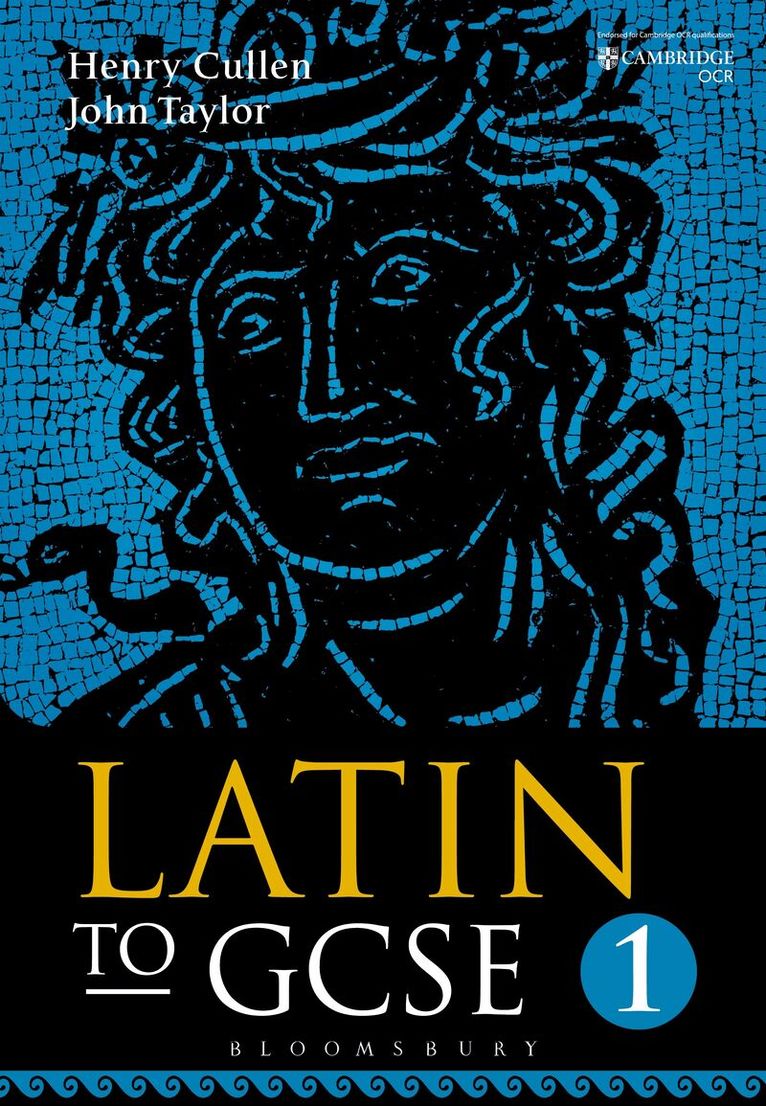
    Latin to GCSE Part 1

    AvHenry Cullen,John Taylor

    Häftad, Engelska, 2016

    236 kr

    Beställningsvara. Skickas inom 5-8 vardagar. Fri frakt över 249 kr.

    Fler format och utgåvor

    E-bok

    233 kr

    E-bok

    233 kr

    Beskrivning

    A companion to Bloomsbury’s popular two-volume Greek to GCSE, this is the first course for Latin students that directly reflects the curriculum in a clear, concise and accessible way. Enhanced by colour artwork and text features, the books support the new OCR specification for Latin (first teaching 2016) as well as meeting the needs of later students, both at university and beyond.Written by two experienced school teachers, one also an examiner, the course is based on a keen understanding of what pupils find difficult, concentrating on the essentials and on the explanation of principles in both accidence and syntax: minor irregularities are postponed and subordinated so that the need for rote learning is reduced. User-friendly, it also gives pupils a firm foundation for further study. Part 1 covers the basics and is self-contained, with its own reference section. It outlines the main declensions, a range of active tenses and a vocabulary of 275 Latin words to be learned. Pupil confidence is built up by constant consolidation of the material covered. After the preliminaries, each chapter concentrates on stories with one source or subject: the Fall of Troy, the journeys of Aeneas, the founding of Rome and the early kings, providing an excellent introduction to Roman culture alongside the language study.

    Produktinformation

    • Utgivningsdatum:2016-04-07
    • Mått:244 x 170 x 26 mm
    • Vikt:480 g
    • Format:Häftad
    • Språk:Engelska
    • Antal sidor:272
    • Förlag:Bloomsbury Publishing PLC
    • ISBN:9781780934402

    Utforska kategorier

    • Läromedel: klassiska språk inom Läromedel

    Mer om författaren

    Henry Cullen teaches Classics and is Director of Studies at St Albans High School for Girls, UK.John Taylor was for many years Head of Classics at Tonbridge School, UK, and now teaches at Manchester University, UK. He is an experienced examiner of Ancient Greek and the author of the widely used textbooks Essential GCSE Latin; Latin Beyond GCSE; Greek to GCSE; and (with Stephen Anderson) Greek Unseen Translation and Writing Greek.

    Recensioner i media

    I particularly enjoyed the respect the authors show for the intelligence of the students ... Whilst this text book is a useful and much-needed aid when trying to get one’s head around the new specification for the first time, it provides much more than that.

    Innehållsförteckning

    • ContentsChapter OneThe Latin alphabetCapital lettersPunctuationPronunciationLatin in EnglishAbbreviations and phrasesInflection (1): word order and endingsInflection (2): modern languagesInflection (3): what the endings tell usVerbs: first conjugationNouns: first and second declensionsWorking out the subjectWord order‘the’ or ‘a’?Three important conjunctionsThe verb to bePrepositions (1): with the accusativeSummary of grammar covered in Chapter OneChapter One vocabulary Chapter TwoGenitive, dative and ablative casesNoun cases: a summary tableFirst and second declensions in fullTranslating with the ablativePrepositions (2): with the ablativeSecond declension neuterVerbs: second, third and fourth conjugationsNew verbsThe infinitiveBackground: the Trojan War and the origins of RomeUsing wordlistsThe Judgement of ParisTo, from and in citiesTime phrases (1): ‘time how long’The wrath of AchillesThe death of PatroclusThe death of HectorThe Trojan Horse and the fall of TroyChapter Two vocabulary Chapter ThreeChapters One & Two grammar revision summaryImperfect tenseTranslating the imperfect tensesum – imperfect tenseAeneas and CreusaThe verb possumAdjectives (1): laetus -a -umThe Trojans head for CreteNoun anomalies (1): nautaNoun anomalies (2): vir, puer, liberAdjectives (2): miser -era -erumVocative caseThe ImperativeThe Trojans depart from CreteTime adverbsTwo contrasting receptionsScylla and CharybdisChapter Three vocabulary Chapter FourPerfect tense: first conjugationPerfect tense: second, third and fourth conjugationsPerfect tense: summary tableThird declension nounsIn the land of the CyclopesStorm and RescueBackground: Aeneas’ epic questQuestions (1)Dido and Aeneas (1)Third declension neuterMixed conjugation verbsDido and Aeneas (2)Pronouns and possessives (1)Time phrases (2): ‘time when’Dido and Aeneas (3)Dido and Aeneas (4)Chapter Four vocabularyChapter FiveVerbs: future tenseTime adverbs (2)sum & possum: future tenseTime adverbs (3)The Sibyl and the UnderworldPersonal pronouns and possessive adjectives (2): nos, vos, noster, vesterThe eating of tablesAdjectives (3): third declensionThe future site of RomeThe victory of AeneasAdverbs from adjectivesBackground: From Aeneas to RomulusRomulus and RemusThe foundation of RomeThe relative pronoun (qui, quae, quod) and the relative clauseThe Sabine womenThe Deification of RomulusChapter Five vocabularyChapter SixtbcReference GrammarEnglish to Latin vocabularyLatin to English vocabulary