• Fri frakt över 249 kr
  • •
  • Snabba leveranser
  • •
  • Billiga böcker
Kundservice

Du är på sajten för privatpersoner.

Företag, bibliotek eller offentlig verksamhet?

Du handlar på classic.bokus.com, där alla dina funktioner finns intakta.
Till classic.bokus.com
Bokus logotyp. Gå till startsidan.
  • Erbjudanden
  • Student
  • Topplistor
  • Barn & ungdom
  • Bokus Play
  • E-böcker
  • Ljudböcker
  • Pocketböcker
  • Spel & pussel

10% rabatt på allt med kod NYSTART10 →

Sidfot

Mina sidor

    Hjälp

    • Kundservice
    • Vanliga frågor och svar
    • Frakt och leverans
    • Retur vid ångerrätt
    • Reklamera vara
    • Betalning
    • Köpvillkor
    • Allmänna villkor
    • Information om webbplatsens tillgänglighet

    Om Bokus

    • Om oss
    • Pressrum
    • För studenter
    • För företag
    • För bibliotek och offentlig verksamhet
    • För leverantörer
    • Hållbarhet

    Populärt

    • Aktuella erbjudanden
    • Presentkort
    • Studentlitteratur
    • Nya böcker
    • Topplistor
    • Signerade böcker
    • Engelska böcker

    Inspiration

    • Boktips
    • BookTok
    • Populära bokserier
    • Barnbokskaraktärer
    • Populära författare
    Logotyp för Bokus
    Följ oss på Facebook (extern länk)Följ oss på Instagram (extern länk)Följ oss på YouTube (extern länk)Följ oss på TikTok (extern länk)
    bokus @ CookiesAnpassa cookiesIntegritetspolicyKöpvillkor
    Till Citymail hemsida (extern länk)Till Budbee hemsida (extern länk)Till Postnord hemsida (extern länk)Till Schenker hemsida (extern länk)Till Early Bird hemsida (extern länk)Till Walleys hemsida (extern länk)
    1. Historia och arkeologi
    2. Historia
    3. Afrikas historia

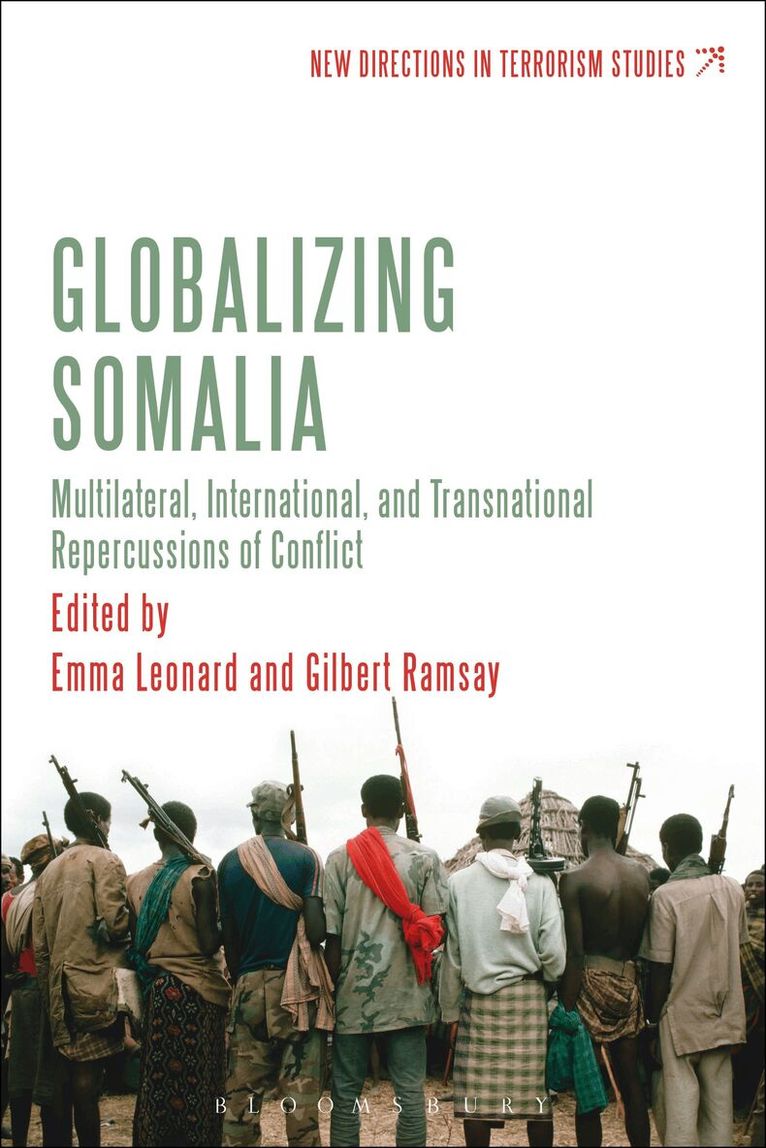
    Globalizing Somalia

    Multilateral, International and Transnational Repercussions of Conflict

    AvEmma Leonard,Gilbert Ramsay

    Häftad, Engelska, 2013

    Del i serien New Directions in Terrorism Studies

    523 kr

    Beställningsvara. Skickas inom 10-15 vardagar. Fri frakt över 249 kr.

    Beskrivning

    This collection of essays demonstrates how chronic state failure and the inability of the international community to provide a solution to the conflict in Somalia has had transnational repercussions. Following the failed humanitarian mission in 1992-93, most countries refrained from any direct involvement in Somalia, but this changed in the 2000s with the growth of piracy and links to international terrorist organizations. The deterritorialization of the conflict quickly became apparent as it became transnational in nature. In part because of it lacked a government and was unable to work with the international community, Somalia came to be seen as a "testing-ground" by many international actors. Globalizing Somalia demonstrates how China, Japan, and the EU, among others, have all used the conflict in Somalia to project power, test the bounds of the national constitution, and test their own military capabilities. Contributed by international scholars and experts, the work examines the impact of globalization on the internal and external dynamics of the conflict, arguing that it is no longer geographically contained. By bringing together the many actors and issues involved, the book fills a gap in the literature as one of the most complete works on the conflict in Somalia to date. It will be an essential text to any student interested in Somalia and the horn of Africa, as well as in terrorism, and conflict processes.

    Produktinformation

    • Utgivningsdatum:2013-12-05
    • Mått:148 x 228 x 20 mm
    • Vikt:520 g
    • Format:Häftad
    • Språk:Engelska
    • Serie:New Directions in Terrorism Studies
    • Antal sidor:304
    • Förlag:Bloomsbury Publishing PLC
    • ISBN:9781780935690

    Utforska kategorier

    • Afrikas historia inom Historia och arkeologi
    • Internationella relationer inom Samhälle och politik

    Mer om författaren

    Gilbert Ramsay works at the Centre for the Study of Terrorism and Political Violence at the University of St. Andrews, UK. An Arabic speaker, he has previously written reports on terrorism and the Internet for the United Nations and the European Union.Emma Leonard was Assistant to the Dean of Development Studies at Mbarara University, Uganda. She earned a post-graduate degree in African Studies (MSc Hons) at Oxford University before joining the Center for the Study of Terrorism and Political Violence at the University of St Andrews, Scotland. She is now pursuing her doctoral research at The Pennsylvania State University, USA.

    Recensioner i media

    With extensive information and rich analyses, this book contributes a great deal to our understanding of how the Somali conflict has been transformed into a transnational issue with various forms of intervention by global and regional powers as well as international organizations.

    Innehållsförteckning

    • IntroductionEmma Leonard & Gilbert RamsaySECTION ONE: THE FAILURE OF THE INTERNATIONALThe United Nations, Peacekeeping, and the Globalization of the Conflict in SomaliaKate SeamanContextual Disconnect: The Failure of the ‘International Community’ in SomaliaKarl SandstromSECTION TWO: THE RISE OF THE TRANSNATIONALIs all Jihad Local? Transnational Contention and Political Violence in SomaliaPeter S. HenneInvolving Foreign Fighters in SomaliaDavid Malet, Bryan Priest, & Sarah StaggsSomali Piracy and International CrimePeter LehrSECTION THREE: THE NEW MULTIPOLAR POLITICS AS A RESPONSE TO TRANSNATIONAL DISORDERRe-crossing the Mogadishu Line: U.S. Policy toward Somalia 1994-2012Michael J. BoyleSomalia-China Relations: China Claiming its Place as a Global Actor?Monika ThakurJapan’s Aspirations as a Global Security Actor: the anti-piracy mission off Somalia and the dynamics of Great Power interventionYee-Kuang HengOpposing Interests? The Geopolitics of the Horn of AfricaStig Jarle HansenThe European Union Comprehensive Intervention in Somalia: Turning Ploughs into Swords?Maria-Luisa Sanchez-BarruecoSECTION FOUR: RE-IMAGINING INTERVENTION – MUST HISTORY REPEAT ITSELF IN SOMALIA?Identity, Stability, and the Somali State: Indigenous Forms and External InterventionMichael Walls & Steve KibbleConclusionGilbert Ramsay & Emma LeonardBibliographyIndex